


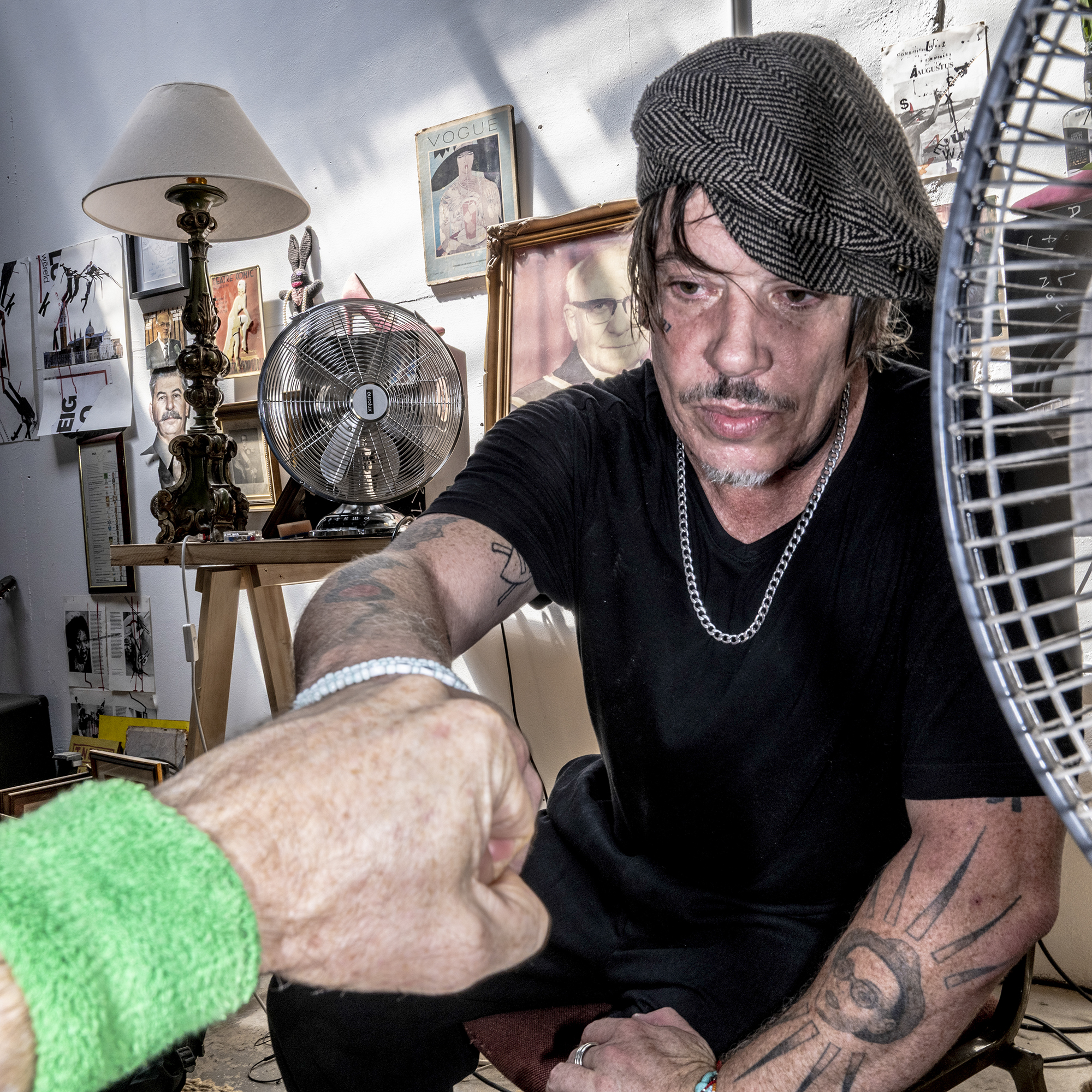



I spoke to electronic musician and artist Felix Laband about the emotional and intellectual processes behind his music, as well as recovering from addiction, the insecurities involved in putting out work in public, and our mutual love for Bruce Springsteen.
What’s a Rich Text element?
The rich text element allows you to create and format headings, paragraphs, blockquotes, images, and video all in one place instead of having to add and format them individually. Just double-click and easily create content.
Static and dynamic content editing
A rich text element can be used with static or dynamic content. For static content, just drop it into any page and begin editing. For dynamic content, add a rich text field to any collection and then connect a rich text element to that field in the settings panel. Voila!
How to customize formatting for each rich text
Headings, paragraphs, blockquotes, figures, images, and figure captions can all be styled after a class is added to the rich text element using the "When inside of" nested selector system.

Felix Laband is one of South Africa's most well-loved and critically acclaimed electronic musicians. Over the course of the last two decades, he has produced five exquistely tender albums, rendered in his signature blend of cut-ups and delicately considered compositions. During that time, he has also struggled with recreational drug use, which has a particularly central role in the electronic music scene. I chatted to Felix about the challenges of making work without chemical assistance, the ways in which we engage with music and culture has changed over time, and a bunch of other things! Enjoy our conversation!
Peter Machen: Hello, Felix Laband. Thank you so much for talking to me.
Felix Laband: Peter, how are you? Lovely to talk to you too. How are you?
PM: I’m pretty good. It’s really good to see your face.
FL: Lovely to see yours too.
PM: So I’m going to kick off with my many questions. So, Felix, I’ve been listening to your music quite intensely for the last few days, although I have known it for many, many years now. But I remember the last time I interviewed you, like about 10 or 15 years ago, having the same issue. And my issue is this: I experience your music in a particularly visceral way. It occupies my body as much as my head. And a lot of the time it’s more kind of a biochemical experience than it is any kind of intellectual processing. In fact, I actually struggle with wrapping my brain around what your music means and what it does. Which is kind of weird, because I think your music is very cerebral, but it’s also almost got this kind of physical aspect to it.
So, I have an odd – but very obvious – question: what are you trying to do with the music?
FL: I’m trying to basically like, I don’t know, create a space into memory and sort of dreamlike states. But at the same time, there has obviously been this kind of physical aspect to it, which is governed by a rhythm and stuff like that, which also, in many ways, helps it translate to a lot more people. Because a lot of people are quite inexperienced with music that doesn’t have any sort of rhythm to it, in this modern age, you know.
PM: Yeah.
FL: And in fact, it’s an interesting question, because there’s been many a point where I’ve wanted to actually experiment with just having music on its own without… I mean, still having rhythms in the sense of the musical ideas, but without actual beats and bass and stuff like that.
And it’s almost like I’ve, at various points, sort of chickened out, I suppose. I’m about to release it, and then I start missing some beats and stuff.
And there’s also there’s other – I don’t know if it’s the word problem is the right word – but having to perform, especially to modern audiences in a context of some sort of environment where there’s people before and after you playing quite intense house music, it’s quite a difficult experience performing and then sort of just like breaking all of that and coming in with sort of ambient-type music, you know?
So this resulted in me kind of, I suppose, you know, being quite fixated with that aspect of the music too. But that has been a bit of a problem for me in many ways, in the sense that it’s…it’s kind of…I mean, I listen to all sorts of music, but I don’t find myself listening to too much dance music and stuff, and found that trying to kind of like bring that aspect in as well was much easier for me to create and do that while using drugs and stimulants, you know, to kind of give you that energy to do it, because it’s quite difficult to.
PM: Yeah, yeah.
FL: And I sort of feel in many ways that I’m sort of like, not like slugging a dead horse, but I feel like a lot of my issues that I’ve had with using stimulants and stuff to work have been exacerbated by that, in a sense, you know, kind of like trying to get myself into that mood and make some beats and stuff and then, you know, obviously some drugs and, and and you’re away, you know. So I’m quite interested to see where I’m going to go going forward, because obviously I’ve stopped doing all of that and I’m sort of entering a new space in my life where that is no longer a factor whatsoever.
And I’m still struggling to make music. But I think it’s because my mindset hasn’t really opened yet to the possibilities of where I could go. And I assume it’s probably going to be a lot more music without beats and stuff. Because I feel like that’s almost like I’m…in the same way as you, you know, like when you’re a teenager, you listen to fucking punk rock or whatever, and then you get a bit older, you know, you kind of go through stages in your life where certain genres kind of with the states that you’re in at the time, you know, and how you see that stuff. And I’m not too sure whether making people dance on ecstasy is something that interests me much longer, you know?
PM: Well, that’s what I was going to say, because, you know, this is complicated by the fact that a lot of people, when they listen to the music, even if it’s not based music, are on drugs. That is one of the contexts in which this kind of specifically electronic music is consumed. So I think you kind of led to about ten of the questions I was going to ask with that response.
But I think the central thing for any musician, but especially for someone like you, is that tension between what you want to do and what an audience might want or demand or be open to. And, obviously you’re not the kind of person who is going to focus exclusively on satisfying the needs of your audience – I realize that – but at the same time, music is for other people to listen to. So, how do you resolve that tension between what you think people might want, what they actually want, and what you want to make?
FL: Well, I think I’m quite lucky in that sense, in that I have had a fair amount of time making music and thank God, have had a fair amount of – I’m not sure if , success is the right word – but I’ve been able to do it as my career. And, I feel I don’t really need to prove too much any longer. I’ve released enough albums, doing what I generally do. And it’s not just an audience; there are many other factors as well. There’s record labels. There’s this and that. There are all sorts of people who expect a certain thing from you and, quite candidly, can sometimes like…you know, you can send something else that you think is magical, and they’re like, “No! Where’s the kick drum” kind of vibe.
And the only way that I can honestly deal with that is just to be brave and basically do what I’m currently doing, which is literally taking some time off from music in general, and just kind of reassessing what’s important to me, and letting music find its way back to me naturally.
And I feel like it is starting to do that. And I feel as well that possibly the future involves being a lot more interested in possibly making stuff for soundtracks, you know, to films and documentaries and stuff.
Because it’s also like we live in a time, especially with electronic…I mean, I was very lucky when I started releasing electronic music – there weren’t that many artists around? So if you did something that was fairly decent, you could actually get some airtime and get heard, you know? And luckily for me, when I first released in 2001, it was still that landscape. I mean, you could literally go into a record store and there would be like a Ninja Tune CD, you know what I mean? PM: Yeah, yeah, yeah, yeah.
FL: And so I was lucky to release and that sort of…I mean, I can’t imagine what it must be like being a young experimental producer now, with the huge, vast amount of work that you have to compete with that gets uploaded, like, every single day, you know?.
PM: With everything.
FL: Yeah. And that also leaves me feeling a little despondent regarding the music world in general, where we’ve gone with things like Spotify and this and that. I’ve seen such interesting videos of people, older people, explaining how important an album used to be and all this type of stuff.
And even for that, I’ve always worked with the idea very much of an album being very much like a film, you know, where it has a beginning and an end. And that was very important to me, to create a full listening experience. And, I’ve had to basically accept the fact that that really kind of no longer exists, even in my own listening.
PM: Yeah, so the only time I listened to albums – and I listen to albums a lot – is when I put on a record, and sometimes on YouTube. I completely get what you say, but I also don’t think the album is dead, for the very simple reason that artists around the world, in their tens of thousands, continue to make albums. And maybe three or four percent of the audience listen to those songs as albums.
FL: Well, absolutely. I agree with you. And I still think it’s a beautiful art form, and I shall not leave that. But where I do feel that people will listen to a full album, is if you made the soundtrack to a film, because they’re going to watch the whole film and therefore listen to the whole body of work.
So I’m sort of reassessing how best I would like people to be able to appreciate and take in the music. And I’m just trying to open my mind a little bit more to those avenues. Because I think…there are certainly still amazing films being made. And it would be…I don’t know, the world of electronic music in terms of like DJ’s and fucking TikTok, it kind of disgusts me sometimes, you know. And I don’t want to be part of that. I don’t. So I’m veering more towards trying to make more inroads into the world of art and films where, many different ideas can be expressed. I’s not just music, it’s also political ideas, and, you know, this and that.
And I’m just finding the landscape of sort of electronic music as we know it very limiting. And it’s kind of been a little frustrating to be honest.
PM: So, I do want to counter that a little – I mean, I’m not disagreeing with you – but I also think that the music industry has always been pretty shit from the perspective of artists. You know, even if, you’re David Bowie.
FL: Yeah, yeah.
PM: Yeah, yeah that kind of level, you know, they were still screwed over. So, I just think that’s the nature of the relationship between art and commerce is that we get screwed, reflecting the broader economic models in the world. Anyway, my other response is that, in a way, I feel like you’ve always been making soundtracks. It’s just that the movies don’t exist. Your music feels incredibly cinematic. It feels like, if I’m sitting in my living room listening to your records, it feels like a movie is happening somehow.
FL: Yeah. Well, a lot of that is also due to the fact that quite a big proportion of the music I’m making is based around actually sampling from films and documentaries and stuff. It’s not super obvious, but it’s kind of there in the background. And there are many textures and maybe little vocal excerpts and stuff that are from films and documentaries or various things I like.
And I use that quite a bit to try and tell kind of stories. Sometimes they’re a little bit nonsensical, and sometimes…I’m very much into changing the context of things, as well. You might have a vocal sample that’s quite poignant but the music is opposing that, you know, creating these weird juxtapositions. But I really really do enjoy that aspect of making the music I do, which is being able to tell a little bit of a story, using vocal excerpts and things like that as well, and sort of sound recordings of the places I’ve been and stuff. It’s quite a big aspect of what I enjoy basically. Yeah, yeah, yeah.
PM: I mean, one thing that I do understand about your music is the very layered nature of it. You know, the collaged nature of it, which you talk about quite often. I have three of your records, and I just think that the artwork is so incredibly beautiful.
FL: Thank you.
PM: And, you know, for me, it’s also not separate from the music. It’s an extension. For me, it is part of the same story. Is your visual expressions part of the same thing for you, or is it a kind of separate category of creation?
FL: Well, I like to always say in interviews that I see it all as one language, basically that of collage. My music is very much like that. It’s made up of bits and pieces that I’ve cut and stolen and reassembled, and then bits of my own making, and my art’s much the same thing.
It’s kind of cutting from various different sources and adding my own inputs into it. So, I see it all as one language, although I must say that I am a little bit more at ease making art. I don’t know how to express it, but it’s like it’s more like a cerebral thing. I can kind of just get lost, whereas the music thing is quite…actually, now that we’re talking about it, maybe if I wasn’t using beats it wouldn’t be so physical. But it’s been quite like a physical…it’s like physical and cerebral at the same time. And it’s and maybe it’s also just because of the pressure, I suppose, of having released things and then having to keep doing similar type things or whatever that it seems to take a lot more energy from me than making physical art, which almost just happens without much thought.
And I must also say, as a child, in terms of talents and stuff, drawing was most definitely a much more natural talent than playing an instrument or something. I really loved music, but when I started playing instruments, it wasn’t like I just picked something up and could play, you know. I had to learn. Whereas art for me was just totally natural, you know?
PM: Yeah, yeah. Analogically, I’m definitely a natural writer, but I also, I find moving things around on the page, you know, whether it’s a physical page or a screen, I find design and visual creation much easier than writing.
FL: Yeah.
PM: I’m not sure why. I mean, it might just be like a simple thing of dealing with a simpler, two-dimensional reality. I’m not sure.
FL: Maybe it’s just that that’s the thing that we are known for and getting paid for. And therefore it just requires so much more kind of insecurity..
PM: Yeah, maybe.
FL: I don’t know.
PM: I mean, I’m pretty confident in my visual output until, you know, I have to exhibit it. Then I do get a little bit insecure.
FL: Yes! I have a similar type of thing. I just used to do it for my own pleasure. And then suddenly I started exhibiting. And then it all kind of suddenly started getting a little bit more difficult. It’s funny putting things out in the public space – I think I’m struggling with that a little bit at the moment, in the sense like now that I don’t have…you know, I think I’ve very much used drugs and stuff as a kind of way to deal with my insecurities and stuff, and just sort of numbed myself to any real thought of what other people think – I just get fucked and do my stuff? And now that I’m stone cold sober, I’m trying so hard to get out of my head. Because my head is like my worst enemy, you know?
PM: Yeah. That is the great challenge. I was speaking to Roger Ballen about this. And his reference is Sartre. There is no exit, there is no escape. Whereas I feel I can kind of escape sometimes.
FL: Yeah.
PM: But yeah, I think we are largely stuck in our own mental realities.
FL: I actually asked him a question. I was like, “You know, these worlds that you’re creating, are you able to kind of turn that off at the end of the day and go back to being yourself?” And I think his answer was like, yes, he can. He sees it as sort of work, and he comes and does it, and then he’s like…if I’m not mistaken. But I was kind of surprised because I was expecting a different answer. Something like, “No, this nightmare goes on all night” or whatever. And he was quite just simple with it. And I was like, “Oh shit. I wish I could do that”.
PM: I think he might be more pragmatic in the way he lives than you and I. I can never switch anything off. Everything is just an endless blur of everything leading into everything.
FL: Yeah, myself.
PM: But back to collage. I have one question - well, two things actually: so collaging and composition are very closely related. Collage depends not just on its media, on its elements, but also on its composition in space. But the other thing is that South Africa is a very layered and collaged society. And my question is: do you think that the collage elements in your musical and visual work are influenced by this kind of very multitudinal nature of South African reality?
FL: 100 percent! Absolutely. I feel that. And I’ve had these sort of debates in my head, you know, not regrets, but things like, imagine if I hadn’t become a crazy-ass drug addict, if I had just gone, on my first album, and moved to Europe and set up a big studio and stuff. And then I think to myself, “I wonder what work I would have made”. And I think my answer is that the chaos and all the aspects of South Africa that are just so full-on nonstop. Like the, the nonstop guilty you always have been a privileged person and facing that every fucking 20 minutes, literally, on the streets, where someone’s fucking asking you for something, and the obvious disparity between everyone and everything, I think it’s such a huge, vital aspect to making the work I do. Because it tries to basically somehow kind of sum this up in my own, in my own way. So,I definitely feel that…even now, I mean, there are many aspects of South Africa that are deeply depressing in terms of…we just don’t have…You know, we have an amazing culture, but it’s also quite a…it’s not like I can go and sort of watch some experimental ballet or something, you know. That doesn’t exist. And there’s no…
PM: Yeah, yeah.
FL: And I sometimes get quite depressed about that. And I think like, fuck, imagine if I was staying where you are in Berlin, and all the things that I could experience and stuff. And then how much that could actually probably affect my outlook and broaden my horizons. Because, I mean, I think that’s the issue…there are always dilemmas everywhere, you know?
PM: Yeah, yeah. Sure.
FL: I’m trying to open my mind to that, going forward. Because I think once my creativity starts coming back in confidence, I really want to nourish it. And perhaps that is maybe traveling for a bit and just trying some other places and some other experiences. Because there’s something kind of morbidly depressing about staying here as well, which I think sometimes also gets to my work in terms of like, “what’s the point”. I don’t know. I don’t know if I’m expressing myself properly.
PM: No, no. I mean, I don’t know if there is a correct expression of that. But, I get it. You know, like the reason I live in Berlin is culture – and the huge amount of money that they spend on culture. At the same time, you know, there are lots of experimental works being produced in South Africa. But there’s no stage or audience for them. South Africa does have this incredible cultural production. And virtually no audience.
In Berlin, nearly everything is sold out, pretty much. Everything gets an audience. Everything gets a standing ovation. Everything is “bravo!”. Which is also the other side of it. But it’sjust great that I can go and see world class art, regularly.
FL: It is great. And it’s great that if you are somebody making experimental stuff that you have a future doing it, and you’re not just limited to…I mean, in Cape Town at the moment we have literally one venue for experimental work. And all of us who play there play for free, you know, because there’s just no budget. It’s a tiny little room and the audience is pretty small. It’s a great vibe and it’s cool, but it’s not like…I can just imagine it being very disparaging for a young, seriously excited, creative person. You know, it’s quite difficult, you know?
PM: Yeah, totally. It can be heartbreaking, especially, as I said, because of the huge amount of creativity that there is. But that’s completely valid. At the same time, I do think that, as you’ve suggested, you get an incredible richness and understanding of the world from growing up in South Africa.
FL: Yeah. Well, I think also, particularly if you don’t just…I’m living back in Cape Town, which is a bit of a weird experience. But if you’ve spent a significant amount of time in Johannesburg and Durban and places like that – the real South Africa – then you get a good experience of being here. And certainly, a lot of my work that I’ve created, I created in Johannesburg. And a lot of the energy of Johannesburg and that is definitely…especially that album that you were showing, Deaf Safari. That was definitely a Johannesburg album. I was very invested in the culture at that point in time. I was still playing a lot and going out, and my audiences were very, very cool. It was just all these really interesting African characters who were super supportive to me, and I felt very South African at that point in time. Whereas, at the moment, I don’t know how South African I feel. I mean, I am, but I’m sad to say that I’ve lost a little bit of the energy I once had to super clued-up on everything that’s happening culturally here. I’ve kind of almost lost a little bit of touch with that.
PM: At the same time, it also does feel like South Africa has become a less inclusive place.
FL: It has. It literally has. I mean, we both…you’re a little bit older than I am…but…I finished school as apartheid ended and you finished just before. It’s like we had that experience. And then there was the amazing period of the early 2000. So it was so exciting and everything was great.
You know, it was like wonderful, you know, and and certainly it’s probably when I made some of my most interesting work and it’s slowly just gotten more and more, you know, I mean, I literally found when I left Johannesburg, I was starting to feel like unwelcome in places, you know, literally just because of how I look. Yeah, definitely was not like that for a long time.
It was really exciting.
PM: Yeah.




LESS
Felix Laband is one of South Africa's most well-loved and critically acclaimed electronic musicians. Over the course of the last two decades, he has produced five exquistely tender albums, rendered in his signature blend of cut-ups and delicately considered compositions. During that time, he has also struggled with recreational drug use, which has a particularly central role in the electronic music scene. I chatted to Felix about the challenges of making work without chemical assistance, the ways in which we engage with music and culture has changed over time, and a bunch of other things! Enjoy our conversation!
Peter Machen: Hello, Felix Laband. Thank you so much for talking to me.
Felix Laband: Peter, how are you? Lovely to talk to you too. How are you?
PM: I’m pretty good. It’s really good to see your face.
FL: Lovely to see yours too.
PM: So I’m going to kick off with my many questions. So, Felix, I’ve been listening to your music quite intensely for the last few days, although I have known it for many, many years now. But I remember the last time I interviewed you, like about 10 or 15 years ago, having the same issue. And my issue is this: I experience your music in a particularly visceral way. It occupies my body as much as my head. And a lot of the time it’s more kind of a biochemical experience than it is any kind of intellectual processing. In fact, I actually struggle with wrapping my brain around what your music means and what it does. Which is kind of weird, because I think your music is very cerebral, but it’s also almost got this kind of physical aspect to it.
So, I have an odd – but very obvious – question: what are you trying to do with the music?
FL: I’m trying to basically like, I don’t know, create a space into memory and sort of dreamlike states. But at the same time, there has obviously been this kind of physical aspect to it, which is governed by a rhythm and stuff like that, which also, in many ways, helps it translate to a lot more people. Because a lot of people are quite inexperienced with music that doesn’t have any sort of rhythm to it, in this modern age, you know.
PM: Yeah.
FL: And in fact, it’s an interesting question, because there’s been many a point where I’ve wanted to actually experiment with just having music on its own without… I mean, still having rhythms in the sense of the musical ideas, but without actual beats and bass and stuff like that.
And it’s almost like I’ve, at various points, sort of chickened out, I suppose. I’m about to release it, and then I start missing some beats and stuff.
And there’s also there’s other – I don’t know if it’s the word problem is the right word – but having to perform, especially to modern audiences in a context of some sort of environment where there’s people before and after you playing quite intense house music, it’s quite a difficult experience performing and then sort of just like breaking all of that and coming in with sort of ambient-type music, you know?
So this resulted in me kind of, I suppose, you know, being quite fixated with that aspect of the music too. But that has been a bit of a problem for me in many ways, in the sense that it’s…it’s kind of…I mean, I listen to all sorts of music, but I don’t find myself listening to too much dance music and stuff, and found that trying to kind of like bring that aspect in as well was much easier for me to create and do that while using drugs and stimulants, you know, to kind of give you that energy to do it, because it’s quite difficult to.
PM: Yeah, yeah.
FL: And I sort of feel in many ways that I’m sort of like, not like slugging a dead horse, but I feel like a lot of my issues that I’ve had with using stimulants and stuff to work have been exacerbated by that, in a sense, you know, kind of like trying to get myself into that mood and make some beats and stuff and then, you know, obviously some drugs and, and and you’re away, you know. So I’m quite interested to see where I’m going to go going forward, because obviously I’ve stopped doing all of that and I’m sort of entering a new space in my life where that is no longer a factor whatsoever.
And I’m still struggling to make music. But I think it’s because my mindset hasn’t really opened yet to the possibilities of where I could go. And I assume it’s probably going to be a lot more music without beats and stuff. Because I feel like that’s almost like I’m…in the same way as you, you know, like when you’re a teenager, you listen to fucking punk rock or whatever, and then you get a bit older, you know, you kind of go through stages in your life where certain genres kind of with the states that you’re in at the time, you know, and how you see that stuff. And I’m not too sure whether making people dance on ecstasy is something that interests me much longer, you know?
PM: Well, that’s what I was going to say, because, you know, this is complicated by the fact that a lot of people, when they listen to the music, even if it’s not based music, are on drugs. That is one of the contexts in which this kind of specifically electronic music is consumed. So I think you kind of led to about ten of the questions I was going to ask with that response.
But I think the central thing for any musician, but especially for someone like you, is that tension between what you want to do and what an audience might want or demand or be open to. And, obviously you’re not the kind of person who is going to focus exclusively on satisfying the needs of your audience – I realize that – but at the same time, music is for other people to listen to. So, how do you resolve that tension between what you think people might want, what they actually want, and what you want to make?
FL: Well, I think I’m quite lucky in that sense, in that I have had a fair amount of time making music and thank God, have had a fair amount of – I’m not sure if , success is the right word – but I’ve been able to do it as my career. And, I feel I don’t really need to prove too much any longer. I’ve released enough albums, doing what I generally do. And it’s not just an audience; there are many other factors as well. There’s record labels. There’s this and that. There are all sorts of people who expect a certain thing from you and, quite candidly, can sometimes like…you know, you can send something else that you think is magical, and they’re like, “No! Where’s the kick drum” kind of vibe.
And the only way that I can honestly deal with that is just to be brave and basically do what I’m currently doing, which is literally taking some time off from music in general, and just kind of reassessing what’s important to me, and letting music find its way back to me naturally.
And I feel like it is starting to do that. And I feel as well that possibly the future involves being a lot more interested in possibly making stuff for soundtracks, you know, to films and documentaries and stuff.
Because it’s also like we live in a time, especially with electronic…I mean, I was very lucky when I started releasing electronic music – there weren’t that many artists around? So if you did something that was fairly decent, you could actually get some airtime and get heard, you know? And luckily for me, when I first released in 2001, it was still that landscape. I mean, you could literally go into a record store and there would be like a Ninja Tune CD, you know what I mean? PM: Yeah, yeah, yeah, yeah.
FL: And so I was lucky to release and that sort of…I mean, I can’t imagine what it must be like being a young experimental producer now, with the huge, vast amount of work that you have to compete with that gets uploaded, like, every single day, you know?.
PM: With everything.
FL: Yeah. And that also leaves me feeling a little despondent regarding the music world in general, where we’ve gone with things like Spotify and this and that. I’ve seen such interesting videos of people, older people, explaining how important an album used to be and all this type of stuff.
And even for that, I’ve always worked with the idea very much of an album being very much like a film, you know, where it has a beginning and an end. And that was very important to me, to create a full listening experience. And, I’ve had to basically accept the fact that that really kind of no longer exists, even in my own listening.
PM: Yeah, so the only time I listened to albums – and I listen to albums a lot – is when I put on a record, and sometimes on YouTube. I completely get what you say, but I also don’t think the album is dead, for the very simple reason that artists around the world, in their tens of thousands, continue to make albums. And maybe three or four percent of the audience listen to those songs as albums.
FL: Well, absolutely. I agree with you. And I still think it’s a beautiful art form, and I shall not leave that. But where I do feel that people will listen to a full album, is if you made the soundtrack to a film, because they’re going to watch the whole film and therefore listen to the whole body of work.
So I’m sort of reassessing how best I would like people to be able to appreciate and take in the music. And I’m just trying to open my mind a little bit more to those avenues. Because I think…there are certainly still amazing films being made. And it would be…I don’t know, the world of electronic music in terms of like DJ’s and fucking TikTok, it kind of disgusts me sometimes, you know. And I don’t want to be part of that. I don’t. So I’m veering more towards trying to make more inroads into the world of art and films where, many different ideas can be expressed. I’s not just music, it’s also political ideas, and, you know, this and that.
And I’m just finding the landscape of sort of electronic music as we know it very limiting. And it’s kind of been a little frustrating to be honest.
PM: So, I do want to counter that a little – I mean, I’m not disagreeing with you – but I also think that the music industry has always been pretty shit from the perspective of artists. You know, even if, you’re David Bowie.
FL: Yeah, yeah.
PM: Yeah, yeah that kind of level, you know, they were still screwed over. So, I just think that’s the nature of the relationship between art and commerce is that we get screwed, reflecting the broader economic models in the world. Anyway, my other response is that, in a way, I feel like you’ve always been making soundtracks. It’s just that the movies don’t exist. Your music feels incredibly cinematic. It feels like, if I’m sitting in my living room listening to your records, it feels like a movie is happening somehow.
FL: Yeah. Well, a lot of that is also due to the fact that quite a big proportion of the music I’m making is based around actually sampling from films and documentaries and stuff. It’s not super obvious, but it’s kind of there in the background. And there are many textures and maybe little vocal excerpts and stuff that are from films and documentaries or various things I like.
And I use that quite a bit to try and tell kind of stories. Sometimes they’re a little bit nonsensical, and sometimes…I’m very much into changing the context of things, as well. You might have a vocal sample that’s quite poignant but the music is opposing that, you know, creating these weird juxtapositions. But I really really do enjoy that aspect of making the music I do, which is being able to tell a little bit of a story, using vocal excerpts and things like that as well, and sort of sound recordings of the places I’ve been and stuff. It’s quite a big aspect of what I enjoy basically. Yeah, yeah, yeah.
PM: I mean, one thing that I do understand about your music is the very layered nature of it. You know, the collaged nature of it, which you talk about quite often. I have three of your records, and I just think that the artwork is so incredibly beautiful.
FL: Thank you.
PM: And, you know, for me, it’s also not separate from the music. It’s an extension. For me, it is part of the same story. Is your visual expressions part of the same thing for you, or is it a kind of separate category of creation?
FL: Well, I like to always say in interviews that I see it all as one language, basically that of collage. My music is very much like that. It’s made up of bits and pieces that I’ve cut and stolen and reassembled, and then bits of my own making, and my art’s much the same thing.
It’s kind of cutting from various different sources and adding my own inputs into it. So, I see it all as one language, although I must say that I am a little bit more at ease making art. I don’t know how to express it, but it’s like it’s more like a cerebral thing. I can kind of just get lost, whereas the music thing is quite…actually, now that we’re talking about it, maybe if I wasn’t using beats it wouldn’t be so physical. But it’s been quite like a physical…it’s like physical and cerebral at the same time. And it’s and maybe it’s also just because of the pressure, I suppose, of having released things and then having to keep doing similar type things or whatever that it seems to take a lot more energy from me than making physical art, which almost just happens without much thought.
And I must also say, as a child, in terms of talents and stuff, drawing was most definitely a much more natural talent than playing an instrument or something. I really loved music, but when I started playing instruments, it wasn’t like I just picked something up and could play, you know. I had to learn. Whereas art for me was just totally natural, you know?
PM: Yeah, yeah. Analogically, I’m definitely a natural writer, but I also, I find moving things around on the page, you know, whether it’s a physical page or a screen, I find design and visual creation much easier than writing.
FL: Yeah.
PM: I’m not sure why. I mean, it might just be like a simple thing of dealing with a simpler, two-dimensional reality. I’m not sure.
FL: Maybe it’s just that that’s the thing that we are known for and getting paid for. And therefore it just requires so much more kind of insecurity..
PM: Yeah, maybe.
FL: I don’t know.
PM: I mean, I’m pretty confident in my visual output until, you know, I have to exhibit it. Then I do get a little bit insecure.
FL: Yes! I have a similar type of thing. I just used to do it for my own pleasure. And then suddenly I started exhibiting. And then it all kind of suddenly started getting a little bit more difficult. It’s funny putting things out in the public space – I think I’m struggling with that a little bit at the moment, in the sense like now that I don’t have…you know, I think I’ve very much used drugs and stuff as a kind of way to deal with my insecurities and stuff, and just sort of numbed myself to any real thought of what other people think – I just get fucked and do my stuff? And now that I’m stone cold sober, I’m trying so hard to get out of my head. Because my head is like my worst enemy, you know?
PM: Yeah. That is the great challenge. I was speaking to Roger Ballen about this. And his reference is Sartre. There is no exit, there is no escape. Whereas I feel I can kind of escape sometimes.
FL: Yeah.
PM: But yeah, I think we are largely stuck in our own mental realities.
FL: I actually asked him a question. I was like, “You know, these worlds that you’re creating, are you able to kind of turn that off at the end of the day and go back to being yourself?” And I think his answer was like, yes, he can. He sees it as sort of work, and he comes and does it, and then he’s like…if I’m not mistaken. But I was kind of surprised because I was expecting a different answer. Something like, “No, this nightmare goes on all night” or whatever. And he was quite just simple with it. And I was like, “Oh shit. I wish I could do that”.
PM: I think he might be more pragmatic in the way he lives than you and I. I can never switch anything off. Everything is just an endless blur of everything leading into everything.
FL: Yeah, myself.
PM: But back to collage. I have one question - well, two things actually: so collaging and composition are very closely related. Collage depends not just on its media, on its elements, but also on its composition in space. But the other thing is that South Africa is a very layered and collaged society. And my question is: do you think that the collage elements in your musical and visual work are influenced by this kind of very multitudinal nature of South African reality?
FL: 100 percent! Absolutely. I feel that. And I’ve had these sort of debates in my head, you know, not regrets, but things like, imagine if I hadn’t become a crazy-ass drug addict, if I had just gone, on my first album, and moved to Europe and set up a big studio and stuff. And then I think to myself, “I wonder what work I would have made”. And I think my answer is that the chaos and all the aspects of South Africa that are just so full-on nonstop. Like the, the nonstop guilty you always have been a privileged person and facing that every fucking 20 minutes, literally, on the streets, where someone’s fucking asking you for something, and the obvious disparity between everyone and everything, I think it’s such a huge, vital aspect to making the work I do. Because it tries to basically somehow kind of sum this up in my own, in my own way. So,I definitely feel that…even now, I mean, there are many aspects of South Africa that are deeply depressing in terms of…we just don’t have…You know, we have an amazing culture, but it’s also quite a…it’s not like I can go and sort of watch some experimental ballet or something, you know. That doesn’t exist. And there’s no…
PM: Yeah, yeah.
FL: And I sometimes get quite depressed about that. And I think like, fuck, imagine if I was staying where you are in Berlin, and all the things that I could experience and stuff. And then how much that could actually probably affect my outlook and broaden my horizons. Because, I mean, I think that’s the issue…there are always dilemmas everywhere, you know?
PM: Yeah, yeah. Sure.
FL: I’m trying to open my mind to that, going forward. Because I think once my creativity starts coming back in confidence, I really want to nourish it. And perhaps that is maybe traveling for a bit and just trying some other places and some other experiences. Because there’s something kind of morbidly depressing about staying here as well, which I think sometimes also gets to my work in terms of like, “what’s the point”. I don’t know. I don’t know if I’m expressing myself properly.
PM: No, no. I mean, I don’t know if there is a correct expression of that. But, I get it. You know, like the reason I live in Berlin is culture – and the huge amount of money that they spend on culture. At the same time, you know, there are lots of experimental works being produced in South Africa. But there’s no stage or audience for them. South Africa does have this incredible cultural production. And virtually no audience.
In Berlin, nearly everything is sold out, pretty much. Everything gets an audience. Everything gets a standing ovation. Everything is “bravo!”. Which is also the other side of it. But it’sjust great that I can go and see world class art, regularly.
FL: It is great. And it’s great that if you are somebody making experimental stuff that you have a future doing it, and you’re not just limited to…I mean, in Cape Town at the moment we have literally one venue for experimental work. And all of us who play there play for free, you know, because there’s just no budget. It’s a tiny little room and the audience is pretty small. It’s a great vibe and it’s cool, but it’s not like…I can just imagine it being very disparaging for a young, seriously excited, creative person. You know, it’s quite difficult, you know?
PM: Yeah, totally. It can be heartbreaking, especially, as I said, because of the huge amount of creativity that there is. But that’s completely valid. At the same time, I do think that, as you’ve suggested, you get an incredible richness and understanding of the world from growing up in South Africa.
FL: Yeah. Well, I think also, particularly if you don’t just…I’m living back in Cape Town, which is a bit of a weird experience. But if you’ve spent a significant amount of time in Johannesburg and Durban and places like that – the real South Africa – then you get a good experience of being here. And certainly, a lot of my work that I’ve created, I created in Johannesburg. And a lot of the energy of Johannesburg and that is definitely…especially that album that you were showing, Deaf Safari. That was definitely a Johannesburg album. I was very invested in the culture at that point in time. I was still playing a lot and going out, and my audiences were very, very cool. It was just all these really interesting African characters who were super supportive to me, and I felt very South African at that point in time. Whereas, at the moment, I don’t know how South African I feel. I mean, I am, but I’m sad to say that I’ve lost a little bit of the energy I once had to super clued-up on everything that’s happening culturally here. I’ve kind of almost lost a little bit of touch with that.
PM: At the same time, it also does feel like South Africa has become a less inclusive place.
FL: It has. It literally has. I mean, we both…you’re a little bit older than I am…but…I finished school as apartheid ended and you finished just before. It’s like we had that experience. And then there was the amazing period of the early 2000. So it was so exciting and everything was great.
You know, it was like wonderful, you know, and and certainly it’s probably when I made some of my most interesting work and it’s slowly just gotten more and more, you know, I mean, I literally found when I left Johannesburg, I was starting to feel like unwelcome in places, you know, literally just because of how I look. Yeah, definitely was not like that for a long time.
It was really exciting.
PM: Yeah.

FL: And I think the most terrifying aspect to that at the moment in South Africa is what’s happening in this terrible fucking shit we’re having with, you know, everybody fucking wanting to get rid of, like, all foreign African nationals and stuff, you know? I mean, it’s actually quite,
PM: It’s heartbreaking.
FL: Yeah. It’s really happening on a huge scale now. And it’s quite awful actually. Yeah, yeah.
PM: And I feel, you know, for most of the last 20 years that, you know, our government in various capacities has fed directly into that narrative of foreigners taking jobs and damaging the economy.
FL: Well, I ain’t exactly the same way I can, but I can see from my social media post, seems like some of the stuff that’s happening in Germany and you kind of.
PM: Yeah. And, you know, it’s possible it is. You know, for since I’ve been here, there’s been this refugee crisis. But like, there is no refugee crisis, you know, refugees are sort of a tiny, tiny percentage of the total number of people in Europe. And also all of these, you know, European countries, you know, have, you know, stinking populations. So they, you know, they reach out to other people to come.
Yeah. So it’s just it’s really, you know, exploitative manipulation of people’s fears and insecurities. Yeah.
FL: And I mean, I don’t know, I mean, I suppose I’m asking a question like if it is the reality, but from what I’ve seen from and I know, like our social media stuff is very, you know, I don’t know what exactly is the truth or not, but I mean, I keep seeing all these who have been seen for some years now, all of these videos of like fucking just like the most insanely ridiculous, like fucking police action against like, people supporting Palestinians in Germany and stuff.
I mean, it’s fucking shocking. Yeah, yeah.
PM: I mean, look, I think two things, you know, obviously, like social media puts a lot of focus on those specific events. Yeah. And I think it has shifted over time. But I did mean, it’s a really complicated you know, it is a really complicated conversation. But I felt like, you know, when, you know, when in the when, you know, the attack against Israel first happened, I am merely.
Oh, shit. What’s going to happen now? Within a week, I felt that I was living in a more surveilled society. Yeah, they were just within their week of, at first happening. About what you can say. What you can’t say. And I found that very disturbing. And my immediate feeling was it started to feel like the old South Africa.
And I’m not suggesting in any way that it was, but just that feeling of state intervention and public morality, like I found deeply disturbing. And I still do, you know, around the world.
FL: Yeah, it’s shocking. And it’s like it’s kind of I mean, that’s the one thing that also I think we take for granted so much Africa is I mean, I mean, my proudest South African moment probably ever was when we fucking took Israel to court and stuff. You know, I really was like, I thought that was just fucking amazing.
And certainly amongst a lot of the, you know, geopolitical voices that I watch on YouTube and stuff, we discuss all these things. You know, we suddenly had quite a high standing amongst everyone in terms of our reality. And certainly here, I mean, it’s great to be in the country that is majority and you know what I mean. And you can, you know, we kind of forget how free we are to actually voice our opinions and stuff here and say whatever we like.
You know, you can be very critical in whatever and you’re not going to get back. I mean, what’s happening in England seems ridiculous. The kind of stuff that you can get like arrested for, you know, tweets and this and that and everything. And, I mean, I’m very grateful to have that aspect, you know, of a society where you can actually and, you know, generally, generally we stand with so oppressed and we very much, you know, concealer, you know, the proper story.
You know, I’m quite proud to be part of bricks and all of this. And, you know, it’s cool. You know.
PM: I mean, I just, you know, like, you know, you know, even if, you know, hypothetically, we were all on completely the wrong page, we’d still be entitled to have that opinion.
FL: I know..
PM: And something that I just really, you know, realized I’d like to do, you know, podcast exploring this is that, you know, contained in all of that is what I call the politics of embarrassment.
FL: Yes.
PM: And I was just slightly struck and I remember it’s Austria. It’s a lots of growing up in South Africa where pretty much all white people supported apartheid. You know, like it wasn’t like, you know, like mostly it was like 99.5% of the population. But I was just struck by how saying of filming or, you know, in the broadcast of a film or something.
PM: The screening of a film there, it seems that the deepest, the deepest upset is not moral outrage, but social discomfort, embarrassment that they’re not comfortable with, you know, with the contradictory nature of what is happening. And I think one thing about South Africa, I think two things about South Africa in that context is we’re very good at dealing with with contradictory notions, you know, things at the same time.
But the other thing that in Africa, you know, for so many years we’ve had so many different kinds of division, racial, economic, social, you know, within race groups, you know, heavily, you know, you know, you know, hierarchy. You know, hierarchical economies and stuff. But we’ve never had religious discrimination. South Africa at the height of apartheid, all of the all, all of the different organizations much together against the pilot.
And that’s just something that I find very interesting about our country.
FL: Yeah, yeah. It’s beautiful. I love that, you know, I love I mean, I was just recently living in Kenilworth, you know, there’s a mosque, there’s Jewish thing, there’s this, that. It’s all next to each other. It’s all totally a piece of other. There’s no fucking. It’s beautiful. I love that. Yeah, yeah.
PM: I mean, one of the things that I really missed, you know, just kind of kind of sending me vaguely, positively raised or whatever, but I just missed the sound of the asylum of a clot of prayer. Like it’s one of the most beautiful, you know, background sounds in my reality.
FL: I love it. It’s beautiful. I live next door to a mosque in the book Art for about two years, and so I had quite much that. Yeah, I love it.
PM: Okay, back to your music, Felix. And it’s something that we were just talking about, but I want to ask you again, like, do you conceive of music or your music specifically as something that exists primarily within a physical space or primarily a mental space, or are those the same thing?
FL: I think it’s primarily in the mental space. There is the physical space sometimes, but I’ve actually sort of quite recently I have.
Decided to listen to some of my work again as well, because obviously you get tired of hearing you, you stop. And yeah, there’s definitely a physical space sometimes. Most definitely. But but it’s predominantly a mental space. And I think that’s been my saving grace in terms of, you know, I’ve been releasing for over 20 something years and I, you know, through all the social, you know, the digital platforms and stuff.
I actually have far more listeners now than I did, you know, a while ago. And I think that’s mostly due to the fact that people actually do listen to it, you know, not just when they like, they listen to it at home and that kind of stuff. And that works for me in terms of plays and support. Yeah, yeah, yeah, yeah.
PM: I mean, I think that is a very important point to mention in terms of electronic music specifically. So I mean, I love Johnson as I think, you know, like an our dance to anything. But I very, very slow and listen to dance music at home. But I listen to the music and a lot of could be harsh and I can tell you dance to it.
But just like heavy techno, even just like heavy House, I’m never going to sit at home. I’m just that’s just not who I am. I’m looking at a low register person. Yeah. You know, bringing Neil Young or Felix the Bad, you know, like, so they operate like. Yeah. Yeah. Springsteen. I mean, at the end of the day, like in my life, all of those things operate on the same terms and within the same parameters.
And I don’t see any substantial difference between you and Springsteen, you know, because.
FL: I put a I put a sound system in my car for the first time a little while ago, which is pretty amazing, like subwoofer and or like my whole boot says no space and stuff, which is being quite a a really cool experience because you don’t generally have that in the car, you know, with the bass and everything.
And I find, I can’t listen to some sort of dance music in my car driving and stuff, you know. But when I’m totally, you know, it’s kind of like no things. I’d rather be something, you know? Terrible. Yeah. You know. And to be honest with you, more and more in my life, you know.
PM: I have a question about that, about lurking. But, I mean, I do think and this might catch me and I did a test for you. I think we both test fire pretty easily. And if I do sometimes take quite dancey stuff, I get to activate it and then like moving around, you know, like 120 myself, I’m apartment and I can’t really function.
So I actually need quite kind of low tempo things to keep me stable.
FL: Yeah. Myself, you know. Yeah, it kind of grounds me and takes me away and, you know, it’s beautiful. Yeah, yeah.
PM: But it’s interesting that you come to Springsteen just because often when I say like like, like electronic producers, they often like Springsteen often comes up in the conversation almost as a kind of counterpoint, but also this kind of universal kind of the universality of it. I’m friends with, like the dance producer DJ, he wrote reports, you know, theme song, and he often speaks about just hearing a Springsteen song and he’ll he’ll break down in tears.
But he completely exists within electronica. And I think it’s craft.
FL: I also think it’s, that’s possibly an age thing as well. Like for me, Bruce Springsteen was literally the first type I ever bought was born in the USA. There was another six years old, you know, and it was so like poignant to me. And I think there’s like an emotional kind of like rawness to his music as well.
But I think it’s well, for me, it’s something that it takes me back to a kind of naivety of emotion in my life. And I’ve noticed that, you know, like I’ve tried sometimes playing it to youngsters and they don’t really seem to get it as much, you know, as, okay. Yeah. I mean, that’s been my experience.
But for me, I think his music is most definitely is not d’Alger. I mean, it’s also just like a raw emotion of it in his voice. And it’s just like.
PM: I think that’s it. Like. Yeah. And also, I feel even more that that he is as a person, as a musician, as a creator, determined to hang on to that naivety. Yeah. You know, to never let it go, like with the songs, you know, like even the nostalgic songs are in a way about the stars, in the way that has failed or the way that it delivers.
So yeah, but that’s not good. Other titles. Rabbit hole, I want to ask you just a little bit about, you know, the software at hand. It feels.
I feel a little bit more kind of global and it feels a little bit like. And also moving on from Safari, like, but it feels like you start out very interior, you know, like at a very kind of interior focused musician. And it’s, you know, as you’ve grown up, grown older, moved more and more upward into the world.
So both of those, you know, two more recent albums feel quite expensive. My question is ready. Did you try with software in hand, were you trying to make something that was more and more kind of global references?
FL: Yeah, I think, I think, I think actually, if I’m honest with myself, I had an experience that I think a lot of, of people have had, especially after Safari, where I was something a lot from kind of a South African television and stuff like that, and kind of toying a little bit with African politics and stuff, where there was almost the beginning of the stage of, of cancel culture, you know, where suddenly, as a white, middle aged, privileged South African, I was suddenly told I’m not allowed to venture anywhere near languages or cultures that apparently don’t know anything about.
And, you know, as much as it infuriated me, like I was so kind of it gave me well, once I forced me, but it.
I started looking elsewhere in terms of the vocal kind of samples and stuff that I was sampling from and everything. And in that album in particular, I think that album was made possibly at like the very heart and tail end of, of my many years of addiction sort of thing. So a lot of the samples and stuff usually are actually, I sampled a lot from these kind of sort of 80s New York documentaries on the cane epidemic and stuff, you know?
So it was like autobiographical in that sense. Not that I’m a crack addict, but, you know, I just found the conversations quite poignant and then musically as well as entered into territories exploring.
Kind of classical themes and stuff, you know, various composers, Bach and some others, which I sort of reinterpreted and stuff like that. And, yeah, I think in that sense it is a bit more expensive in terms of it’s not like particularly South African, you know. But I think what I like about that album the most is that, it doesn’t have a like one particular sort of sheep that kind of ducks and tops, although the place and, and it also has a couple tracks, which I suppose would be viewed as a little bit more experimental in some ways, you know, which are just kind of weird and whatever.
And I sort of allowed myself to be a bit more free in that regard and not be so, critical of my own production and stuff. You know, I think I spent a great deal of time when I was younger, sort of getting everything perfect in this and that, and then I started realizing that, you know, that’s what’s starting to destroy music.
And that’s what’s lacking in music is like the Russians and the mistakes and stuff like that. That makes it personal. So I tried to let that slow through a little bit more in terms of things not being overtly polished and perfect and know just kind of relatively sort of loose and raw look, there’s a great huge.
Amount of work that I created during that period which did not appear in that album, which is a lot more.
Physical and dancey and this and that, you know, and I think that had a lot to do with also subconsciously being affected by, you know, sort of global musical tastes and sort of techno suddenly becoming the great big thing again and all of this. And I think I experimented quite a bit, sort of trying to fit into those spaces and see how I can work in them to plan God, even though I was not entirely here mentally, I had the I still had the capacity to be like, fuck that to my catalog.
And I kept the album pretty quiet and minimal. And so now that I’m in a sort of sober state of mind, I listened to it recently and I was like, I love this album is great. It’s beautiful. So, yeah, I’m, I’m pleased that I, that I didn’t rush into sort of releasing whatever I was making, you know, and I was I took my time, as always.
Yeah. Yeah.
PM: Well, I mean, I think that word considered, you know, I was very much to your output. If you everything does feel like you’ve thought about it, you know, quite substantially and given a time to kind of try to ensure.
Well, I don’t know. I’m a firm believer, like my father is a is an author and he is I was a different he just fucking keeps going and releases releases, releases and like I personally don’t know how beneficial that is to an artist. I mean, there’s certainly some artists that I’ve listened to and I love them. And then they just start packing, releasing, releasing, and then they start.
They’ll do that one album where they’ve decided to fucking sing or something. It’s like, right. And then and then and then I’ll literally stop listening to them, you know? So I think even if it does take like many years, maybe it’s frustrating to those waiting for the music, but rather that than just put something mediocre. That’s for evermore.
You’re going to be like, oh, I wish I’d never released to something, you know? Yeah.
PM: Or even like, I’m a massive fan of Will Oldham, you know, of Prince Billy. And he’s just relentless. Apart from his accent, he’s just always putting on B-sides and alternative takes and, you know, you know, tape version, the cassette version, cassette versions, and it’s still all good, but it’s just like I can’t consume it all.
FL: Yeah.
PM: You know, and he’s like one of the person I spend the most of my musical time, but it’s just too much, you know? And there’s this other music. So I do, I do respect kind of constraint. And, you know, I’m not in any way just, you know, will try to do that. Like, he’s great, but like, I also like this as a consumer, like one of my favorite singers is Mary Margaret O’Hara, who just made basically one proper album in the late 80s, early 90s, and she never made another one.
And anyway, I’m just really grateful to her because I only ever had to concentrate on that one beautiful masterpiece. And I don’t have to buy every, you know, like second album for every album that’s producers and so on.
FL: So yeah, I know it is great. I think sometimes, and I also think it’s beautiful when there’s so many artists sometimes that are. And God bless us. I hope this is not going to be me, but this isn’t artist way. Like in a certain point you like, you should have just left it there and done something else, you know?
Now you’re kind of like killing your legacy, you know? It’s like.
PM: Yeah.
FL: Yeah, well, I suppose there’s similar things. Was fucking, you know, these relentless fucking, you know, remaking of films. And they have to have like city seasons. And the first two were great and the rest of it just ruined everything. That’s kind of, I don’t know. Yeah, yeah.
PM: I remember Richard Hassler talking about REM, you know, breaking up or ending. I don’t even know if makeup is the right word, but he just has. And he described as something like, they basically just going to stop the car and got out of it and started forging. But at the same time, he also says that they should never have made a second album because, remember, we’re so, you know, finally brilliant.
This was lifted there, but I’m very glad they did. So, but I just want to go back to what you’re talking about, about making African music or making music that, you know, is reflects other people’s influences. Yeah. So, I mean, one hand, I do feel that all culture is appropriation. That is what culture is. You know, we take stuff and borrow from each other, but just, you know, don’t be racist. Don’t be an asshole. Yeah. But but but at the same time, it’s the. This is kind of different question, but for me, there’s a smallness and a delicate to your music that paradoxically creates a, you know, a really big sense of space. And I feel like maybe the great Malian guitarists do some of the thing and even like, like.
PM: Madonna or Shannon Kobo, just like, I feel that your work, you know, in some way reflects kind of those other sounds that I’ve grown up and that you’ve grown up hearing. I’m sure you somewhere in the background I have a very simple question is how influenced you are you by the many, many different, different musical forms of Southern Africa and sub-Saharan Africa?
FL: So yeah, very, very I’m also very good friends with Derek, you know, and I bet you you making some music with him recently, which I’m quite excited about. And he is I mean, he literally has played with, you know, some of the great Quora players and stuff. And he’s just been a tour was the, you know, and so, he has introduced me to various stuff, but I definitely grew up.
I still listen to lots of music. I love the Stanley is one of my favorites. African John. Yeah. You know, in fact, that’s why I think we have such good house music, because, I mean, the standard is basically like A44 kind of. Yeah. And but I also very much love, you know, that whist African sort of choral music and stuff.
I’ve been listening to that all my life, and that’s definitely had a huge influence on my music. I’m also influenced by very much, you know, sort of quieter in South African house stuff, which is quite what’s a little different now. Obviously I’m a piano is a huge thing now. But, you know, it was very different to European house in this tempo and this kind of rhythm and stuff like that.
And that’s been a huge influence on my music over the years. I was very much I’ve been quite a big fan of quantum music. In fact, I can tell a story like when I was at school, I obviously hated being a South African in apartheid and all and everything, and I only listened to music from Europe, basically. And I used to date someone.
Janine. In fact, you probably know her.
PM: Oh, yeah.


FL: Yeah. Okay. Her domestic workers son I became friendly with, and he lent me this tape of his twice, a group called Brothers of Peace. Mosquito.
PM: Oh, God.
FL: That literally that did not change my fucking last year. I couldn’t stop listening to it. And then I started getting it to turn shit. And then suddenly, that was the first time I started embracing South African music. You know, it was kind of like, this is like sort of mid 90s, I suppose 93 or 4 or something.
FL: And I really got into it, although I must say not many of my friends did. It was a bit of a thing.
PM: Do you ever live? There like I saw them? They played at Fox New Year’s Festival. I played a few times in case there I’d easily one of the best things that ever seen. Just like incredible.
FL: Yeah, yeah, yeah. Well, I mean, you know, I fucking love that guy. And, like, his label has me, like, I’ve got a huge collection of when I still have a job you could go to, like City Warehouse and then you could just buy all this African house produces CDs like city for your end. And I just thought so.
PM: Yeah, yeah.
FL: And that’s been a big influence on me because it’s a different take on house music to the European kind of mentality or the American stuff.
PM: I feel like it’s wider and deeper, but also just more contained in life.
FL: Yeah, and it’s also just got like a I don’t know, man. It’s like it’s like a soul in a and a kind of, I don’t know. I don’t even know how to express. Yeah, but.
PM: I think it might be a good word, like deep residing. I just know that I probably haven’t tried to any harvest music, but I’ve tried to, like, you know, you know, like African house music. It’s just like, it’s been like. It’s just I’ve had a deep emotional.
FL: Myself, and some of the best parties of my life have most definitely been. And, you know, like places like 115 and Jo’burg, whatever I wish I had, you know, maybe like one of three other, you know, just the, the, the, the vibe on the dancefloor. Compare that to fucking the Robert 330. You know, it’s like, yeah, it’s just like another world, you know.
FL: And it’s lovely, you know. And people.
PM: Know it is.
FL: Listening to the music and you know. Yeah.
PM: You know, I mean, I don’t think the party gets much better than the big party.
FL: Yeah, yeah I miss I miss you sometimes for just I don’t even know if it’s like, torture myself. But I’ll wake up and I’ll put on that fucking track. Alaska accused you know do do do do. And then I started dreaming about turbo and stuff and, but you’re I don’t know. I mean, I’ve heard I’ve heard rumors or not.
FL: Rumors that that that it’s quite difficult to live there at the moment. I think that, like, rapidly falling apart and stuff and I don’t know, I don’t know if back there for a while, you know, but it’s.
PM: One thing for sure. The conversations are always super interesting.
FL: Yeah.
PM: And I think was your place in the world where the best.
Oh, okay. The two places in the world where I probably had the best conversations of Joburg in New York, where just random people just have the most interesting conversations.
FL: Oh, really?
PM: Yeah.
FL: And the people in New York, where they from? New York. Or were they.
PM: They were from New York. I mean, this is quite a while ago, but they were from New York, just, you know, I mean, Joburg in New York and maybe to some extent London, but they just places where you can talk to the stranger and have a conversation and there’s like an openness.
FL: Yeah. And.
FL: My sister said the same thing. She always goes on about New York. She’s been there a couple of times and she, she said similar things. You know, just a few people are so cool and kind of, you know, I’ve heard that, in fact, James was living in New York for the last so or something. Yeah, yeah.
PM: Yeah.
FL: Yeah.
PM: You need to get that.
FL: Yeah. He’s back. Yeah, yeah. He’s back. Yeah.
PM: Okay. Again. Went back to your music, do you think so you, you spoke about classical quite a lot. And I can definitely have a strong sense of classical structures and compositions underlying your music. But of course, the other thing is jazz. So I just want to do you think get close to the jazz or classical in terms of your approach, and is that a valid question?
FL: Yeah, it’s a valid question. I think. I love chess, it intimidates me a little bit in terms of like, it’s very skillful, you know, and so I when I was younger, I kind of was a little bit more, sort of experimental instead of experimental was more jazz. I’ve actually just I’ve just actually made a track more recently, though, which is quite exciting.
It’s going to be released. My record label, compost, they do a compilation called, what’s it called? The, the sound of, of like, it’s like a compilation of once a year of German chairs, interesting sort of contemporary stuff.
PM: Okay.
FL: Released a track on that which actually has a poem by J. Savage on it, which is really cool. And I basically.
PM: Okay.
FL: Yeah, I took Rubik’s take five rhythms and I did it in five, four. And it’s quite excited about that. That’s that’s been my most interesting experiment into the Jazz Bass. I’ve definitely been watching loads of jazz recently. There’s some fucking incredible experimental sort of jazz stuff that I’ve, I’ve been watching. There’s a producer, I mean, a musician called Shane Cooper.
He performs in Europe quite a bit. He’s incredible at some shows by him. And then this other guy called, he’s like this experimental drummer and he’s been some great stuff there. But musically, I think I’ve been listening to more classical music more recently, in particular choral music. I’ve been listening to a lot of Russian choral music. And in fact, you know, I don’t know what it is about it.
There’s something about it that just it’s like it just hits a chord with me in the same way that twin did when I was 23. You know, it’s like, okay. It’s just like, blows me away. It’s really incredible. And it’s like, I’m getting quite a lot of ideas from that and the melodic structures of that. And, and I think if I’m honest to myself, that’s where I would like to start experimenting more and more, as with this kind of choral structures and really appreciating, you know, when harmonies come together and how they can work together and stuff like that, which I don’t think I’ve really explored yet, you know.
Yeah, yeah.
PM: I think that’s the relevant question. I’ve noticed that many, many musicians and I feel like probably maybe more male musicians or men musicians, but but I mean, that’s a separate thing. But like lots of musicians that started from, you know, quite experimental nerds often gravitate toward us over time. CategoryMusic kind of classical forms, more classical structures. Do you feel that tendency at all?
FL: Yeah, I think so. I think I think, I mean, in my own experience, I grew up with a father who only listens to classical music. I asked him when he started listening to music. He said to me when I was about five or something like, like if it wasn’t like one fucking pop record in this collection, ever. So, like.
And so I kind of grew up, I suppose, not like hating classical music, but of course we always rebelled against our parents and stuff and I. But at the same time, it’s always been in the background and it’s kind of influenced me quite a great deal. And the older I’ve gotten in, the more open minded I’ve gotten in terms of actually exploring the world of Tuscan music, and the more, the more exciting it’s gotten for me, really, you know?
Yeah. And I think I think it also it just enables you to just be so much more expressive with melody and stuff, you know, where as when you have based most of your musical career on predominantly like, rhythm, you know, it’s kind of it’s quite it’s quite free, you know. Yeah.
PM: Yeah, yeah, yeah. And have you seen my classical music live?
FL: Well, that’s the only problem with South Africa. It doesn’t really exist here, you know, at all. In fact, I have managed to see some interesting stuff in Canada and various other places, you know, quite interesting experimental type stuff. Seen 1 or 2 things here, but nothing. That’s what I would love to experience in Europe, because I know that it’s so much of that, you know, and really great stuff, you know.
So yeah, I would really I would really love I mean, that to me has been like when I start thinking to myself what I want to do with the rest of my life and what actually excites me these days and stuff. I think actually the excitement I used to feel towards going out and take history pills and dancing all night, I now I’d love to, I’d love to just go this on incredible church and experience an incredible orchestra.
And it’s over by and they go and think about.
PM: Yeah.
FL: Yeah.
PM: Yeah, yeah.
FL: That’s what’s yeah, yeah.
PM: Well I have to get I hope you get to do that soon. How do you, how do you feel about remixes of your work that other people have made that have been.
FL: Honest with you? I fucking hate it.
FL: Sorry, but.
PM: I like that.
FL: Yeah, it’s very, very seldom that, like, something gets done that I’m like, wow, that’s incredible. Most of the time it’s like it’s like a compromise from my side and even like talk about my remix records. And I know a lot of it’s done by like some really great artists and I appreciate. But the whole remix thing is quite a difficult thing to do in the first place.
FL: I don’t really attempt to remix that much because it’s kind of like it’s like, wow, it’s really so great. I don’t know, it’s I understand in some context is maybe when you want to translate something into something else, but like translating electronic music into another electronic music song is just kind of like that. And it’s often just it’s often just, you know, I mean, look, remix can be incredible sometimes, but 80% of the time it’s just like that in my opinion.
PM: Yeah, yeah. I feel I think the places where I do enjoy them are where the original isn’t in any way electronic. Exactly. Like like like like stronger remix. I still prefer the original, but it’s a, it’s a kind of treat to hear them in different forms, and then they’re almost like more like covers rather than I love covers, I love alternative covers.
FL: Yes, I love covers. Covers are cool. You know, there’s no like, pretense of sort of making it your own. Now it’s like, okay, I’m taking the song and I’m just reinterpreting in my own way. I mean, one of the best covers ever for me ever made is probably a cat power. And she does that satisfaction song, you know.
PM: Oh.
FL: By the rolling Stone. She never even got into the chorus, you know, she just kind of. But like, that’s an amazing cover to me. You know, I’d rather just, like any day than the original, but, you know.
PM: Have you ever heard, you know, Jim Tibor, the folk artist.
FL: So again.
PM: June table.
FL: I’m not too sure if I do know.
PM: This is a famous British folkie from the 70s, I think from the 70s. But she does this extraordinary cover of Love of Terror part with the with the blue eyes to them. And I’m not sure I’ll send it to you after this. Yeah.
PM: Cool. I will try to. I just want to think, to ask you about working with their group, which clearly you enjoyed and you know, their song Derek and Me within half a second. I like, you know, obviously had Derek relationship, but it was just so immediate with Derek that was, you know, like even if I hadn’t known. But, how do you enjoy working with other people?
PM: Are you.
FL: I don’t generally enjoy working with other electronic people. And setup being the tourist is difficult to work with. It’s just. But if I’m working with somebody who does something completely outside of my space and does it in such an incredible way that I like, completely admire in a door, I find it really wonderful with him. You know, he’s got his face up of mine and we come together really well.
And then the closer we’ve gotten as actual friends and the more often actually gotten to know him and what it’s all about, you know, it’s not good. It’s quite a beautiful thing. We actually did some recordings, which he wants to release, but we’re having this argument because I’m being open by the two and I, I would prefer to, to, to possibly make something further, you know, because I don’t feel like we had enough time to really get into it, but that is most definitely somebody that I plan to, to, to really make something amazing.
I mean, I really respect a guy and I love his, his, his passion for music and his skills and his he’s just a beautiful human being, you know, and, you know, so, so will definitely be releasing something together in the near future, you know? Yeah, possibly. When I get back from this little tour tripling on tour I’m doing in July, settle down and start making something that I think probably, you know.
Yeah, yeah. He’s wonderful.
PM: And and then I have a related question is, would you ever work with a vocalist? You have one time vocalist.
FL: Yeah, possibly. I.
Yeah, I think so. I mean, I’m also there’s a, there’s a part of me that still loves like great pop music. When I say pop music, I mean, like Madonna. I mean, you know, like, The Smiths or whatever, or, you know, like that sort of the cure and all that, kind of like I love, so it’s called a song stuff.
And, I would definitely be interested in, in doing something along that kind of vein, you know, sort of like, indie, sort of darker and possibly with a female vocalist. I’m generally drawn more to see.
PM: Yeah. I was imagining being a female vocalist. Yeah. Just because. Because in fact, I’ve never I’ve asked anyone my freshman, but there is one that I didn’t ask, and it’s just. But if I can find it. But it’s basically about the inherent loveliness of your music, which is which is a kind of funny thing to say. But there is somebody who writes one review writes the band can’t changes attraction to harmonic balance.
And I know that you have a darkness society, dark plots, and that sometimes you can hear the darkness and you go away, but they seem like you always come back to the light, towards the kind of kind of more gentle, I’m gonna say, affirming the kind of upper register. And you think that’s true? And also, is there something that you try to do?
FL: Yeah. It’s much definitely true. And I think it’s just, I think it’s probably just maybe who I am. And that’s what appeals to me. And it’s kind of it’s, it’s like when you are making music as well, particularly electronic music, it’s very much a process of having to listen to something over and over and over and over again.
And, and I suppose the end of the day, the melodies that end up making it into tracks are ones that I can listen to for the whole day and kind of enjoy, you know? And I tend to find when I venture into darker spaces and stuff like that, I kind of get like tired of the melodies quite quickly.
And it’s also, I suppose at the end of the day, I, I want to make music to enrich people’s experience on this dark planet, you know, and, this cliches as it may seem, just find that making more sort of pretty music is beautiful. Yeah.
PM: Yeah, yeah. But I mean, that is like, that must be said for beauty and truth. And I know that beauty and truth is always pretty, and I don’t, you know, I don’t think that you make pretty music, but I understand why you use that word specifically. I’d say, you know, I don’t think a music ever really pretty.
I think it’s more like, gorgeous. You know, I think pretty is just too light to work.
FL: Yeah, maybe I’m just. I’m probably like.
PM: Why you use the why you use the word pretty. You know, there’s a very specific word. It’s definitely the music.
FL: That’s contemporaries of mine are. The other producers have used to Disney. You know.
PM: I was going to say it, but I think that’s why I’m actually pretty. It’s too pretty.
FL: Yeah, yeah.
PM: But, you know, it’s it’s fine for Felix. Really?
FL: Thank you. Yeah. And something to bro. You know, they also need to just grow some balls and fucking, you know, be able to be a little bit vulnerable. Then maybe people will listen to their music to you. That’s it’s like.
PM: Yeah.
FL: Yeah, yeah.
PM: Look you know totally. You know I love, you know like I, I when I say I love playing music, I don’t necessarily love music. I love the youth. That’s what kind of music I love this. But and I, you know, I also hate virtuosity on its own terms. If it’s just virtuous and beautiful, it also does nothing to me.
So it’s kind of, you know, between those two poles. But if you reject beauty as well, I say.
FL: I’m sorry, but it’s like, what’s the point otherwise? I mean, it’s kind of like a I don’t know, it’s a fuck, you know, it’s that’s I mean, that’s what keeps us going. Is it not, you know. Yeah.
PM: Yeah. I mean, live in a world that is thought, but also in a profoundly fucking beautiful.
FL: And there are so many people. And I think that’s the greatest thing about, you know, sometimes, I mean, even in the world we’re living in today, you know, it seems so fucking hectic. And it is especially considering there’s all these nuclear weapons and things we have these days. But, I mean, I always, often, you know, I’m super fascinated with the Second World War, and I just try and imagine how everyone felt in or like there was no future and this and that.
And sure, millions of people died, but, you know, at the same time, throughout all of that, people were still making art and this and that, and it’s kind of, you know, the beauty always that’s the human spirit. And that prevails at the end of the day. Despite all the darkness. And I think that’s what’s beautiful about and I need to remind myself that constantly.
But that’s what’s beautiful about being part of that aspect of society, that’s trying to make something to fucking transcend all this other shit, you know?
PM: So yeah. Chanson, right? Yeah. But for me, I mean, other life can be, but I think I find it kind of 95 to 5%. I think it’s profoundly beautiful, you know, mostly beautiful. But we focus a lot on the hard stuff. But as long as there is light coming through the leaf of a tree, that is enough for me.
That’s enough to be alive. Just a little bit of you. And there’s so much of that.
FL: Absolutely. Yeah, absolutely. Yeah. You know.
PM: I think that’s a great place to end that conversation.
FL: You it’s been a wonderful conversation. I really appreciate it. It’s been really great. Yeah.
PM: Thank you so much.
PM: Thank you. Thank you so much for talking to me. It’s been really lovely. Thank you. I like that the finishing sounds cool. Have a wonderful weekend. Thank you.
FL: Thank you Peter.
PM: Thank you. John. Bye.


