.webp)



I spoke to Milisuthando Bongela about her remarkable documentary film, 'Milisuthando', which explores themes of country, race, whiteness, and propaganda, while documenting the history of a country that no longer exists.
What’s a Rich Text element?
The rich text element allows you to create and format headings, paragraphs, blockquotes, images, and video all in one place instead of having to add and format them individually. Just double-click and easily create content.
Static and dynamic content editing
A rich text element can be used with static or dynamic content. For static content, just drop it into any page and begin editing. For dynamic content, add a rich text field to any collection and then connect a rich text element to that field in the settings panel. Voila!
How to customize formatting for each rich text
Headings, paragraphs, blockquotes, figures, images, and figure captions can all be styled after a class is added to the rich text element using the "When inside of" nested selector system.

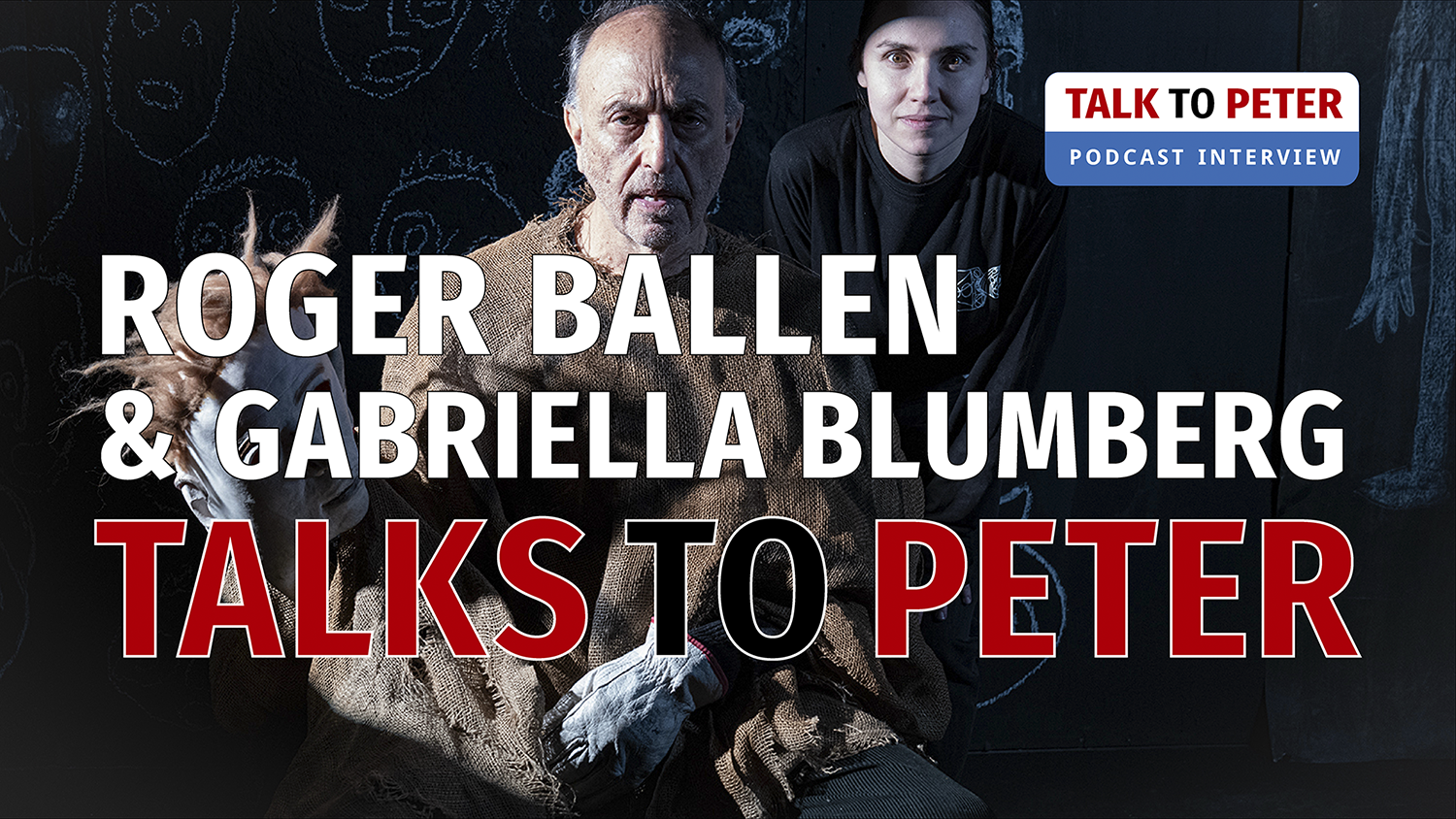
Writer and filmmaker Milisuthando Bongela was born in the Transkei, a country that no longer exists and which was widely regarded as a sham state used to justify the institutionalized racism of apartheid South Africa. And when the new Nonracial South Africa was formally inaugurated on the 27th of April 1994, the Transkei simply disappeared.
Milisuthando’s self-titled film Milisuthando explores this absurdist reality and uses it as a launching point for a powerful meditation on country, race, whiteness, propaganda, and many other things. This conversation with Milisuthando about the stories we tell and the stories we are told expanded my understanding of the world and myself. I hope it does the same for you.
PM: Hello. Thank you so much for talking to me.
MB: You’re very welcome. Hi, Peter.
PM: Hello. I’m so glad to have you in this conversation, because I’ve been wanting to talk to you for a very long time about your film.
MB: Yes, about two years now or something.
PM: So, it’s very easy for us to start talking about the film, but we need to bear in mind that people who haven’t seen the film and hopefully, you know, will get a chance to watch it in the future. So we just need to provide a little bit of background about your film. It’s called Milisuthando. Can you tell us in a nutshell? I mean, it’s a very difficult thing to nutshell - we can’t not talk about apartheid and we need to explain what the Transkei is. So there’s a lot there. So, you grew up in The Transkei, a country that no longer exists. So what was The Transguide in the context of apartheid?
So, I grew up in a small town called Butterworth or Gcuwa in what is now the Eastern Cape of South Africa. But when I was born there in 1985, it used to be called the Republic of Transkei, this area that I was born in. And when we were at school, filling out forms there, they’d always ask nationality and we’d always write ’Transkeian’.
So I grew up in a world where this national identity and a lot of national pride and pride in isiXhosa - isiXhosa history, culture, language. A lot of television was in Xhosa. So the news, cartoons sometimes, TV shows that were dubbed – like from the US or other countries – they were always dubbed in this language. And as a result of that, I didn’t really know that I was black or I didn’t know that I was living in apartheid or even what apartheid was, because it was a very small country about the size of Switzerland – it had 3 million inhabitants.
And there was a lot of, you know, state propaganda, which didn’t appear as propaganda – propaganda doesn’t usually appear as propaganda – it just reaffirms what you already think and feel, and you kind of don’t know where your own memory or thoughts start. So I grew up in this country, and our leader was Matanzima. And my parents had pretty nice jobs. My dad was working for the Department of Education in Transguide as a school inspector. He was a musician. He was an author. My mother was a teacher. And everybody on my street was like black and middle class, and everybody had a car and took briefcases to work. And they looked nice. And we had parties, and our concerns were very much about our lives.
And the extended families and grandparents, aunts, uncles were always around in the ways in which we lived. And even in the architecture of the homes – it was never just like a nuclear family. So everything I knew was very informed by this culture. And in 1990, I was five years old, and I remember one day – it was a Sunday – and I was taking a nap.
And I remember being woken up from the nap by all this noise around. And my mom woke us up and we all went to the streets, and there were thousands of people in the streets. And it looked very scary because I’d never seen that many people. I was like five years old and I was on my mother’s back, holding onto her back. And everybody was shouting and screaming and happy. But I couldn’t understand it – I was just frightened.
And we went back home after a while, back inside. And the grown ups didn’t behave like normal Sunday rituals – we didn’t have family prayers. There was champagne and they were drinking and everyone was kind of happy. And we were allowed to stay up later than usual.
And I realized much later that that was the day that Nelson Mandela came out of jail. And that is when my first consciousness of “something is not quite right, I don’t know, the full picture”. I had a sense of, “wait, there’s something else going on somewhere else”. And later we moved. Like a year or two later, we moved to a little town called East London, which was in South Africa, which is not far – it was only 100km away – but it was always a very different world; we always had to go through a border to get there.
And that is where I saw people who looked different, who spoke a different language, and their houses and the streets were always clean and big. And it’s where my parents’ demeanor would always, like, shrink, and they would suddenly speak English. Whenever they spoke English, they would be different. Whereas when we were home in the Transkei, they were very different.
And that is kind of, yeah, the place that I grew up in. And I only became conscious of the Transkei in 2013, when Nelson Mandela died, when I was 29. I was like “Wait a minute. This was another country actually, within South Africa. What happened to it? Why don’t we?...”
I grew up in a completely different system, but I thought that I grew up in apartheid South Africa, and very much identified with the black experience – because I grew up watching a lot of TV in the 90s, learning ’Simunye, We Are one’ and ’South Africa, We Love You’, and all those songs that informed that Rainbow Nation period and Mandela’s presidency. And we all kind of got sucked into that, and I truly believed that I came from Soweto and that I grew up in a township, and that I had been oppressed in the same way that other black people had been oppressed.
And I never really questioned that until I was older. And it’s only when I started making this film that I really began to ask questions – “Wait a minute!”
Because at Mandela’s funeral in 2013 – I remember going with my friends outside of his house when we had the vigils every night. And we went, and people were singing a struggle song that I’d sung many times before, a kind of anti-apartheid anthem, a very popular one in South Africa called ’My mother was a kitchen girl’.
My mother was a kitchen girl.
My father was a garden boy.
That’s why I’m a communist.
I’m a communist.
And I remember singing that song. But for the first time I said, “Wait a minute. I now feel like I’m lying”, because my mother wasn’t a kitchen girl in the domestic worker sense. And my father wasn’t a garden boy, which is what gardeners used to be called in South Africa – black gardeners. And it started with me, the images of like, my dad in a briefcase having a typewriter, and my mom, you know, wearing high heels every day to work. This contradicted what the majority of black people’s story is in South Africa. That’s when I said, “Wait, I grew up in this other place!” And so what I came to discover, through a lot of research and interviewing my family members and trying to understand politically what the Transkei was, which was actually a guinea-pig state invented by the apartheid regime to fulfill this idea of racial separation.
It was the first place that they built as a test case for this idea of full racial segregation, and apartheid was this notion where every race must be separate. Every culture, every ethnic group, has to have their own land, their own space where they have their own rulers, their own borders, their own system, their own language, and they run their own affairs.
But of course, white South Africa is South Africa. But where the Zulu belong is Zululand. Where the Xhosa belongs is Transkei and Ciskei, and where the Vendas belong is Venda, etc. And they saw the idea that all of us wanted to have our own land, and we always wanted our own nation.
And it did work for about 18 years, when the homelands – they were called Bantustans, these fake countries that were not recognized by anyone in the world. The Transkei wasn’t initially politically recognized, except by South Africa and Israel. Those were the only two countries that recognized it, that came to the inauguration of the presidents and the leaders, and that funded it. The United Nations would not recognize it. No other African country recognized it. Black South Africans certainly thought it was a sham state.
And it was just a sham. But living inside of it, we didn’t have access to the news coming from the rest of the country. And as a child, this sham produced this complexity of “I’m living inside the imagination of the racist, white South African regime and their plan. But I am benefiting from not having everyday white supremacy rule my life. I’m benefiting from speaking my language at school and my language being recognized, and my culture, and not seeing black people in a state of subjugation by other races every day”.
Of course there were white people in the Transkei. A lot of them left, but there were some who remained. And my sister reminded me that we lived next door to a white family in the Transkei. And I was like, “what are you talking about?” – I had no idea. But in my mind, they didn’t register as white because they didn’t dominate anybody, and they spoke isiXhosa. So in my child’s mind, they weren’t white in the sense that I came to understand what whiteness was later. And so the Transkei is the first example of what the dream and the wish and the desire of apartheid is, which is this racial segregation system, where it seems as if everyone’s just equal. But the truth is that, obviously, white South Africans, who were the minority group, and Afrikaners, who were even more of a minority within white South Africa – this was their dream. Apartheid was their vision, their desire to force the notion that they belong in Africa, to create an origin myth, to force indigeneity, like they are indigenous, even though it’s a contradiction, because, in many ways, they didn’t want anything to do with Africa.
They wanted nothing.They wouldn’t want the language. They didn’t want to ever admit that within their own blood is the blood of Koisans and the blood of Zulus and the blood of Xhosas. And they call themselves Europeans, even though they had…
PM: But they wanted the land!
MB: They wanted the land! That was the most important thing – is that apartheid for me, my definition of it, is the creation of a white homeland at the bottom of Africa to convince white people that they belong there, that their ancestors belong there, that they are from there, and that they are African. But of course, “let’s take the best piece of land for ourselves, and let’s relegate the worst parts of the country with no minerals, nothing, the most barren land, the most useless land, to the black people and convince them that it’s their homeland.
But actually the real Bantustan was South Africa, because that was then the one that was meant to be for the white people. And this was their vision. And I think it’s important to return to definitions, because my definition – as a Transkeian of apartheid – is different from a white South African in the 70s, right, a typical white South African. Because today they say apartheid was bad. Now they say, “Oh no, I want nothing to do with it. I never supported it”. But back then they were fully in support of it. It felt like a safe system. It gave safety, security, power, order, a sense of place and belonging. And it really fulfilled this dream of home, which is…a lot of Europeans who leave Europe and go certain other places are forever battling with this foundational question of homelessness, of forcing this idea of “where can we belong, what can be ours?”.
And you find that when they leave Europe to go settle in South America, North America, Australia, parts of Africa and Asia, it’s never a sense of settling that is about making sure that all living conditions are equal and fine for everybody. It’s always you’re settling onto someone, meaning I’m dominating you. I’m violating you. I’ve had to rape to have to to be part of this land.
And so all the European countries that participated in this, in order to become these settler colony states and to house these descendants of theirs who were in other countries had to do something to settle on top of other people. And apartheid is just the third third iteration of it. First, it was colonisation by the British and the Dutch, then it was a slavery. First, it was slavery, actually, slavery for 180 years by the Dutch. Then it was British colonization for 200 years. And immediately following that 200 years, apartheid for 48 years. And so, South Africa is a confluence and mixed masala of these histories. And apartheid is just the last iteration of something that was finessed, something that started in the 1600s, that was then finessed right up until the 1980s, 1990s.
And we are products of that, although from different generations. And I guess the film and my desire to really explore this history came from the question, “Who am I, actually?”. I thought I was a black South African, but it got complicated by this discovery late in life that “Wait – the Transkei almost participated and embraced apartheid”, as a notion of “leave us alone as Xhosa, people leave us alone. Let us live here without being bothered by anybody”. And I’ve I’ve been I’ve benefited from that kind of that, like peace, I guess, and like a lack of direct racial violation that somebody in any other township in South Africa, every single township in South Africa, every black person – and by black I mean anybody who is colored Indian, etc – experienced under apartheid..
PM: Yeah yeah, yeah. I mean, I am so struck by the fact that people are really good at just living in the status quo, you know, living in their reality and being oblivious to everything. But the thing about supporting apartheid – until I went to university, I came across one white person who dissented. A history teacher when I was in standard eight (15 years old).
Nobody else. Everybody else –. And I want to say nice people, you know, good people – came up with very interesting rationalisations for how things were. And I don’t want to start quoting any of them because it will make both of our skins crawl, I’m sure. But it is just amazing. So if you lived in a little liberal enclave, maybe you lived in a different reality. But for me, it wasn’t nearly everyone who supported apartheid. It was everyone.
MB: Exactly. But these days, if you look, you won’t find evidence of that because everybody is like, “No, no, no, no, I didn’t support it”. We always sound crazy as black people because it’s almost like we’re talking to ghosts, right? Because nobody ever wants to admit, “Yes, I was racist. I grew up racially conditioned to believe I’m superior to everybody who was not white.
Yes, I believed in these things and I enjoyed it. And it’s part of my foundation. And that doesn’t mean I’m evil. It means I was a subject of a system. And I also participated in fortifying that system with my actions and with my lack of dissent”. Or you’ll find that people always want to wrap themselves around the activists who paid with their lives, who paid with their freedom, who paid the price, who were white, right? Those few who joined the anti-apartheid movement and fought against apartheid. But the majority, as you say, accepted it.
And the thing is, what I’m looking at in this film and always in my writing, and in my work, is that it’s not just white South Africans who participated in and accepted apartheid.
PM: Yeah, it’s a difficult thing.
MB: Abdullah Ibrahim said in an interview once in a film, you know, “They created this thing and then they expected us to implement it”. And that’s the thing - we did implement it! The state created it –it was their vision, but it relied on the people’s implementation in order for it to work. And so it does mean something. And I was asking myself, what does it mean that for 48 years, black people in the majority did accept our inferiority and we did accept that, you know, we must be the ones that live in the shanty towns and the rural areas and the, you know, places that are not really meant for for human beings to thrive, and to accept that the white people do live in the nice houses and that this is their land, and we mustn’t go into the white people’s houses and we mustn’t go into their shops. Of course, there were those who fought against it, and they were silenced for many, many years. But the majority of people, you know, the domestic worker who works and raises white children for 40 years – her entire career – and the gardener who works there, and all of this interaction. What is it that they had to do to us to make us accept that we are pariahs on our own land, that we cannot speak our own language, that our culture and our religion must be something that we throw away and demonize, and we embrace something that belongs to somebody who you know does not like you.
PM: Yeah.
MB: And so what did they have to do to make everybody implement the system that oppressed all of us?
PM: So I think that “all of us” is key. And let’s dive into that a little bit, you know, a little bit more. But I think that we radically underestimate the power of propaganda and structure in terms of defining our reality. To the extent that my mother doesn’t know that she grew up in a propaganda police state. She doesn’t know. And even now I tell her that and she’s kind of like “But didn’t feel it that way. I didn’t notice that”. And that’s kind of the point, you know. You don’t notice it. The point of propaganda is you don’t notice it. It’s propaganda.
MB: Exactly. Yeah, exactly. I think a guiding question for me and my team, when we were beginning to make this film in around 2015/16, was “something was done to all of us”.
PM: Yeah.
MB: What was done to all of us to make us all believe? And it was different things that had to be done. But I think, you know, when we look at history, the lowest hanging fruit is always to blame each other, to blame someone. It was white people who committed apartheid. Regarding patriarchy, it’s the men who are in control, who dominate women, etc. And as you so rightly say, we underestimate the power of the force of propaganda, which is always this invisible thing.
PM: I’ve got this little propaganda machine, right here? (Peter pulls out his phone)
MB: Right. Yeah. Every day you put that into your pocket. Credo Mutwa called it a little tokoloshe.
PM: Yeah, yeah.
MB: He predicted many years ago, way before cell phones. He said in the future everybody will have a little tokoloshe that they walk around with and which lives in their pockets. I tokoloshe is an entity that takes your energy, that steals your power, that steals your agency as a human being.
PM: Yeah.
MB:And so propaganda – when it revealed itself, when we found all of these archives that belonged to the apartheid regime, which are in the film, they literally belong to the Ministry of Propaganda.
And the way we found them was also so…we were not really supposed to find them. It was not really kosher the way we found them, but we found them and we were like, “Oh my God, we have to use these”. Because now this is the singing canary, right? This is the Pandora’s box opening itself to say, this is what we did to convince the different races of their position.
And that was accompanied by textbooks, by music, and all kinds of, like, structures of the society to uphold and to support this notion of separate development, as they liked to call it, which is why we had the cartoons in isiXhosa – which I’m like, “Oh, this is great! We have our TV shows in Xhosa”.
So it feels good if you’re a benefactor of it. But we never look beyond as kids, to go, “Wait, this is coming from Pretoria”. Actually, this is not, you know, black power and black consciousness. It’s all part of the regime. Yeah, yeah.
PM: So you show in the film how the apartheid government literally went around kind of developing mythologies to imbue the Transkei with this kind of false history and false culture that overlaps real cultures. And you show this quite distinctly in the film. And then, of course, that was also the case with South Africa itself. And the Afrikaner Nationalist Party also had to…because Afrikaans is not a white language, It’s not a European language – it’s an African slave language essentially – maybe I’m being overly simplistic there, but it is not a white language. So they had to invent it, they had to invent mythologies and dress styles and anthems. And, you know, I think that all countries do this. In our case, both of those countries, South Africa and the Transkei, are so young. And neither of those countries exists in the way that they were born. You know, I don’t think that 1948 South Africa still exists, I don’t know…
MB: No…
PM: I mean, it’s got a long tail, but yeah. So countries have to be made. And, you know, even if you look at America where, as far as I know, you are now located, that constitution that they hold to be so sacred is also one of those documents. Yes. “Who are they going to be? What kind of people are we going to be? What anthems are we going to sing? What are we going to wear?
MB: Yeah. And Israel, to many extents, is one of the latest countries to also…for it now…it’s coming undone. But at the same time, we’re seeing really what it’s made up of, and it’s a copy-paste of a lot of these types of invented states.
PM: Totally, and the other side of the Israel thing is that I often try – and I’m not being sympathetic – but I’m just trying to explain what it’s like. People need to bear in mind what it’s like to live embedded inside the Israeli state.
MB: Yes, yes.
PM: And if any human being is embedded in a propaganda police state, they tend to acquiesce.
MB: Exactly. And a lot of the times, you encounter it from a young age, and it braids itself into your memory, into your identity. And it’s very difficult to refuse what it’s giving you, because what good propaganda does is that it takes everything you value, and it perverts it ever so slightly that it’s almost like you don’t throw it away – you’re more concerned with all the ways that you can identify with it. And it takes your fears and it makes you feel like they’ve been represented, and there’s an order around them. They’ve been constructed in such a way that “I don’t have to fear because there’s something else taking care”. And so that’s what happens when good propaganda is in use and you really merge your identity, you believe in the state, you believe in the mythology. You know, the idea of Jan van Riebeeck, even: the image of him, he was printed on the money in South Africa and the origin story written into the songs, into the textbooks, into the identities of people. It’s very difficult to separate people from that and to have to inform them that this is a fake photograph – this man did not look like this. They had to invent this image. The volspiel thing, you know, people going every afternoon after school to participate in these national games, these cultural games. This is all copy pasted. They had to travel to Sweden, to Switzerland, to France, in the 1930s, when they picked up on these health-and-fitness regimes and classes that used to exist for young women and young men.
And so, it’s difficult to then let go of that, if that’s been your whole life. And it’s painful to let go and you don’t want to let go, because then you are left with no ground beneath you. Then you ask, “Actually, is my whole identity built on a lie?” And so, psychologically, it’s extremely difficult to ask people to disavow everything that they’ve known and loved and cared about. And until we understand that and we deal with human beings at that level – and even ourselves, we are not…I’m not beyond being indoctrinated. And this is the thing!
PM: Me too!
MB: We always think about it as if, you know, those people over there.
PM: Those people over there. Yeah!
MB: We’ve all imbibed some form of myth, and myth making is part of history telling and retelling. And so, the way we edited the film, the way we told the story, it’s not that I was sympathetic to white South Africans in apartheid – it’s just that I understood partly what they felt, because I also wondered “What I didn’t know about apartheid – does that make me a bad black person?” If I didn’t know about it, and I didn’t have memories of tear gas and memories of violence, there’s a chance that maybe another peer of mine living in Pretoria or living in Durban might not have known, even though it’s so obvious. There were so many obvious things.
PM: But it’s so obvious. The obviousness, in a way, is the point. It’s so obvious you can’t see it, you know. What you were just saying now, talking about how propaganda works and why it works, you were using a lot of words like “belief” and “image”. And it seems to me that it’s very linked to religion, and christianity and missionary programmes.
MB: Yeah. It’s the same. Yeah. They use the same symbols and the same rituals, to be quite frank. In holding and rearing a human life, you need rituals which are basically shared events in which a group of people witness the same thing. A group of people participate in the same thing, and a group of people forge belonging, you know, we’ve all come together to witness this thing and do this thing together. It means we are bonded. And bonding is really necessary to human relationship-forming.
And you can have evil rituals, and you can also take rituals and turn them into things that are, that are good for people, that feel good, that lead to peace and harmony and balance in people’s lives. And so I feel like they’re partners: religion, the state, education systems, the media – under which propaganda falls under – and politics, these are all bosom buddies in perversion.
PM: The fact that we vote for a single being!
MB: To lead us!
PM: Like God. It’s the same
MB: Exactly.
PM: Yeah. So it’s time for new stories.
MB: Yes! And I think before we kind of…I think it’s always very interesting to return to those same stories, to really fish for the deeper meanings in them. And I think for me, I feel like in South Africa, we’re never going to move on from apartheid until we ask ourselves what was apartheid?
PM: Yeah, like, what was it really?
MB: Yes, because we all think we know what it is. And we don’t have the same definition of it, it’s not the same. And the thing is, South Africa was balkanised so successfully and there were so many South Africas within one land that is now South Africa. And so many different, complex, nuanced experiences that I think it’s very important to return to the scene of the crime historically. There’s an essay that JM Coetzee wrote in 1990 or 1991 called ’The Mind of Apartheid’, in which he says, “You know, before we bury the cadaver, before we bury the body of apartheid – as it was ending at that time – we do have to ask ourselves ’what are we burying?’”, so that we really understand this thing so that it can never come back to us.
But I think we needed to get out and we stuck with the very simple definition. And now my generation, who were children back then when it ended, and who were essentially the benefactors of this new country, this new culture, this new identity, we now are the grown-ups.
And I felt the need to go and return to the past to ask, wait, “What was this thing?” Because we’ve been bestowed the duty of making sure that it never happens again. How do we do that? You have to understand the thing that you are destroying before you destroy it.
PM: For me, what makes it hard to wrap our fingers, our minds, around this thing is the scale of it. It was all of our lives – it was the whole of reality, the whole economy, religion, everything that was published. It was reality.
MB: Yeah.
PM: And you know, we moved so easily into the new South Africa. We had some teething difficulties. But I just think white people got the best deal, you know, especially the white upper middle class, with having to sacrifice – I was going to say very little – but nothing, nothing.
MB: Nothing.
PM: Yeah. I mean...
MB: Maybe standing in shared queues – I feel like they’ve just had to stand in shared queues now and maybe it takes a little longer to go to the post office and a little longer to go to the bank.




LESS
Writer and filmmaker Milisuthando Bongela was born in the Transkei, a country that no longer exists and which was widely regarded as a sham state used to justify the institutionalized racism of apartheid South Africa. And when the new Nonracial South Africa was formally inaugurated on the 27th of April 1994, the Transkei simply disappeared.
Milisuthando’s self-titled film Milisuthando explores this absurdist reality and uses it as a launching point for a powerful meditation on country, race, whiteness, propaganda, and many other things. This conversation with Milisuthando about the stories we tell and the stories we are told expanded my understanding of the world and myself. I hope it does the same for you.
PM: Hello. Thank you so much for talking to me.
MB: You’re very welcome. Hi, Peter.
PM: Hello. I’m so glad to have you in this conversation, because I’ve been wanting to talk to you for a very long time about your film.
MB: Yes, about two years now or something.
PM: So, it’s very easy for us to start talking about the film, but we need to bear in mind that people who haven’t seen the film and hopefully, you know, will get a chance to watch it in the future. So we just need to provide a little bit of background about your film. It’s called Milisuthando. Can you tell us in a nutshell? I mean, it’s a very difficult thing to nutshell - we can’t not talk about apartheid and we need to explain what the Transkei is. So there’s a lot there. So, you grew up in The Transkei, a country that no longer exists. So what was The Transguide in the context of apartheid?
So, I grew up in a small town called Butterworth or Gcuwa in what is now the Eastern Cape of South Africa. But when I was born there in 1985, it used to be called the Republic of Transkei, this area that I was born in. And when we were at school, filling out forms there, they’d always ask nationality and we’d always write ’Transkeian’.
So I grew up in a world where this national identity and a lot of national pride and pride in isiXhosa - isiXhosa history, culture, language. A lot of television was in Xhosa. So the news, cartoons sometimes, TV shows that were dubbed – like from the US or other countries – they were always dubbed in this language. And as a result of that, I didn’t really know that I was black or I didn’t know that I was living in apartheid or even what apartheid was, because it was a very small country about the size of Switzerland – it had 3 million inhabitants.
And there was a lot of, you know, state propaganda, which didn’t appear as propaganda – propaganda doesn’t usually appear as propaganda – it just reaffirms what you already think and feel, and you kind of don’t know where your own memory or thoughts start. So I grew up in this country, and our leader was Matanzima. And my parents had pretty nice jobs. My dad was working for the Department of Education in Transguide as a school inspector. He was a musician. He was an author. My mother was a teacher. And everybody on my street was like black and middle class, and everybody had a car and took briefcases to work. And they looked nice. And we had parties, and our concerns were very much about our lives.
And the extended families and grandparents, aunts, uncles were always around in the ways in which we lived. And even in the architecture of the homes – it was never just like a nuclear family. So everything I knew was very informed by this culture. And in 1990, I was five years old, and I remember one day – it was a Sunday – and I was taking a nap.
And I remember being woken up from the nap by all this noise around. And my mom woke us up and we all went to the streets, and there were thousands of people in the streets. And it looked very scary because I’d never seen that many people. I was like five years old and I was on my mother’s back, holding onto her back. And everybody was shouting and screaming and happy. But I couldn’t understand it – I was just frightened.
And we went back home after a while, back inside. And the grown ups didn’t behave like normal Sunday rituals – we didn’t have family prayers. There was champagne and they were drinking and everyone was kind of happy. And we were allowed to stay up later than usual.
And I realized much later that that was the day that Nelson Mandela came out of jail. And that is when my first consciousness of “something is not quite right, I don’t know, the full picture”. I had a sense of, “wait, there’s something else going on somewhere else”. And later we moved. Like a year or two later, we moved to a little town called East London, which was in South Africa, which is not far – it was only 100km away – but it was always a very different world; we always had to go through a border to get there.
And that is where I saw people who looked different, who spoke a different language, and their houses and the streets were always clean and big. And it’s where my parents’ demeanor would always, like, shrink, and they would suddenly speak English. Whenever they spoke English, they would be different. Whereas when we were home in the Transkei, they were very different.
And that is kind of, yeah, the place that I grew up in. And I only became conscious of the Transkei in 2013, when Nelson Mandela died, when I was 29. I was like “Wait a minute. This was another country actually, within South Africa. What happened to it? Why don’t we?...”
I grew up in a completely different system, but I thought that I grew up in apartheid South Africa, and very much identified with the black experience – because I grew up watching a lot of TV in the 90s, learning ’Simunye, We Are one’ and ’South Africa, We Love You’, and all those songs that informed that Rainbow Nation period and Mandela’s presidency. And we all kind of got sucked into that, and I truly believed that I came from Soweto and that I grew up in a township, and that I had been oppressed in the same way that other black people had been oppressed.
And I never really questioned that until I was older. And it’s only when I started making this film that I really began to ask questions – “Wait a minute!”
Because at Mandela’s funeral in 2013 – I remember going with my friends outside of his house when we had the vigils every night. And we went, and people were singing a struggle song that I’d sung many times before, a kind of anti-apartheid anthem, a very popular one in South Africa called ’My mother was a kitchen girl’.
My mother was a kitchen girl.
My father was a garden boy.
That’s why I’m a communist.
I’m a communist.
And I remember singing that song. But for the first time I said, “Wait a minute. I now feel like I’m lying”, because my mother wasn’t a kitchen girl in the domestic worker sense. And my father wasn’t a garden boy, which is what gardeners used to be called in South Africa – black gardeners. And it started with me, the images of like, my dad in a briefcase having a typewriter, and my mom, you know, wearing high heels every day to work. This contradicted what the majority of black people’s story is in South Africa. That’s when I said, “Wait, I grew up in this other place!” And so what I came to discover, through a lot of research and interviewing my family members and trying to understand politically what the Transkei was, which was actually a guinea-pig state invented by the apartheid regime to fulfill this idea of racial separation.
It was the first place that they built as a test case for this idea of full racial segregation, and apartheid was this notion where every race must be separate. Every culture, every ethnic group, has to have their own land, their own space where they have their own rulers, their own borders, their own system, their own language, and they run their own affairs.
But of course, white South Africa is South Africa. But where the Zulu belong is Zululand. Where the Xhosa belongs is Transkei and Ciskei, and where the Vendas belong is Venda, etc. And they saw the idea that all of us wanted to have our own land, and we always wanted our own nation.
And it did work for about 18 years, when the homelands – they were called Bantustans, these fake countries that were not recognized by anyone in the world. The Transkei wasn’t initially politically recognized, except by South Africa and Israel. Those were the only two countries that recognized it, that came to the inauguration of the presidents and the leaders, and that funded it. The United Nations would not recognize it. No other African country recognized it. Black South Africans certainly thought it was a sham state.
And it was just a sham. But living inside of it, we didn’t have access to the news coming from the rest of the country. And as a child, this sham produced this complexity of “I’m living inside the imagination of the racist, white South African regime and their plan. But I am benefiting from not having everyday white supremacy rule my life. I’m benefiting from speaking my language at school and my language being recognized, and my culture, and not seeing black people in a state of subjugation by other races every day”.
Of course there were white people in the Transkei. A lot of them left, but there were some who remained. And my sister reminded me that we lived next door to a white family in the Transkei. And I was like, “what are you talking about?” – I had no idea. But in my mind, they didn’t register as white because they didn’t dominate anybody, and they spoke isiXhosa. So in my child’s mind, they weren’t white in the sense that I came to understand what whiteness was later. And so the Transkei is the first example of what the dream and the wish and the desire of apartheid is, which is this racial segregation system, where it seems as if everyone’s just equal. But the truth is that, obviously, white South Africans, who were the minority group, and Afrikaners, who were even more of a minority within white South Africa – this was their dream. Apartheid was their vision, their desire to force the notion that they belong in Africa, to create an origin myth, to force indigeneity, like they are indigenous, even though it’s a contradiction, because, in many ways, they didn’t want anything to do with Africa.
They wanted nothing.They wouldn’t want the language. They didn’t want to ever admit that within their own blood is the blood of Koisans and the blood of Zulus and the blood of Xhosas. And they call themselves Europeans, even though they had…
PM: But they wanted the land!
MB: They wanted the land! That was the most important thing – is that apartheid for me, my definition of it, is the creation of a white homeland at the bottom of Africa to convince white people that they belong there, that their ancestors belong there, that they are from there, and that they are African. But of course, “let’s take the best piece of land for ourselves, and let’s relegate the worst parts of the country with no minerals, nothing, the most barren land, the most useless land, to the black people and convince them that it’s their homeland.
But actually the real Bantustan was South Africa, because that was then the one that was meant to be for the white people. And this was their vision. And I think it’s important to return to definitions, because my definition – as a Transkeian of apartheid – is different from a white South African in the 70s, right, a typical white South African. Because today they say apartheid was bad. Now they say, “Oh no, I want nothing to do with it. I never supported it”. But back then they were fully in support of it. It felt like a safe system. It gave safety, security, power, order, a sense of place and belonging. And it really fulfilled this dream of home, which is…a lot of Europeans who leave Europe and go certain other places are forever battling with this foundational question of homelessness, of forcing this idea of “where can we belong, what can be ours?”.
And you find that when they leave Europe to go settle in South America, North America, Australia, parts of Africa and Asia, it’s never a sense of settling that is about making sure that all living conditions are equal and fine for everybody. It’s always you’re settling onto someone, meaning I’m dominating you. I’m violating you. I’ve had to rape to have to to be part of this land.
And so all the European countries that participated in this, in order to become these settler colony states and to house these descendants of theirs who were in other countries had to do something to settle on top of other people. And apartheid is just the third third iteration of it. First, it was colonisation by the British and the Dutch, then it was a slavery. First, it was slavery, actually, slavery for 180 years by the Dutch. Then it was British colonization for 200 years. And immediately following that 200 years, apartheid for 48 years. And so, South Africa is a confluence and mixed masala of these histories. And apartheid is just the last iteration of something that was finessed, something that started in the 1600s, that was then finessed right up until the 1980s, 1990s.
And we are products of that, although from different generations. And I guess the film and my desire to really explore this history came from the question, “Who am I, actually?”. I thought I was a black South African, but it got complicated by this discovery late in life that “Wait – the Transkei almost participated and embraced apartheid”, as a notion of “leave us alone as Xhosa, people leave us alone. Let us live here without being bothered by anybody”. And I’ve I’ve been I’ve benefited from that kind of that, like peace, I guess, and like a lack of direct racial violation that somebody in any other township in South Africa, every single township in South Africa, every black person – and by black I mean anybody who is colored Indian, etc – experienced under apartheid..
PM: Yeah yeah, yeah. I mean, I am so struck by the fact that people are really good at just living in the status quo, you know, living in their reality and being oblivious to everything. But the thing about supporting apartheid – until I went to university, I came across one white person who dissented. A history teacher when I was in standard eight (15 years old).
Nobody else. Everybody else –. And I want to say nice people, you know, good people – came up with very interesting rationalisations for how things were. And I don’t want to start quoting any of them because it will make both of our skins crawl, I’m sure. But it is just amazing. So if you lived in a little liberal enclave, maybe you lived in a different reality. But for me, it wasn’t nearly everyone who supported apartheid. It was everyone.
MB: Exactly. But these days, if you look, you won’t find evidence of that because everybody is like, “No, no, no, no, I didn’t support it”. We always sound crazy as black people because it’s almost like we’re talking to ghosts, right? Because nobody ever wants to admit, “Yes, I was racist. I grew up racially conditioned to believe I’m superior to everybody who was not white.
Yes, I believed in these things and I enjoyed it. And it’s part of my foundation. And that doesn’t mean I’m evil. It means I was a subject of a system. And I also participated in fortifying that system with my actions and with my lack of dissent”. Or you’ll find that people always want to wrap themselves around the activists who paid with their lives, who paid with their freedom, who paid the price, who were white, right? Those few who joined the anti-apartheid movement and fought against apartheid. But the majority, as you say, accepted it.
And the thing is, what I’m looking at in this film and always in my writing, and in my work, is that it’s not just white South Africans who participated in and accepted apartheid.
PM: Yeah, it’s a difficult thing.
MB: Abdullah Ibrahim said in an interview once in a film, you know, “They created this thing and then they expected us to implement it”. And that’s the thing - we did implement it! The state created it –it was their vision, but it relied on the people’s implementation in order for it to work. And so it does mean something. And I was asking myself, what does it mean that for 48 years, black people in the majority did accept our inferiority and we did accept that, you know, we must be the ones that live in the shanty towns and the rural areas and the, you know, places that are not really meant for for human beings to thrive, and to accept that the white people do live in the nice houses and that this is their land, and we mustn’t go into the white people’s houses and we mustn’t go into their shops. Of course, there were those who fought against it, and they were silenced for many, many years. But the majority of people, you know, the domestic worker who works and raises white children for 40 years – her entire career – and the gardener who works there, and all of this interaction. What is it that they had to do to us to make us accept that we are pariahs on our own land, that we cannot speak our own language, that our culture and our religion must be something that we throw away and demonize, and we embrace something that belongs to somebody who you know does not like you.
PM: Yeah.
MB: And so what did they have to do to make everybody implement the system that oppressed all of us?
PM: So I think that “all of us” is key. And let’s dive into that a little bit, you know, a little bit more. But I think that we radically underestimate the power of propaganda and structure in terms of defining our reality. To the extent that my mother doesn’t know that she grew up in a propaganda police state. She doesn’t know. And even now I tell her that and she’s kind of like “But didn’t feel it that way. I didn’t notice that”. And that’s kind of the point, you know. You don’t notice it. The point of propaganda is you don’t notice it. It’s propaganda.
MB: Exactly. Yeah, exactly. I think a guiding question for me and my team, when we were beginning to make this film in around 2015/16, was “something was done to all of us”.
PM: Yeah.
MB: What was done to all of us to make us all believe? And it was different things that had to be done. But I think, you know, when we look at history, the lowest hanging fruit is always to blame each other, to blame someone. It was white people who committed apartheid. Regarding patriarchy, it’s the men who are in control, who dominate women, etc. And as you so rightly say, we underestimate the power of the force of propaganda, which is always this invisible thing.
PM: I’ve got this little propaganda machine, right here? (Peter pulls out his phone)
MB: Right. Yeah. Every day you put that into your pocket. Credo Mutwa called it a little tokoloshe.
PM: Yeah, yeah.
MB: He predicted many years ago, way before cell phones. He said in the future everybody will have a little tokoloshe that they walk around with and which lives in their pockets. I tokoloshe is an entity that takes your energy, that steals your power, that steals your agency as a human being.
PM: Yeah.
MB:And so propaganda – when it revealed itself, when we found all of these archives that belonged to the apartheid regime, which are in the film, they literally belong to the Ministry of Propaganda.
And the way we found them was also so…we were not really supposed to find them. It was not really kosher the way we found them, but we found them and we were like, “Oh my God, we have to use these”. Because now this is the singing canary, right? This is the Pandora’s box opening itself to say, this is what we did to convince the different races of their position.
And that was accompanied by textbooks, by music, and all kinds of, like, structures of the society to uphold and to support this notion of separate development, as they liked to call it, which is why we had the cartoons in isiXhosa – which I’m like, “Oh, this is great! We have our TV shows in Xhosa”.
So it feels good if you’re a benefactor of it. But we never look beyond as kids, to go, “Wait, this is coming from Pretoria”. Actually, this is not, you know, black power and black consciousness. It’s all part of the regime. Yeah, yeah.
PM: So you show in the film how the apartheid government literally went around kind of developing mythologies to imbue the Transkei with this kind of false history and false culture that overlaps real cultures. And you show this quite distinctly in the film. And then, of course, that was also the case with South Africa itself. And the Afrikaner Nationalist Party also had to…because Afrikaans is not a white language, It’s not a European language – it’s an African slave language essentially – maybe I’m being overly simplistic there, but it is not a white language. So they had to invent it, they had to invent mythologies and dress styles and anthems. And, you know, I think that all countries do this. In our case, both of those countries, South Africa and the Transkei, are so young. And neither of those countries exists in the way that they were born. You know, I don’t think that 1948 South Africa still exists, I don’t know…
MB: No…
PM: I mean, it’s got a long tail, but yeah. So countries have to be made. And, you know, even if you look at America where, as far as I know, you are now located, that constitution that they hold to be so sacred is also one of those documents. Yes. “Who are they going to be? What kind of people are we going to be? What anthems are we going to sing? What are we going to wear?
MB: Yeah. And Israel, to many extents, is one of the latest countries to also…for it now…it’s coming undone. But at the same time, we’re seeing really what it’s made up of, and it’s a copy-paste of a lot of these types of invented states.
PM: Totally, and the other side of the Israel thing is that I often try – and I’m not being sympathetic – but I’m just trying to explain what it’s like. People need to bear in mind what it’s like to live embedded inside the Israeli state.
MB: Yes, yes.
PM: And if any human being is embedded in a propaganda police state, they tend to acquiesce.
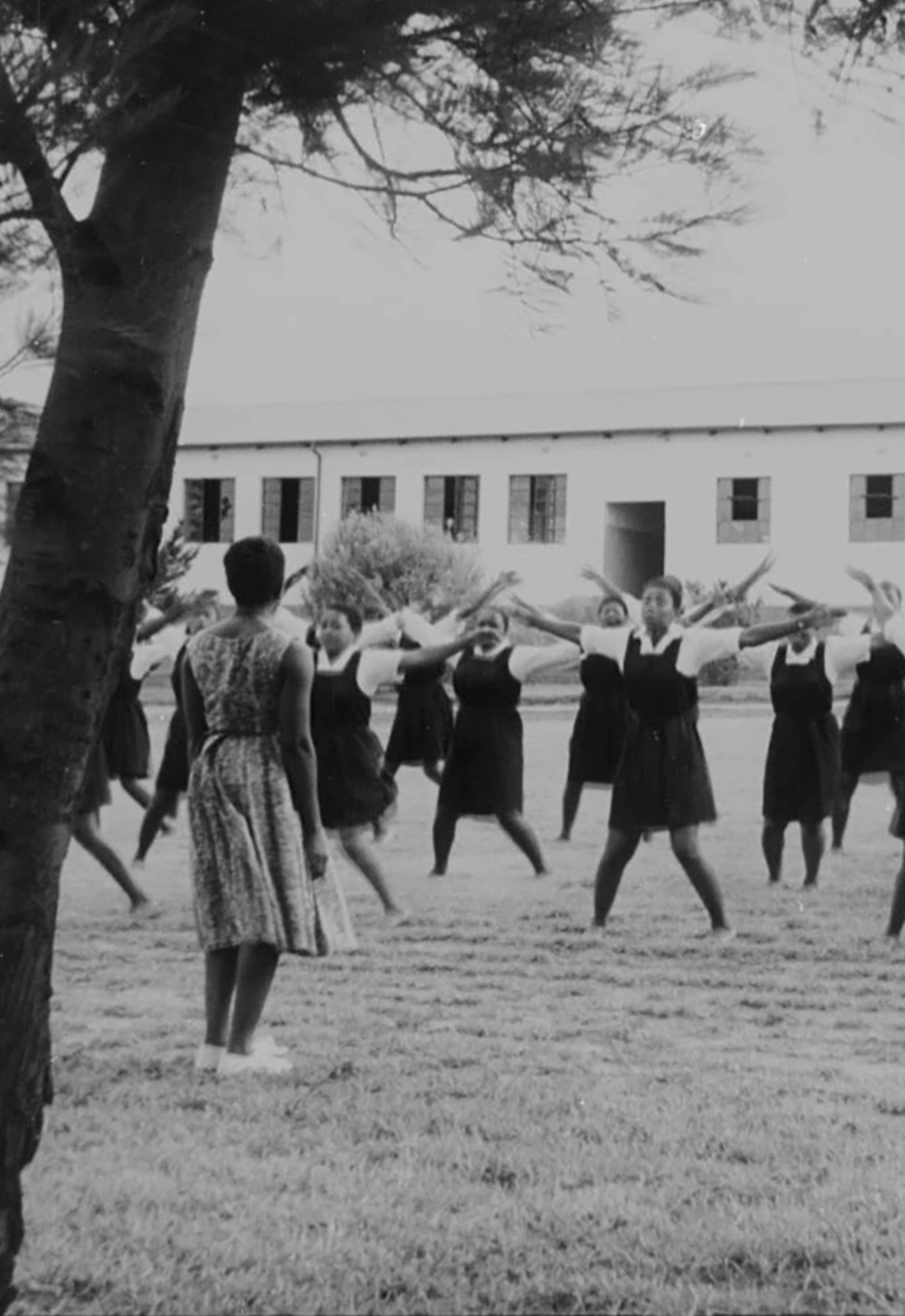
MB: Exactly. And a lot of the times, you encounter it from a young age, and it braids itself into your memory, into your identity. And it’s very difficult to refuse what it’s giving you, because what good propaganda does is that it takes everything you value, and it perverts it ever so slightly that it’s almost like you don’t throw it away – you’re more concerned with all the ways that you can identify with it. And it takes your fears and it makes you feel like they’ve been represented, and there’s an order around them. They’ve been constructed in such a way that “I don’t have to fear because there’s something else taking care”. And so that’s what happens when good propaganda is in use and you really merge your identity, you believe in the state, you believe in the mythology. You know, the idea of Jan van Riebeeck, even: the image of him, he was printed on the money in South Africa and the origin story written into the songs, into the textbooks, into the identities of people. It’s very difficult to separate people from that and to have to inform them that this is a fake photograph – this man did not look like this. They had to invent this image. The volspiel thing, you know, people going every afternoon after school to participate in these national games, these cultural games. This is all copy pasted. They had to travel to Sweden, to Switzerland, to France, in the 1930s, when they picked up on these health-and-fitness regimes and classes that used to exist for young women and young men.
And so, it’s difficult to then let go of that, if that’s been your whole life. And it’s painful to let go and you don’t want to let go, because then you are left with no ground beneath you. Then you ask, “Actually, is my whole identity built on a lie?” And so, psychologically, it’s extremely difficult to ask people to disavow everything that they’ve known and loved and cared about. And until we understand that and we deal with human beings at that level – and even ourselves, we are not…I’m not beyond being indoctrinated. And this is the thing!
PM: Me too!
MB: We always think about it as if, you know, those people over there.
PM: Those people over there. Yeah!
MB: We’ve all imbibed some form of myth, and myth making is part of history telling and retelling. And so, the way we edited the film, the way we told the story, it’s not that I was sympathetic to white South Africans in apartheid – it’s just that I understood partly what they felt, because I also wondered “What I didn’t know about apartheid – does that make me a bad black person?” If I didn’t know about it, and I didn’t have memories of tear gas and memories of violence, there’s a chance that maybe another peer of mine living in Pretoria or living in Durban might not have known, even though it’s so obvious. There were so many obvious things.
PM: But it’s so obvious. The obviousness, in a way, is the point. It’s so obvious you can’t see it, you know. What you were just saying now, talking about how propaganda works and why it works, you were using a lot of words like “belief” and “image”. And it seems to me that it’s very linked to religion, and christianity and missionary programmes.
MB: Yeah. It’s the same. Yeah. They use the same symbols and the same rituals, to be quite frank. In holding and rearing a human life, you need rituals which are basically shared events in which a group of people witness the same thing. A group of people participate in the same thing, and a group of people forge belonging, you know, we’ve all come together to witness this thing and do this thing together. It means we are bonded. And bonding is really necessary to human relationship-forming.
And you can have evil rituals, and you can also take rituals and turn them into things that are, that are good for people, that feel good, that lead to peace and harmony and balance in people’s lives. And so I feel like they’re partners: religion, the state, education systems, the media – under which propaganda falls under – and politics, these are all bosom buddies in perversion.
PM: The fact that we vote for a single being!
MB: To lead us!
PM: Like God. It’s the same
MB: Exactly.
PM: Yeah. So it’s time for new stories.
MB: Yes! And I think before we kind of…I think it’s always very interesting to return to those same stories, to really fish for the deeper meanings in them. And I think for me, I feel like in South Africa, we’re never going to move on from apartheid until we ask ourselves what was apartheid?
PM: Yeah, like, what was it really?
MB: Yes, because we all think we know what it is. And we don’t have the same definition of it, it’s not the same. And the thing is, South Africa was balkanised so successfully and there were so many South Africas within one land that is now South Africa. And so many different, complex, nuanced experiences that I think it’s very important to return to the scene of the crime historically. There’s an essay that JM Coetzee wrote in 1990 or 1991 called ’The Mind of Apartheid’, in which he says, “You know, before we bury the cadaver, before we bury the body of apartheid – as it was ending at that time – we do have to ask ourselves ’what are we burying?’”, so that we really understand this thing so that it can never come back to us.
But I think we needed to get out and we stuck with the very simple definition. And now my generation, who were children back then when it ended, and who were essentially the benefactors of this new country, this new culture, this new identity, we now are the grown-ups.
And I felt the need to go and return to the past to ask, wait, “What was this thing?” Because we’ve been bestowed the duty of making sure that it never happens again. How do we do that? You have to understand the thing that you are destroying before you destroy it.
PM: For me, what makes it hard to wrap our fingers, our minds, around this thing is the scale of it. It was all of our lives – it was the whole of reality, the whole economy, religion, everything that was published. It was reality.
MB: Yeah.
PM: And you know, we moved so easily into the new South Africa. We had some teething difficulties. But I just think white people got the best deal, you know, especially the white upper middle class, with having to sacrifice – I was going to say very little – but nothing, nothing.
MB: Nothing.
PM: Yeah. I mean...
MB: Maybe standing in shared queues – I feel like they’ve just had to stand in shared queues now and maybe it takes a little longer to go to the post office and a little longer to go to the bank.
_Milisuthando%20Documentary%20Stills%20-%2003%20-%20DEFAULT.jpg)
_Milisuthando%20Documentary%20Stills%20-%20C_O%20Milisuthando%20Bongela.jpg)
Because now you have to share the line with everybody. Your domestic worker, your gardener, all these people you thought you’d never share space with. And there’s also…
PM: Maybe you’ll get your domestic worker to do it for you instead!
MB: To go to the grocery store. Yes, but I think the...
PM: Yeah, yeah, yeah, I know what you mean.
MB: I mean, in many ways, white South Africans actually had to give up on their righteousness politically, whether they like it or not. The sense of “we were right”, the sense of “it was our country and we created it”. And “what more do these black people want? We’ve already created and given them so much”; this idea that they were the generous ones, that they were the ones that came with goodness to dark Africa that needed all the saving.
This idea of being a savior, this idea of being good and right and holy and and righteous, I think. But there hasn’t been room within the public discourse or anywhere in our country where they can really grieve that loss.
That’s why the racism always shows up in other ways, you know, in interpersonal things or in the way people vote. They haven’t had to give anything material up in many ways, but at a psychological and personal level, this idea that the world, not just South Africa but the world, embraced the black people and our story and our experience, and white South Africans were the perpetrators. And of course, to deal with that, I think that is an interesting…I’m interested in what that has done to the imagination of white people in South Africa in terms of their identity and what are the vestiges of that grief in everyday life?
Which is why, in the film, I interview my white friends rather than my black friends. I interviewed all of them – I have the footage – but I was very curious about “Wait a minute – racism is usually one directional”. It’s usually from white to black or from white to brown or from white to other, all over the world.It’s hardly the other way around.
PM: Yeah. From lighter to darker, bluntly.
MB: Exactly. And so, it’s still happening in many ways, you know, in covert ways. When I was growing up and it tried to suppress and like, where is that thing? You can’t just snap your fingers and something’s gone. That thing is still in the mind, and the dream, the memory. How does that dog let itself out of captivity every now and then? And I think…yeah, like I’m very curious about that. Because I don’t believe that you can just clap your hands and something’s gone. It’s not. Where is it?
PM: Especially for people who are like my age and slightly older. Because, for me, and I think actually for the whole country at the time – the 2nd of February 1990 — when that thing was starting to become over, it was a giant fucking relief.
MB: Really?
PM: Certainly for me and I think for all white people – “this thing’s over, we don’t have to do this anymore”.
MB: Wow. Really.
PM: Look, I don’t think that was actually a universal sentiment, but that’s certainly what I experienced, and nearly everybody I know. Because it’s hard work being an oppressor, you know, even if you don’t have to do anything, just psychologically. And when I say that kind of thing, I’m not in any way making that experience more primary, you know, I’m not elevating that experience.
MB: Yeah, yeah, I get it.
PM: But it is….it’s exhausting. I mean, you know, I was different because, like, I never fitted into that country. I didn’t know about the braaivleis and the sunny skies and the Chevrolets and all of that. So I was kind of alienated, anyway, from white culture. But so for me, it was just like it was probably the best day of my life, the 2nd of February 1990, and then the 27th of April, 1994. Those days are very important.
But it was…I just remember everyone becoming more human. You know, their persons expanding black, white, Indian, colored, everybody in Durban.
MB: Yeah.
PM: That said, I was wondering last night how many white people voted for the ANC in 1994. It was like 1%.
MB: Yeah.
PM: I thought it would be like seven, eight, maybe 15, but I...
MB: 1%?
PM: Yeah. And I think actually less than 1%.
MB: So that for me, it’s not a surprise. But I am curious about it. I’m curious about the contradiction of feeling this relief, and about all the ways in which Mandela went from being the leader of black people in South Africa in their political struggles to suddenly becoming the most beloved figure by white people. How? And the question that I always have is, “Why did you love Mandela?”
PM: Well, he gave them a gift, an easy way out, to be honest? But that's simplifying. He did a lot. He was amazing. And, you point to that in the film, the deep love that he had for all of us and that we had for him. But he was also a really good marketing mechanism.
MB: Yes, a marketing mechanism. Exactly. For the absolution of white South Africans. Yeah. The question has always been for me, like, you know, black people know, generally speaking, why we love Mandela – and both the Mandelas – and that class of people who liberated the country. But I’m always curious about the reasons why white people love Mandela so much.
And what did that symbol mean? And is it the same thing as the rest of us? Yes, I think, as human beings, that the entity of the human in terms of representing these universal principles of love and forgiveness and and reconciliation that we all yearned for at the time is one thing. But at a political level, where does that show up politically?
And it’s in your statement of “Did they vote for the ANC?” What’s that contradiction? Where does that live in the mind? How does it live in the mind? How does it affect their memory of that time and even their political identity right now? Like how?
PM: So the thing I was going to say, it’s for me, it’s no accident that the people who really love Mandela – I remember back at the time – were like heads of advertising agencies. They seem to really like him genuinely, you know, because he told a good story that resonated easily. But you say like, black people loved both Mandelas…
MB: Yes.
PM: And I think a more interesting question – well, not a more interesting question, but another interesting question – is about how white people relate to Winnue.
MB: Yes.
PM: Because hers is a much more nuanced story.
MB: Very nuanced, for everybody. She’s not an easy character to characterize. Neither of them are actually, when you really look into it. But I think her image was much more difficult to capture in the way of advertisers and marketing, and even the ANC, you know – she was a crisis for the ANC at that time.
PM: Yeah, yeah. Because, you know, the thing about that transition – and we can talk a little bit about the Rainbow Nation and that period from 1995 and 2000. But we had the Truth and Reconciliation Committee, which in many ways, had its limitations. And it was powerful and it wasn’t powerful and it let people off the hook and so on. But I don’t think that South Africa has ever come face-to face with the dark, unpalatable things that happened – during apartheid, during that transition period, during the ANC’s history. I think there’s so much dark stuff that just doesn’t fit, doesn’t tell a good story, you know.
MB: Yeah, it’s very difficult, yeah.
PM: Very difficult. You know, one of the most amazing things I’ve ever watched was Desmond Tutu, bless his heart, trying to get Winnie to tell the complete truth. And there’s no way she could have told the complete truth. It was just too complicated. And nobody else was telling the complete truth.
MB: Exactly. And nobody else was asked and expected to confess in that way. Yeah, yeah.
PM: So, I don’t want to spend too much time talking about Winnie because that’s a whole rabbit hole. But I think she was an extraordinary person. And what she did...
MB: Somebody worth studying, really, an entity, a force, a force of nature, a force of politics in our lifetimes who is definitely worth revisiting in the same way that apartheid is worth revisiting, in the same way that the TRC…I think the scholars, the artists, the thinkers, the people who carry the the cultural imagination of the country, it’s very important from as many angles as we can to return to these reference points, because something did happen in the TRC that was irrefutably successful, right? Even as there were so many disappointing elements of it afterwards.
And I think we like to privilege the disappointments because we are afraid to look at the moment where the reference point for this thing – which is actually drawn, I feel, a lot from the cultural identity of Africans – could have only been made to happen by Africans. This idea that, “Wait, we do need to repair” and there does need to be this reparative justice in a very particular way that draws it from isintu ubuntu. It’s drawn from our cultures and how, within our own families and clans, there are rituals. They are things that are done to repair and to restore balance when something has been imbalanced, when there’s been a crime, when somebody has raped another. There are rituals that exist in a lot of our cultures to cleanse that thing that has happened, both for the victim as well as the perpetrator.
So this facing of the two together, the notion of that comes from ubuntu isintu and these cultures that make up the people in southern Africa, the indigenous people of southern Africa. Then that cultural identity informs the political response to apartheid. And that process is something that should have carried on. I think that there is no universe in which it could have been done perfectly.
PM: Yeah, of course.
MB: I cannot imagine a world in which we had a perfect TRC. The whole idea is that here are the ingredients. Here’s what you need to make this meal. Now, if you give up in the middle of making the meal, you’re never going to experience the taste and the nourishment of the meal. And I think for many understandable reasons, and because it’s a very, very difficult task, I don’t know another country that’s done it properly or well. Maybe the country that’s continued to try and attempt it that we could look to is Rwanda.
PM: Yeah.
MB: But the idea of bringing together all these different races and languages and cultures around something so heated and so alive as race and racism, it’s a very difficult task. But I feel because it’s so difficult, that’s exactly where we should be applying our best minds to say, “What would it mean to revisit this thing and to try to see?” Because we still need strategies for healing.
PM: Yeah.
MB: We still need it so desperately, And this was such a good reference point and a good strategy for repair that that involved everybody. I’m reading this incredible paper at the moment that talks about Mandela’s inauguration on the 10th of May, 1994, as a public ritual, one that very much resembles indigenous rituals, where you have everybody in the same room, you have the religious leaders of the Christians, the Jews, the Muslims, the Hindus, and the Africans all on one stage. And all of these enemies. You had Gadhafi, Castro, you had Americans – Clinton was there. And all of these leaders, all in one room, and doing something, witnessing something, where there’s song, where there’s ritual, where there’s dancing, where there are all these elements. And we all felt good on that day. Everybody, from left to right, everybody there. That feeling of goodness we remember, those who were there. The pride, that thing that now we are so afraid to acknowledge existed.
PM: Yeah.
MB: We’re so afraid to revisit it because now it seems we were naive. Or we believed in the rainbow nation. But, as you said in one of your questions, there was a goodness – we remember that feeling.
PM: Yeah. I’m so glad you said that! Because like…even if you do think that the Rainbow Nation was a whitewash, the TRC wasn’t. And if you think it was, just go back and watch any of it.
MB: Yeah, exactly.
PM: Some of the most...
MB: Watch them. Exactly.
PM: I mean, I’m nearly tearing up just thinking about the abstract notion of them, because.
MB: That’s what I do. I watch them.
PM: The pain, the love…
MB: All of it, all of it. The encounter, the facing, the…what do you call it? Not the confessions. When people go and talk about what happened to their children, what happened to their husbands, that is such a powerful thing to hear somebody testimony. And that was enough for some people. Because they knew they were going to get their husbands back. They knew that they’d lost their children.
PM: Yeah, justice is never real in that sense. Justice doesn’t return things.
MB: No, not unless it involves this process where the victim has to say, “this is what happened”. So in our cultures, when somebody has died, in those first few days of the funeral, people come to the family house together. And traditionally the widow – say it’s the husband that’s died, or the mother or the child of somebody. The mother, usually surrounded by her close family members, is sitting on a mattress or sitting in a room, and people come in and they come and ask what happened? And the mother has to tell over and over and over and over again what happened. And even at the funeral, even though we all know that this person has died and they got killed in this way, somebody at the funeral has to relay that story.
And it’s in that repetition, it’s in that repetition, that this isolating, painful thing gets shared amongst the community members. You break it up, and I’m giving a little bit of it to you to hold and giving it a little bit of to you, and I’m giving it a little bit to you. And in that, it’s literally being pulled out and shared.
PM: That’s so interesting. And really beautiful.
MB: That’s the procedure in most of our rituals. It’s constant repetition. So that this thing that I’m experiencing alone that’s very, very painful is not just mine to hold. I’m sharing it with other people. And this was one of the basics of the TRC and the fact that the victims must come to say, and the perpetrator has got to hear that – because in them listening, their humanity is also being aroused at that point. Because before then all they’ve done is “I’ve silenced it, I’ve erased it, I’ve extricated it from my mind”.
And the difference between South Africa and Germany and how we handled the aftermath of our histories is that in Germany, the perpetrators ’disappeared’. Either they were killed or they were only given the status of “You are evil. Let’s just extricate you. And you don’t exist anymore. And you are bad and only bad”. And the people who then live after that have to inherit this extreme shame around this identity, as if these people were other, not human beings, as if they were…they did something so extraordinary that it’s not human. That thing shows up again later. It doesn’t…it’s not finished.
Whereas in South Africa, the difference there is that we couldn’t throw away and erase and pretend that the perpetrators who’d done those things didn’t exist. They had to listen to what the other people did, and then it was left to them. So it’s like that thing of, “I’m telling you about it and you must now hold it and you will decide what to do with that”. You in your own mind can say, “snip, snip – I don’t want anything to do with it”. Or you can let it arouse and let you…it can force you to become naked again with yourself as a human being.
And in that negotiation, that’s when the humanity of the perpetrator is also then touched. And then another pathway can be accessed. And that’s what that process does, is that you cannot throw away people. There’s a Xhosa saying, Akukho bin eyakhiwe ngokwemo yakho – “there’s no bin that is in the shape of you a human being”.
PM: I love it.
MB: You can’t throw away people. And if you think you can, then the thing is going to visit you 50 years from now. It’s going to come back the same. And I feel like what’s happening in Israel is a ghost of what happened in Second World War Europe, and the way that the Nazis were all like, “Let’s just destroy them. Let them die”, And I’m like, “No.” You always have to find a way to rebalance. And it involves both the perpetrator and the victim.
PM: So, you talk a lot about ancestors in the film. And, I have obviously grown up with this concept, you know, given the cultures around me. And I’ve always been very much like, “Yeah, the ancestors. Cool – nice story, nice vibe”. And then I started thinking about my ancestors, and “Hmmm, I’m not so sure I want them hanging around!”. But then I was thinking about how I am still shaped by influences that impacted on my great grandmother, who I didn’t know, and how both my grandmothers were completely fucked by the First World War and the Second World War, you know. They never recovered from there. And I think that whole generation didn’t.
And we move on, and we forget about these things that really actually affect our own individual psyches generations later. That shit is real.
MB: Oh please! Very, very real. And the family psyche.
PM: Yeah.
MB: You can move 20,000 km away. You can move to another country. It’s still going to follow you. You’ll find it in Australia. You find it in South Africa. It’ll be there.
PM: Yeah, yeah.
MB: I think for Nguni people, for sub-Saharan Africans, as Bantu, our whole relationship to our ancestors is very different, I think.
PM: Well, I do think so. And I was thinking of all of – and it’s difficult to talk about this in ways that don’t seem kind of vaguely racist – but I think of all of the the older African people that I grew up around with – mostly Zulu and Xhosa, some Vendas, some from Zimbabwe – and those old people are different to the older people that I know from Europe. They just…the realities that they’ve grown up in are so fundamentally different. And this is where the possible racism occurs, but I feel that they are genuinely wiser than my European ancestors – for genuine reasons. They weren’t as…their cultures had been more consistently tended over generations. Whereas, with my ancestors, it was all just a giant mess; the beginning of the industrial revolution and Europe reforming itself. And it wasn’t a sense of cultural continuity or wisdom, it was more like everyone for themselves, I think. I don’t know. But that’s the sense I get.
MB: I think there’s a kernel there. And this is, I think, what is facing a lot of descendants of European enterprise, whether it’s through colonization or slavery or apartheid or whatever,is this question of, “who were our ancestors and what did they do to create us. And what are we created from, and what is the relationship of that creation to violence?”
Yeah. And wisdom, you know, is a question that comes up. Yes, you’ll obviously find individuals, you know, there’s individual wisdom. But, collectively, it’s very difficult to try to find wisdom in a place that has not first encountered honesty of lies. If there’s a lot of lying that had to come with your story, if there’s a lot of lying and suppressing and oppressing of both self and other – whether that’s the gender dynamic or a class dynamic or a racial dynamic – it’s very difficult to try to find wisdom from that kind of thing.
PM: Yeah.
MB: There’s another saying in Xhosa – Abantu abakhusela ngesandla esinye babulale ngesinye – ’the hand that kills cannot be the hand that heals’. If you’re a killer, you cannot also turn around tomorrow and think you can heal somebody. So, yeah, I feel like this is not an essential or inherent lack of wisdom. It’s just generations and generations and generations of people who’ve been brought up within political systems and economic systems that have really destroyed or suppressed the humanity of those people. It’s then very difficult to compare yourselves to another culture where, despite the difficulty, despite the oppression, despite all of these things that have happened, those African people that you’re talking about, you know, the grandmothers, aunties, or the uncles – I know what you’re talking about it. I know this thing that you’re seeing in them because I see it, I see the same thing. And that is because black people have been forced to contend with the truth, the truth of their own reality, memories, history, self, and then the truth of having to live in a lie that has been imposed in them. And they know it’s a lie, but they still go to work.
PM: Yeah,
MB: But they have access to a portal that is elsewhere. So when black people were being forced to come to Johannesburg to work as domestic workers and gardeners and laborers, you know, for nine months of the year, you’re living the lie when you’re around the white man. You’re lying about your name – it’s not John, it’s actually Jonga.
So you know that there’s a split personality where you know that you’re living a lie around your name, you’re speaking in a different language, accent, etc. But there’s an elsewhere that exists where – either in your own home or in the homeland or somewhere else – you can take off Joe or John, you can take off the fact that you’re a gardener. And in fact, at home you are a very important figure within the institution and the constitution of the family, because nobody can do any ritual without you, because you are the spear holder. At the farm, they might think of you as nothing. but when you make that track back home – which is two times a year or whatever, or sometimes every weekend, if you’re lucky – your role changes and then you are again one with the truth. So, what you’re picking up in these elderly people is their connection to that universal truth.
And, again, it’s not inherent. It is because of this forced status as people on the periphery. The periphery is where the truth is.
PM: Yeah, yeah, yeah. It’s also where the best parties are!.
Your film was thought provoking and this conversation is so thought provoking. I’ve got a million different streams of thought, and my reality is shifting as we’re talking. But my father was utterly a product of empire, you know. He was British and he literally thought that he was better than everybody else in the world because he was a white Englishman. He would say that. It was not even subconscious. That’s what he thought.
MB: Yeah.
PM: And God, it damaged him so much, you know. And I’m not asking for sympathy for these colonizers. I’m just saying that’s how it was.
MB: Yeah, yeah…
PM: But it is that thing because he never had the pleasure – or the pain – of living with the truth. It wasn’t, you know, part of his reality.
MB: Yeah. Always having to live in this posture of suppressing somebody.
PM: Yeah. And I mentioned in the notes that I sent to you, that story that Hilton Als wrote about Richard Pryor in the late 90s. It’s really beautifully expressed and I encourage anybody who’s listening to this interview to also go look this up. But Als explains really eloquently how the person experiencing the racism is given this double awareness. They’re given the awareness of why the racist is behaving like they are, or at least constructing some kind of awareness around it. And then they’re having their own awareness of being in that, experiencing the racism. But the racist has no real awareness. He is just repeating a behaviour or whatever. But he doesn’t have the consciousness to be fully present.
And it’s a weird tragedy. But I often see that. Like in a restaurant, say, there’s a white asshole dude – you know, they’re still around – and you can even take race away, you can just reduce it to class. And he thinks he’s the boss, you know, and everybody who’s serving him is laughing at him, but he doesn’t see it because he doesn’t have that basic awareness of being present in that physical space.
MB: Yeah. Yeah, I don’t disagree. I think that is the tragedy of…But at the same time, that’s why the last ten years or 15 years, with the advent of the internet and social media, this is why it’s been such a fast-tracking of kind of a globalizing of the story of colonized people, enslaved people, all over the diaspora, all over the world. We’re speaking one language. We’ve always spoken one language, but we didn’t have access to each other before. And so, that is why the rise of the right sentiment, all over the world, is coming up again. Because it touched that nerve where there was this recognition that the global majority, you know, we can see that Europe is the last to see itself.
PM: Yeah.
MB: And it still thinks it’s the site of all truth and superiority. And it’s like, “the joke’s on you, actually”.
PM: Yeah.
MB: And to watch that in real time has been one of the most remarkable things to experience. And then to see the rise of Trump and all the little Trumps that are forming everywhere else and how the white frightened imagination is grabbing onto that all over the world, from Argentina to South Africa to Germany, you know, to America, Canada. And it’s it’s I watch it with interest, you know. Of course it’s upsetting and you get angry. But you take a step back and you watch with interest. “Oh, okay, this is all information”. At the end of the day, we’re all getting information that this thing is still present.
PM: So again, in a way it’s kind of like that situation we just spoke with Als talking about Richard Pryor. So I grew up, in the colonies, from a very privileged position. But it felt like a colony. Certainly Natal felt like a colony of Europe.
MB: Architecture, language, postures. Yeah. Everything..
PM: I grew up in little England, basically. So still growing up there, I nonetheless...Because the center is, there in Europe, you know, up there north, like a few thousand kilometers away, the only way you can experience colonialism or empire is to be in one of the colonies. You can’t experience it from Europe. Because you’re not there, you’re at the center, not at that periphery, not in those annexes.
MB: In Europe. You’re just experiencing it through this acquisition of unexplained wealth, just like, “Wow we have all this money”. And it’s like we don’t ask, where did the money come from? Yeah.
PM: So I’ve asked a few people this very simple question, “Why were the first World War and the Second World War world wars?” The answer is very simple. It’s one word, but people just can’t get it. I’ll ask people – for like half an hour – they just don’t get it. And I go “colonialism”, and then they’re like, “it’s not that”. But like that’s why they were world wars – it was a European war and all of their colonies had to take part. And it was all over the world. They’d colonized the world. I think that virtually nobody in Europe or even in Africa knows about how Africa’s borders were basically defined by Europe.
MB: We do!
PM: We do, but for most people, it’s just not part of their reality.
MB: Yeah. And it’s not part of the education. Yeah. It’s not part of the education.
PM: Yeah. Schools in Germany aren’t taught about colonialism.


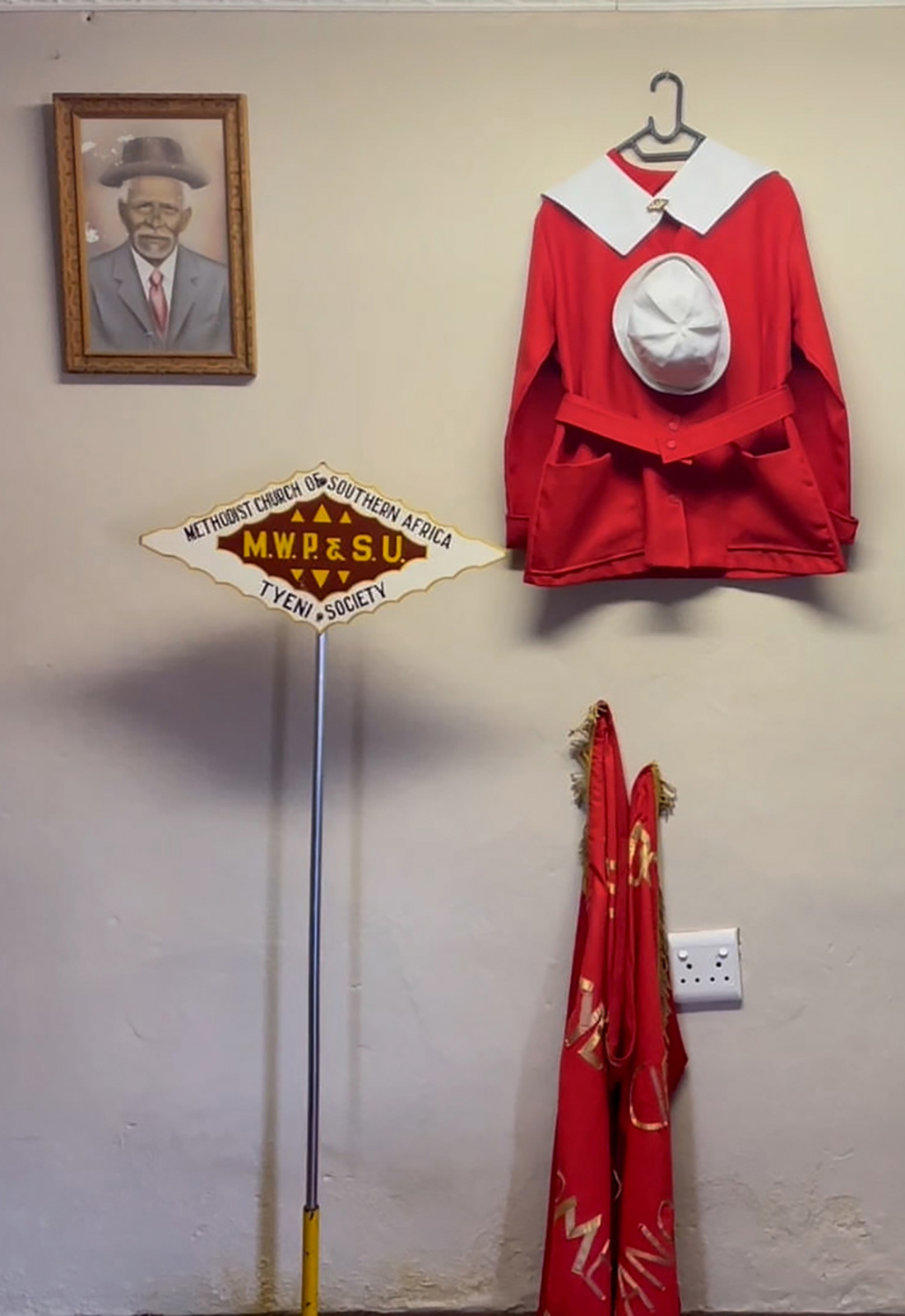
MB: No, they’re not taught about [unclear]. They’re not taught about Namibia. They’re not taught about colonialism. I remember being in Germany once and speaking to a group of students there at university and talking about colonialism and having to explain what it is. And I was extremely shocked at university level that these, like, bright eyed, kind of earnest-looking kids in their 20s did not know this.
And one of them was so concerned because a Ghanaian student was meant to come on a student exchange there and suddenly they couldn’t make it because of a visa issue. And they were so incensed about this idea of a visa, you know, why did they have to carry a visa? “We don’t need a visa when we go to Ghana.Why do they need a visa?” And to kind of draw the bigger picture for them, they were quite shocked to learn that Germany had been central to the creation of these borders and the maintenance of them and the extraction of the wealth. And I realised that it’s very similar in England; it’s very similar in these other countries where there has been this divorcing from the reality of “how did we acquire all of this wealth and power?”.
PM: And how do you actually understand history without understanding colonialism? You’re basically then just beginning at the 20th century.
MB: Yeah.
PM: And in fact, that’s not even true because there were still colonies in the ’70s. In a sense, there still are colonies but there were literally still colonies in the ’70s. Yeah. So it’s not something that happened in the 1600s.
MB: No. And it’s not taught in school. And I think that a lot of people don’t value history. It’s also not the most valued subject, especially now. Yeah. And so there’s a lot of people walking around with…we all have very different perceptions of where we come from and what we’re even living in. And I think that’s why it’s so tragic to live in an age of algorithms, is that they really exploit those differences and those ignorances against each other.
PM: Yeah. I mean, that thing about picking up my phone and it being a little propaganda device, I think there I think we can actually do stuff about that. But legislation and stuff like, we could insist that if I open a news tab, I see a variety of news. All of that could be legally prescribed. But we’ve just handed everything over to these tech pros, and we’ve given them the world and we’ve given them a whole reality, and there’s no sense of accountability.
MB: Yeah, it’s beginning now, but I didn’t even want to give them my attention.
PM: Yeah. I’m actually, but also the internet used to be amazing. Now, it’s basically just a boring endless scroll. You go onto like three sites and just scroll all day. And I’m actually wondering if there will come a point where people just secede from the internet and return to real life because the internet is just boring.
MB: I mean, I’m starting to see things like that here. Younger people who’ve been raised in it and for whom it’s not this amazing thing because it’s all they’ve known, and they really are yearning for human contact, real life, analogue tactility, all that stuff. I am an optimist. I think human beings always invent the things that they need, and when they no longer need them, they just discard them.
PM: Yeah.
MB: Yeah, yeah. I don’t imagine that it’ll be a snap of the finger and suddenly is all gone. But we are living in an age where it’s a battle for our souls, really. Really. And I think AI is like the one of the final frontiers where souls are being snatched and usurped. And I think because of the types of creatures we are, there is also a deep desire to be who we are. Even as there is a fear to be exactly who we are as human beings, we also deeply desire to be living creatures.
PM: Yeah. Because, I mean, you know how much you might value nice things and nice cars, etc. the only thing we truly have is ourselves.
MB: And this thing! (picks up phone)
PM: Yeah, yeah. Nothing else really even exists.
So I have a very simple question. But it’s a dense question. What does it mean to belong?
MB: I mean, I think it’s different for each of us. There’s some level of difference, but there’s also some shared something in there for each of us.
I think it’s to be seen, any place where you as a person are really seen and held appropriately, and your humanity is treated with delicacy, respect, regard, and is gazed upon with care. I don’t think it’s an extrinsic thing. I think it’s something that exists between us as human beings, us in nature. It is to be seen and also to have the privilege of seeing another. So it’s a shared thing, belonging.
And that can be kind of constructed within a family, within a clan, within a friendship, within a relationship, within a society. And again, it’s one of those things that can be perverted. The sense of belonging can also be perverted to force certain ideas of dominance over others.
PM: As we’re seeing now...
MB: But, yeah, I think it’s to have a place, whether it’s in someone’s gaze or someone’s embrace or a home or a school. And I think all of us, as human beings, every single one of us is always contending with this. Nobody escapes. Just being on this earth and being a person. In even the most Aryan of Aryan groups, somebody is battling – “Do I belong?” You know, even in the most same, same places, where we’re all women and we’re all dark skinned and we’ve all gone through certain things and we all are intelligent, but there’ll always be somebody who’s like, “do I really belong here?”.
So I think it’s this immutable, kind of intangible essence of what it means to be here. And, it’s something that I don’t think you can fully ever catch it and capture it forever. Yeah. It’s a feeling. Once you do have it, it leaves and then it returns. And the fight is to find a way for it to return.
PM: Yeah. I’m glad you pointed out the kind of interrelationality of belonging. And, in a way, I think that’s one of the main things that your film is about – the fact that we are all interpersonal beings, that we are all made up of each other, and of so many kinds of strands of things that we’re not even aware of. What do you think the relationship between nostalgia and belongingness is?
MB: It’s a good question. I think that a lot of belonging resides in nostalgia, and vice versa. This idea of “there was a time when”, “back in the day”, “when I was younger”, “in the old days”, when, you know, it was good or it felt safer or I knew less and I was more innocent and my mother, my home, was together. And it was before something terrible happened to rupture the scene.
PM: Yeah.
MB: I think we are always nostalgic for the past or some element of the past – not all of it. And it’s the parts that we pick and choose to take with us into our story of what my life is and what your life is, that for me, are the elements that make up nostalgia.
PM: Yeah.
MB: There’s also a saudade in it. You know, that Portuguese concept of yearning for something that is not there anymore. So there’s always this element of yearning, which is, I think, what fascism takes and perverts: a yearning for order and structure, a yearning for surrendering and letting somebody else – you know when you’re a child, somebody else is controlling the reality; someone else tells you what to eat; someone else is worrying about how the roof is going to stay on. You know, there’s some element where you can let go and just be held.
And I think fascism takes those things and turns them around and kind of makes them into like a big superstructure, where to some degree there is relief in order.There is relief in neat roads and everybody marching in line wearing a uniform. We don’t… it’s not a disgusting thing. We can theorise it and intellectualise it as terrible and bad. But when you’re inside the formation, there’s something that feels good about, you know, being the one that’s in that line because there’s a sense of belonging in that.
And I think the two go hand in hand. And I certainly had to contend with what this means in the context of the Transkei, you know, to take it back to the film. And it’s something that I had to fight for because it was dangerous to think of the Transkei as a legitimate place, even within my own team.
I had to sell it to my team – “Hey, guys, by the way, this was a legitimate place”. And some of the people in my team were like, “No, it wasn’t. This was a sellout state. Full stop. I don’t want to engage. I don’t want to think further about it. You cannot tell me that it was anything else”. And I had to take them seriously as people who grew up in Soweto or Durban or other parts of the country where it could be seen as this terrible place. But then I had to think, “Oh, but I have good memories of this place”. I felt good to some degree. Yes, there were bad things happening all over the place there, but there was also this other thing. And they’re not separate from each other. It’s not possible to actually fully segregate them.
PM: Yeah, totally. And that is the great difficulty. As I said in the notes that I sent to you, my experience of the Transkei as a young kid and then as a teenager and young adult was also that strange sense of relief from the apartheid state. And I knew that the Transkei was a strange place and I understood that not everything was legitimate, but it was still like…apartheid was so overwhelming, it was so everywhere. And the two places where I managed to escape from it in my life were the Transkei and also Hillbrow in the 80s, just briefly, and even even in the 70s, as a young kid walking around Hillbrow, it was a different place, and it’s changed so much now…
MB: Because there were mixed people there?.
PM: Yeah, there were mixed people, and even like the notion of whiteness, you know, there wasn’t this predominant…there were lots of Europeans, you know, like German people and Italian people, still being German and Italian, not being South African. It felt a little bit like New York in a way, just the kind of everythingness, which was such a relief compared to the kind of militarized authoritarian state that I was used to.
And it’s also interesting how people can live in authoritarian states and not even realize they are.
MB: Yeah, that’s the success of the authoritarian state.
PM: Yeah. Like “everything’s fine” – like those cartoons where they wandered off the edge of the cliff, but nobody’s told them that the cliff has ended,, and they are in mid air and suddenly they realise it.
MB: Yeah…
PM: Your firm explores and depicts a lot of dynamics across race, gender, class. And as you say somewhere – I’m not sure if it was in the film or in one of your interviews – “These are dynamics that we can’t erase”. My question to you is, can these dynamics, which are often rooted in so much terrible history and personal suffering and pain, and death sometimes,can they make us collectively richer? Can they make us healthier and better people in the future?
MB: I think that they do. We don’t have a choice but to contend with that very difficult truth. I think it’s our tendency as human beings, no matter which side of history we fall on, to hold on to our victimhood. It’s a tendency in relationships – if you have a partner or a close friend or a colleague, you always want to hold on to yourself as the victim. You hardly go, you know, “this fight could have really been avoided by me understanding that you perceive reality very differently from me because we’re not in the same reality”. It’s usually, “I’m blaming you for doing this” – and that’s something we all share as human beings.
Now, a successful culture is one that is able to transcend that, that to make its people see that “Yes, to not use the victimhood to hold us back and to hold us, remain us in our victimhood”, so that we can always say we’re the victims and everybody else is the perpetrator.
It’s rather one that integrates both the perpetrator and the victim’s experiences into the understanding of the people. And I think the richness comes from that – it’s in seeing that “I am made up of the hardships of others and I’m made up of the crimes of others and what they’ve had to do in order to be..”, and then your perspective is wider.
And when you have a wider perspective and a larger portion of the truth on your side, that’s what creates the rich experience. But it’s difficult to swallow the truth, because the truth is not binary. It’s not neat. It’s not as simple as we’re told. It really constantly splinters and it’s complicated.
And, you know, I think every artist, every person who picks up a pen and is responsible for influencing the minds of others, whether you’re in television or anyone who has the power to tell a story and influence how other people think and feel, it’s a responsibility, it’s a duty, to constantly question.
Do we all do that? Absolutely not. Absolutely not. But, you know, truly, if you’re trying to engage in real love work or real liberation work or real truth work, you don’t abide by any other rule. And in the richness…that’s why you can have, you know, many poor people, materially poor people, who are very, very wealthy in other ways compared to people who live in very fancy places in Monaco or in France or in England or whatever. Because the richness comes from “How close am I to the universal truths? How close am I to the truth of nature?”
And that’s why you can have the richest man on earth be the most impoverished, in our eyes. We can see how impoverished that person is inside, how tortured of a soul he is, even though he’s got trillions of dollars, right?
And it’s not a shock to me that he's also a South African. It’s a very interesting thing that here is a white South African man at the helm of the world, with another white South African man – that guy, Peter Thiel – tinkering about at the sites of power at the same time that these Afrikaners have found a way to victimize themselves thirty years later. You know, create this notion that they are the victims.
And I always say that white South Africans, in many ways, are the luckiest white people in the world, because of this proximity to Abantu, to black people from southern Africa. One of the luckiest, because the truth is everywhere around, you can’t avoid it. And if you choose, you can access another portal by integrating and understanding ubuntu and understanding the people that you’ve been around for 400 years, by speaking the language or trying to learn the language and trying to learn this other universe that has been so glaringly true. And at the same time, like white South Africans are also the ones, in recent history, who have had to contend with their stories becoming, you know, their story kind of being made bare naked and rendered untrue. And so they have to deal with that truth in a way that white Americans really aren’t. And British people certainly aren’t.
PM: Yeah.
MB: And so they are close again to like wrestling with “Who are we. What is our identity?’” And it’s this proximity to Abantu that is the thing that’s going to propel the human race forward. That’s why it’s so interesting right now that South Africa comes up – I live in New York – comes up in very interesting ways in in world politics in the global discourse, morally speaking, ethically speaking, even though right now we’re in hot water, which I feel is also manufactured hot water, to kind of take down the image of, “you guys don’t have any moral authority over the West”.
PM: Yeah.
MB: It’s interesting that this little country, with a very clear sense of like a moral compass as it relates to human relations, is the one that is both the hope as well as the…the forces of destruction are also right there, embodied by Elon Musk and that guy and all of those other people who are part of that camp, that are then following that. I find it quite interesting.
PM: Yeah. I mean, I must say that growing up in South Africa has been one of the great gifts of my life.
MB: Me too.
PM: And I cannot overstate that. Just the insights it gives you into the nature of human existence, the richness I’ve got from – not just my friends – but the cultures that surround me. You know – Zulu culture, also Hindu culture and Muslim cultures, Venda culture, Xhosa culture, these things are so rich and they’ve just taught me so much.
And I do think that if you grew up in South Africa, you learn about the world in a very specific way that is not available to most people.
MB: Not to exceptionalise us, but yes, there is something that has to be named there. It’s not to say it might not exist in other places, but there’s a very particular presence of it.
PM: Yeah.
MB: This thing where you do have the world there, but in an African context. Whereas here (in New York), you have the world here, but the dominant culture is still very Western European in terms of the everyday culture. Whereas in South Africa that thing is complexified because it’s the African, it’s the Asian, it’s the European, all coming together to create that reality.
PM: Yeah. And I do totally reject that notion of South African exceptionalism, because it’s too close to the American version. It’s too based on the fact that we’re a white portal as well, and we have these nicely marketable stories that are not really true.
MB: Yeah. That’s the shallow side of it. That’s the shallow side of it. The deep side of it is this other thing that that as I said, I don’t know when last in, in any inauguration in our history recently where you had, you know, a very astute leader who is a black political leader and at the same time you have the Hindus, the Jews, the Muslims, the Christians, the indigenous peoples of Africa, the Khoisan, all represented at this very, very publicly viewed thing, which is the reference point for, you know, the Mandela’s inauguration, a moment to return to, to go, “What was that?”
PM: Yeah. Even today, you know, South Africa is still a very, very divided country, possibly more than it was 15 years ago or whatever. But one thing that I always take great comfort in is the fact that all of the faith-based organizations largely came together against apartheid. Obviously not the NG Kerk. But I remember all of the multi-faith protests in the late ’80s and ’90s. It was all of the South African religious strands coming together. And I always thought that was really beautiful.
MB: Definitely. And they inform their constituencies, the people who go to those places. That aspect is taken seriously, it’s not just people who must be there to tick a certain box. South Africans are very faithful people. You don’t find a lot of people who don’t believe, whatever the belief is. We are people of faith. Whether what we do with that faith is up to the individual. But there is this reverence for the spirit and spiritual. Yeah, yeah.
PM: Totally, and it’s everywhere in a sense.
I have one final question for you. It’s a slightly complicated question, though. So, something that has been very clear to me all my adult life, and maybe even beforehand, is that human beings are ultimately generally subordinate to systems and structures.
And these structures include language and fiction and religion and state and presidents and currencies, etc. John Lennon’s ‘Imagine’ asks us to imagine the erasure of various things. Imagine there’s no heaven, there’s no hell, no country, no religion, no possessions. But none of these things existed in the first place. We just imagined them into being in the first place.
So, my final question to you is this – and I think I think it relates very much to your film – how can we build better imaginations, both individually and collectively, to take us into the future? And I know it’s not an easy question.
MB: I like that question. It’s a good question. I don’t think it’s an easy one to answer.
PM: Yeah.
I personally, in my work and in my life, have always returned to this notion that my imagination is actually all I have to create my reality in the future. I can fight all day long against the perpetrators of oppression, both in the past and now – I tried so hard to be an activist through my writing and through my work, and I realised I’m not actually an activist. Activists, like journalists, adhere to a very particular way of being in the world and a very particular posture around the things that they are trying to take down. And you have to be very good at articulating the problems, and I want to be good at that. And I’ve tried.
But I think my role more – as as I’ve become older and realized that I am an artist – which is a title that I don’t take lightly, and it’s something that I didn’t feel like I have a right to because I didn’t go to art school, which is such a limited view of it – but I come from a very, very artistic people. My family, my lineage, we are the artists, we are the storytellers, we are the history keepers, we are the ritual keepers.
And so I was fortunate enough to be born within a culture, a home, a clan, that really maintains that quite effortlessly. And it’s a duty to not concern myself with things that I do not have as much influence over, to recognize that, yes, these are the things that we have to fight against.
But what is going to be a weapon? And as a writer and an artist, and now a filmmaker, it’s to pull out the next world – that’s my role. You have to imagine the next world. And that’s very difficult to imagine if you consider all the things that have happened and you consider that there must be a place for everybody. There must be nobody that’s left behind.
And that comes from, again, my culture. My cultural identity is what informs my identity as a human being and my ethics as an artist. It’s that art and storytelling is a superficial thing. It is one of the deepest things, actually. And inside that recognition is that nothing is separated.
Apartheid and fascism always tried to say, you must separate – according to ethnicity or clan or gender or whatever, all of these superficial things. It fundamentally believes in separating human beings, based on something. There’ll always be a story invented to separate.
The diametric opposite of apartheid and these Western notions of individuality, for me, is ubuntu, which fundamentally understands that it’s foolish to think that science is separate from sexuality, is separate from religion, is separate from mathematics, is separate from prayer.
These things are not segregated anywhere on Earth.
PM: Yeah.
MB: We tried to build them as separate structures. African’s organic Bantu philosophy understands that these things have never been separate. And so, one has to understand and integrate them. So, anything that I do has to come from that foundation first, that foundational understanding that nothing and nobody, nothing can be left behind in the new world, in the new culture, in the future that we’re trying to imagine.
And that that work of imagining is also very disciplined. You have to be very disciplined about “How do I not get caught up?” in what is so easy to get caught up in, and that is so enraging and so painful, as to watch war on our cell phones, as to watch genocide happen live. How do you not get caught up in that? And it’s the discipline of having hope, having love, as a binding principle to what you do.
And it seems as if it’s this light thing. It’s not. I’m actually tired of always justifying before I talk about love. Oh no, no, no, it’s the most difficult work. We don’t even know how to define it, let alone how to practice it amongst our own families, amongst our own selves. This is one of the most difficult things that humans have had to contend with, and it’s a very powerful thing, and we’re throwing it away, every single day, in so many ways, as people.
And how do you bring that back into the foundational ethic of who we are, our politics, our culture. And this work is very difficult. And I think, for me, if the imagination is not informed by history, then it’s just fantasy. Then it’s just you making fantasy pictures to escape. You’re just making escapist things.
PM: That’s a great perspective.
MB: It has to be informed by what has happened before. Who came before, what did they do? What did they leave behind? I am not the first, nor will I be the last. I do have to recognize that whatever I’m thinking or feeling or doing or reacting to is built on what has happened. So I have to understand history.
And secondly – I am so privileged, my God. I’m in a deep research mode at the moment here. And part of that research is understanding my cultural identity, understanding who were Abantu? Why did they create reality and posture to time, space, architecture, love, politics, sexuality, all of it? How did we come to be the way that we are? Why is it that the ancestor veneration makes so much sense? Why does our justice system make so much sense? Why is it so profoundly integrated with very simple – It can seem very simple, but it’s actually very, very far – it can take you very far. This concept of like one should never be alone and one is never alone, and death is not a thing. People die, but death is also rebirth. It’s very much seen in that way.
So, I’m doing a lot of homework and investigation around understanding my culture. And I think anybody has that – you can do that, no matter who you are. Before Germany, the state, was formed, before America, the state, was formed, we were all pagans. We were all people. We all had a belief system. We all had religions. We all have myths. We all had stories. We all had things that made us.
And it’s in investigating, “Who were these people? Who do I come from? And why do they…?” It’s in learning the logic of who our ancestors were, constantly, to back before it became as clear and basic as the last 600 years has made it out to be, the last thousand years made it out to be.
And I think my imagination is so assisted by doing that investigation. I get so many ideas about, oh, of course, we’re not the first people to try to solve this problem. There have been many things that have tried to take away our humanity and our power and our agency. It’s just happening in AI today, but a hundred years ago it was religion.
And so how did they subvert? How did the African practitioners of indigenous religions subvert and hide, so that I know that, even though I’ve never met my great grandmother, I know how she was praying, I know what she was believing, even though they had to hide it in church clothes for a hundred years. It exists in me.
So without any of that looking back, there is no going forward and trying to imagine the future. And it’s also not a solitary practice. I can’t imagine on my own. I have to do it with somebody. I have to do it in conversation. By talking to you, you bring out another thought that only you can bring out in me, as the person that you are.
And so it’s also this interrelated “And I’m talking to my ancestors, and they’re talking back to me by showing me certain things and sending me on certain errands. And I’m responding”. And it’s this constant give and take and borrowing and lending that’s happening, across time, across space, across different scapes. So, like the dreamscape, waking life, prayer mode, there are all these different portals that we can access.
And that's not something I invented. That’s not something that’s new. It's very old. And I think all human beings, because we’re all creations of nature, we all have access to this. It’s just that some of us forgot it. Some of us threw it away. We said, “No, we don’t want it. We want fascism instead”.
But ultimately, we always return to source. We’re always hungry for something that we can’t control the hunger for, which is, yeah, to be ourselves.
PM: Yeah. Which is the greatest gift anyone’s ever received.
MB: Yeah.
PM: Milisuthando, I think that is a wonderful place to end off. We could carry on talking for days, quite evidently. But thank you so much.
MB: Thank you! I feel bad…we didn’t say anything about what this film is about! I feel bad for somebody who’s like, “Wait, what is this film about?” I think they should watch it and then maybe come back to this conversation!
PM: Thank you so much. This conversation has been really lovely. Thank you. And we’ll speak soon.
MB: Okay. Thanks so much, Peter.