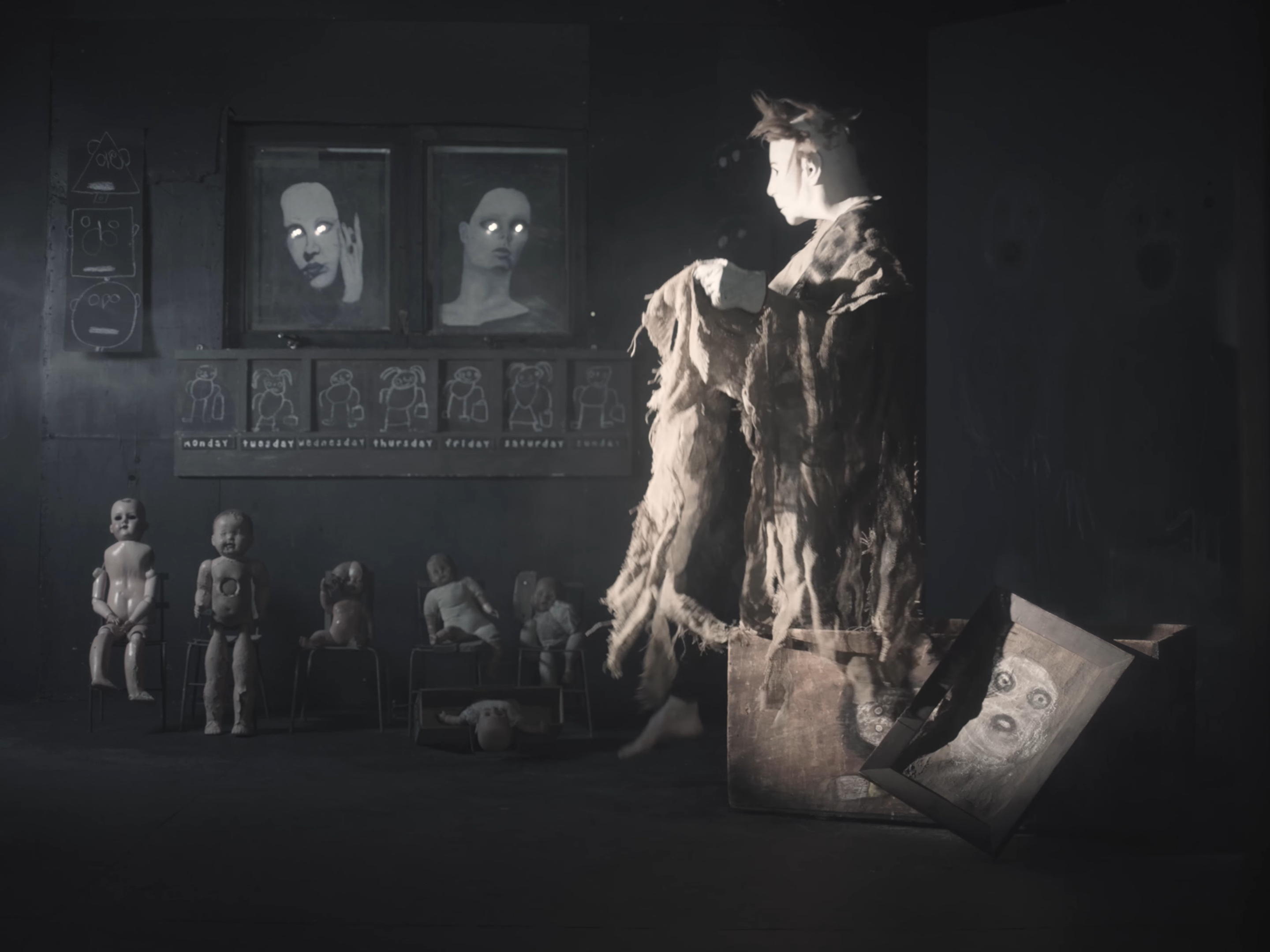



I spoke to American photographer Roger Ballen and South African filmmaker Gabriella Blumberg about 'Spirits and Spaces', a short film based on Roger's recently published photographic book of the same name.
What’s a Rich Text element?
The rich text element allows you to create and format headings, paragraphs, blockquotes, images, and video all in one place instead of having to add and format them individually. Just double-click and easily create content.
Static and dynamic content editing
A rich text element can be used with static or dynamic content. For static content, just drop it into any page and begin editing. For dynamic content, add a rich text field to any collection and then connect a rich text element to that field in the settings panel. Voila!
How to customize formatting for each rich text
Headings, paragraphs, blockquotes, figures, images, and figure captions can all be styled after a class is added to the rich text element using the "When inside of" nested selector system.

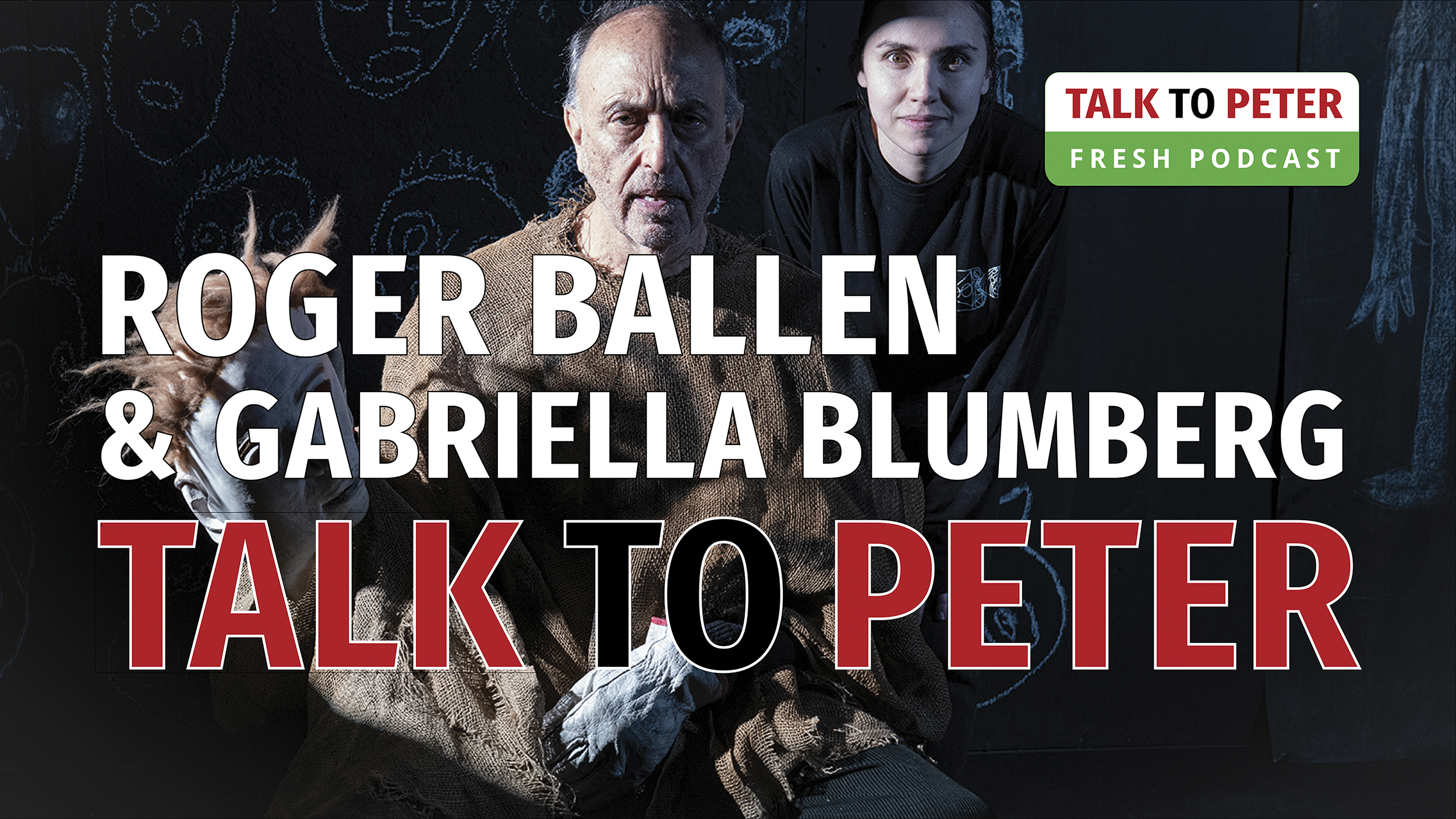
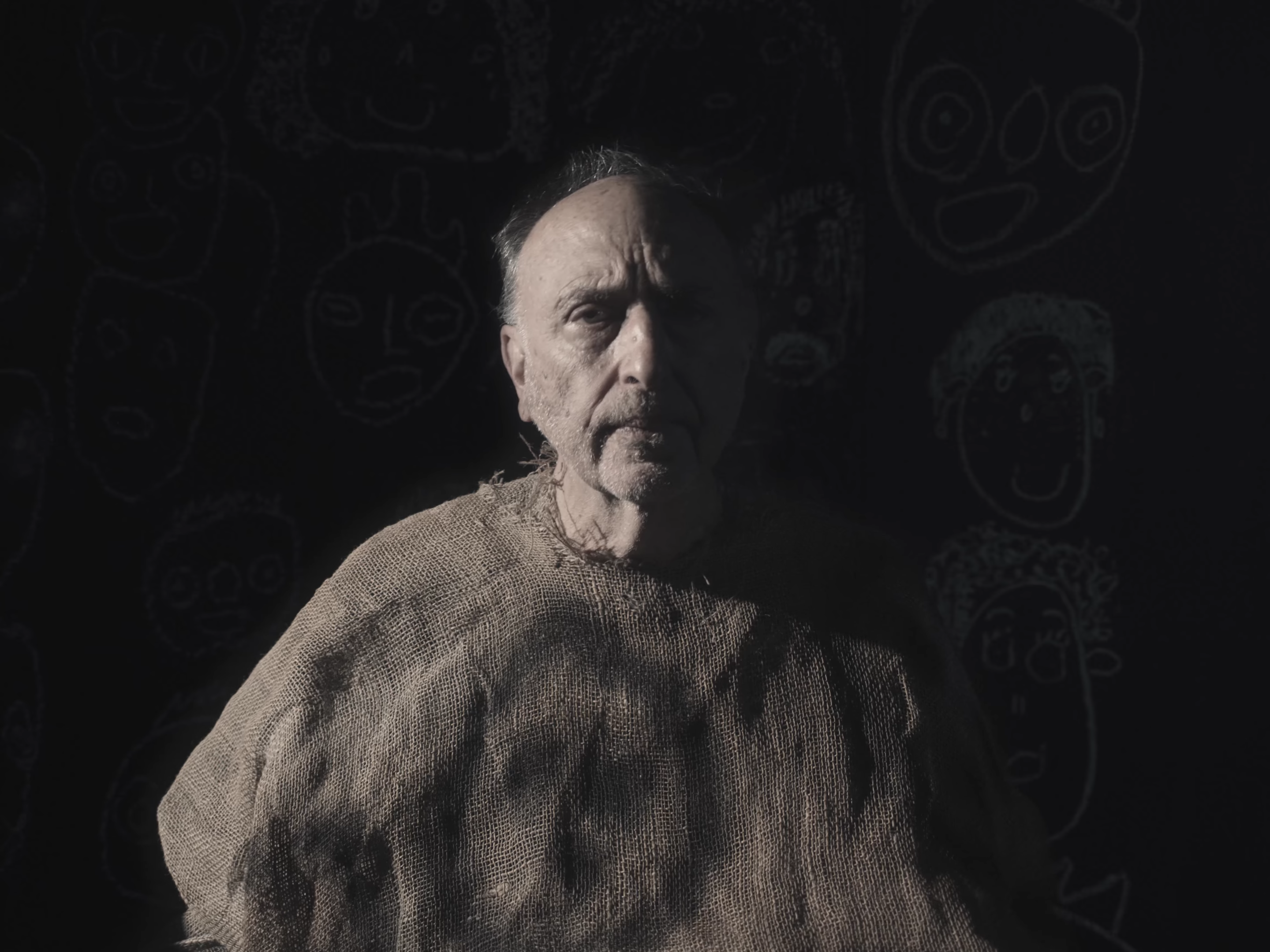
Roger Ballen is an American photographer who has lived and worked in South Africa for many years, during which time he has earned international renown for his images. Gabriella Blumberg is a South African filmmaker who works as a producer and director, with several award-winning films under her belt. I spoke to the two of them about the making - and meaning - of the short film 'Spirits and Spaces', which is based on Roger's recently published photographic book.
Peter: So, I obviously know a lot about Roger’s work, and I watched the film several times and thought a lot about it. But I don’t actually know much about how the collaboration happened or the extent to which it is collaborative. So, can you tell me a little bit about how you met each other, how you came into each other’s orbits, and also about the production? At what point did you meet during the making of the film?
Gabby: Sure, Roger, should I start?
Roger: Sure, you start, Gabby. Go ahead.
Gabby: I started working with Roger a few years ago, helping him to convert some of his old archive videos. And I spent quite a lot of time in Roger’s space and in his studio, and I’d always been familiar with Roger’s work. With my work as a filmmaker, I generally don’t do such experimental work. I work as a director and as a writer and as a producer. Most of my work has been done through a company called Sanctuary Films, which we didn’t do this project under. But I’ve made some documentaries, some commercial projects for KykNet, so really a wide range of features and shorts that I’ve been involved in, from either a writing, producing, or directing side. But I’ve always been really drawn to experimental work, and I’ve always known about Roger’s work. And I think, spending time in his studio, I really got to understand a bit more about the process.
And what I find really phenomenal about Roger is that he sees photographs not as the only way to explore a topic. What we’ve sometimes done is we’ve brought on board an animator, who’s brought the photos to life, and that’s been used, say, for a social-media campaign. Slowly, throughout the years, we’ve been working on more and more things together. And so, when Roger decided that he was going to publish Spirits and Spaces, he thought, let’s have a movie, a film that actually explores this world in more than just a photographic way. So that’s when the conversation started.
It was a very collaborative process. Roger has these fantastic ideas and loves to sit in a room and chat. So, we spoke through all these different options for storylines and how clear we want the story to be. We had a lot of these conversations, Roger, Marguerite – the creative director – and me. I brought on board a storyboard artist to start visualising, and then I brought in the cinematographer, and we walked through the space we were going to film.
And even then, we were still collaborating, even when we were on set. I know that it was a phenomenal experience for our cinematographer, Gavin Pincus, because he would frame a shot, and then Roger would come and look at the monitor, and they would discuss the lighting and the setup, obviously having Roger’s photographic eye. So, yes, there was always this collaborative process. But when we actually went into film, we did have quite a clear storyboard that we’d agreed upon. So we knew the structure, but we still allowed ourselves time to really play when we were actually on set.
Peter: Just thinking about that – I've been wondering what it’s like for Roger to step back from work that is his, but also isn’t his, because, you know, there are a whole lot of other people involved. Roger, how was that process for you? Was it difficult at all?
Roger: No, I didn’t think it was difficult – Gabby and I have worked on a number of projects together, and we spent a fair amount of time talking about the project. So it wasn’t difficult. It wasn’t like she walked into the space and started telling people what to do. It took months to get the script right and plan the project, so it was very coordinated and mutual. We’ve known each other for quite a long time already, so there weren’t any other issues. And I think we respect each other’s opinions and territory, and we’re flexible, so there were absolutely no issues involved.
Peter: I think that a lot of people tend to see a rawness to your work, although I know it’s quite clearly planned. But I think a lot of people don’t, you know, necessarily look with a lot of thought and contemplation. And it seems to me that your work is always very carefully planned and very carefully considered, even though it takes place in that moment of the photograph. Roger, do you ever get frustrated by people’s perceptions of how your photography works?
Roger: No, I don’t. Because, after doing this work for nearly 60 years, most of the things that people find in the pictures actually are their own problems, because they’re just reflecting their repressed, unresolved state of mind. So, it’s like a dog looking – you know, if you smell of food, it’s friendly towards you, but you also know that the dog is interested in the food, not in you.
And, it’s the same thing when people make these issues. “Oh, it’s dark, uh, it’s a little bit scary.” Yeah, you’re right – you have a problem. You have a problem. What do you do when you turn on the TV? What do you do when you go into the supermarket and see all the dead animals for food? You have a problem. You haven’t, somehow or another, resolved your own issues related to one state of mind, to the other state of mind. So that has nothing to do with me.
Peter: Yeah. I always think that every photograph is, on one hand, a self-portrait of the photographer on some level. But it’s also, in the moment, always a self-portrait of the viewer as they’re looking at the work.
Roger, clearly, we operate subconsciously nearly all the time. We are so rarely properly conscious and fully conscious, and we’re, you know, biological animals. Do you think that, if as a society, we acknowledged our subconscious more and our inner demons and just the little things that make us run, do you think that would be healthier for us?
Roger: Yeah, well, I say that’s the problem in the world. And I realised that in the 1960s. I was very influenced by RD Lange’s writings – my first degree is actually in psychology – and he wrote a book called The Divided Self. And so, that is the problem in the world, has been, is the problem, will continue to be the problem, and there’s no way out of this problem. And to resolve these issues, it takes a lot of knowledge, a lot of discipline, a lot of interest, and a lot of psychological liberation.
And, you know, we’re three people sitting here who have a lot of education. Most of the world doesn’t understand any of the concepts you’re talking about. You might as well be talking about a man on the moon to most people. They don’t know what the subconscious is. “What are you talking about?” And even if you do know something about it, it’s a very mysterious element.
And we don’t do everything right, also, you know. It’s not like we’re perfect human beings, even if you do know all these things. So this is a very, very complex issue. But in the end, that is the problem in the world. It’s about unresolved states of mind. And how that can be solved, don’t begin to tell me, and don’t ask me for any answers. There are no answers. There are no answers. The only answer I would say is, you know, to try to do your best, and look at history as fact. History tells you everything about the species. So, if you start to think that the species is going to change, prove, biologically, why it will.
It’s important to be realistic. There’s no point in sitting on a cloud and thinking it’s sunny when you’re in the middle of the cloud.
Peter: Yeah, sure. I have two thoughts there. One is that I do know a lot of extremely intelligent, well-educated people who also kind of don’t get it, despite having a better platform from which to get it. But then also just as a being, as this entity, my own dark thoughts – I’m not at peace with them. I try not to, you know, think of them as too dark, but we all have these impulses that we’re just really not that keen on acknowledging. And possibly for good reason, but I’m not sure.




LESS
Roger Ballen is an American photographer who has lived and worked in South Africa for many years, during which time he has earned international renown for his images. Gabriella Blumberg is a South African filmmaker who works as a producer and director, with several award-winning films under her belt. I spoke to the two of them about the making - and meaning - of the short film 'Spirits and Spaces', which is based on Roger's recently published photographic book.
Peter: So, I obviously know a lot about Roger’s work, and I watched the film several times and thought a lot about it. But I don’t actually know much about how the collaboration happened or the extent to which it is collaborative. So, can you tell me a little bit about how you met each other, how you came into each other’s orbits, and also about the production? At what point did you meet during the making of the film?
Gabby: Sure, Roger, should I start?
Roger: Sure, you start, Gabby. Go ahead.
Gabby: I started working with Roger a few years ago, helping him to convert some of his old archive videos. And I spent quite a lot of time in Roger’s space and in his studio, and I’d always been familiar with Roger’s work. With my work as a filmmaker, I generally don’t do such experimental work. I work as a director and as a writer and as a producer. Most of my work has been done through a company called Sanctuary Films, which we didn’t do this project under. But I’ve made some documentaries, some commercial projects for KykNet, so really a wide range of features and shorts that I’ve been involved in, from either a writing, producing, or directing side. But I’ve always been really drawn to experimental work, and I’ve always known about Roger’s work. And I think, spending time in his studio, I really got to understand a bit more about the process.
And what I find really phenomenal about Roger is that he sees photographs not as the only way to explore a topic. What we’ve sometimes done is we’ve brought on board an animator, who’s brought the photos to life, and that’s been used, say, for a social-media campaign. Slowly, throughout the years, we’ve been working on more and more things together. And so, when Roger decided that he was going to publish Spirits and Spaces, he thought, let’s have a movie, a film that actually explores this world in more than just a photographic way. So that’s when the conversation started.
It was a very collaborative process. Roger has these fantastic ideas and loves to sit in a room and chat. So, we spoke through all these different options for storylines and how clear we want the story to be. We had a lot of these conversations, Roger, Marguerite – the creative director – and me. I brought on board a storyboard artist to start visualising, and then I brought in the cinematographer, and we walked through the space we were going to film.
And even then, we were still collaborating, even when we were on set. I know that it was a phenomenal experience for our cinematographer, Gavin Pincus, because he would frame a shot, and then Roger would come and look at the monitor, and they would discuss the lighting and the setup, obviously having Roger’s photographic eye. So, yes, there was always this collaborative process. But when we actually went into film, we did have quite a clear storyboard that we’d agreed upon. So we knew the structure, but we still allowed ourselves time to really play when we were actually on set.
Peter: Just thinking about that – I've been wondering what it’s like for Roger to step back from work that is his, but also isn’t his, because, you know, there are a whole lot of other people involved. Roger, how was that process for you? Was it difficult at all?
Roger: No, I didn’t think it was difficult – Gabby and I have worked on a number of projects together, and we spent a fair amount of time talking about the project. So it wasn’t difficult. It wasn’t like she walked into the space and started telling people what to do. It took months to get the script right and plan the project, so it was very coordinated and mutual. We’ve known each other for quite a long time already, so there weren’t any other issues. And I think we respect each other’s opinions and territory, and we’re flexible, so there were absolutely no issues involved.
Peter: I think that a lot of people tend to see a rawness to your work, although I know it’s quite clearly planned. But I think a lot of people don’t, you know, necessarily look with a lot of thought and contemplation. And it seems to me that your work is always very carefully planned and very carefully considered, even though it takes place in that moment of the photograph. Roger, do you ever get frustrated by people’s perceptions of how your photography works?
Roger: No, I don’t. Because, after doing this work for nearly 60 years, most of the things that people find in the pictures actually are their own problems, because they’re just reflecting their repressed, unresolved state of mind. So, it’s like a dog looking – you know, if you smell of food, it’s friendly towards you, but you also know that the dog is interested in the food, not in you.
And, it’s the same thing when people make these issues. “Oh, it’s dark, uh, it’s a little bit scary.” Yeah, you’re right – you have a problem. You have a problem. What do you do when you turn on the TV? What do you do when you go into the supermarket and see all the dead animals for food? You have a problem. You haven’t, somehow or another, resolved your own issues related to one state of mind, to the other state of mind. So that has nothing to do with me.
Peter: Yeah. I always think that every photograph is, on one hand, a self-portrait of the photographer on some level. But it’s also, in the moment, always a self-portrait of the viewer as they’re looking at the work.
Roger, clearly, we operate subconsciously nearly all the time. We are so rarely properly conscious and fully conscious, and we’re, you know, biological animals. Do you think that, if as a society, we acknowledged our subconscious more and our inner demons and just the little things that make us run, do you think that would be healthier for us?
Roger: Yeah, well, I say that’s the problem in the world. And I realised that in the 1960s. I was very influenced by RD Lange’s writings – my first degree is actually in psychology – and he wrote a book called The Divided Self. And so, that is the problem in the world, has been, is the problem, will continue to be the problem, and there’s no way out of this problem. And to resolve these issues, it takes a lot of knowledge, a lot of discipline, a lot of interest, and a lot of psychological liberation.
And, you know, we’re three people sitting here who have a lot of education. Most of the world doesn’t understand any of the concepts you’re talking about. You might as well be talking about a man on the moon to most people. They don’t know what the subconscious is. “What are you talking about?” And even if you do know something about it, it’s a very mysterious element.
And we don’t do everything right, also, you know. It’s not like we’re perfect human beings, even if you do know all these things. So this is a very, very complex issue. But in the end, that is the problem in the world. It’s about unresolved states of mind. And how that can be solved, don’t begin to tell me, and don’t ask me for any answers. There are no answers. There are no answers. The only answer I would say is, you know, to try to do your best, and look at history as fact. History tells you everything about the species. So, if you start to think that the species is going to change, prove, biologically, why it will.
It’s important to be realistic. There’s no point in sitting on a cloud and thinking it’s sunny when you’re in the middle of the cloud.
Peter: Yeah, sure. I have two thoughts there. One is that I do know a lot of extremely intelligent, well-educated people who also kind of don’t get it, despite having a better platform from which to get it. But then also just as a being, as this entity, my own dark thoughts – I’m not at peace with them. I try not to, you know, think of them as too dark, but we all have these impulses that we’re just really not that keen on acknowledging. And possibly for good reason, but I’m not sure.
Peter: Roger, how do you feel about the fact that somebody can just ask one of these many AI engines to make a kind of Roger Ballenesque image?
Roger: We tried that a few times with somebody who actually won a lot of awards in this AI photo business. He doesn’t call his pictures ‘photography’. He calls them ‘pronto images’ or something like that, but he doesn’t say it’s photography. So photography for this person is working with a lens, with a camera back, and transferring light onto a chip or a piece of film.
But you know, at the end of the day, AI has tremendous variability. The first exhibition we had in the Roger Ballen Centre for Photography was this AI exhibition, and there were pictures in there that could have come out of traditional photography, and there were pictures that looked like they came from a Hollywood movie. So it has a tremendous capability for transforming things.
But the same man tried to do something with me, tried to take some of my images and transform them through AI, and the AI couldn’t get it. There are just so many subtleties there. And complexities and personality issues that, when they tried to do it, it looked contrived, it looked staged. It didn’t have a fluidity to it.
Whether that’ll change with time, I don’t know. I think that what we’re looking at is, you know, it’s like in geology – we keep looking at new foundations, new levels. So in 10 years, reality will be more than it is now. So people then can’t, don’t, know the difference. That’s, that’s what the reality is.
And so I think that’s what you’re looking at, and people adjust to it like everything else. When I first got a cell phone, I couldn’t figure out how I could ever work with something that didn’t have the little keyboard on the phone. Now, I don’t even think about it. I thought, “No, I’ll never be able to read a newspaper on the phone”. Now, I do this every day.
So, it’s very difficult to know, and I just consider myself very lucky that I grew up in a non-Internet age, where there were no phones. When I went to university, they didn’t even have calculators. So I have a different bearing on life. And I’m also in this generation, so I have the ability to balance one off against the next. And the next generation may say the same thing, you know. So who knows what – that’s what we live in. The whole planet might blow up tomorrow, not even from a war. It could be a giant volcano that covers the earth with ash. We don’t know.
Gabby: I think Peter, if I may jump in, that what I found really interesting, working in the same space as Roger for a few years – and really seeing how the foundation works – is that there’s the Inside Out Foundation and Roger’s recently launched the Centre for Photography; and the first exhibition at the centre – I think it was called Psychopomp – was all about this discussion of AI. You know, you can really kind of box in a photographer as having a certain style, but what I find phenomenal about Roger, starting off from film and moving to digital – Spirits and Spaces is his first book published in colour – is how he allows other artists in the Centre for Photography to explore themes, such as AI, and how it’s raising these ethical questions. Roger is confronting these issues head-on and moving with the times. I found that really interesting because I think a lot of photographers can get stuck in a certain way of working.
And what I found really fantastic about Roger’s work is that, even though there’s been work in different mediums, there’s always still been this Ballenesque aesthetic. Even with this film, I directed it, and Gavin shot it, but it’s such a close collaboration with Roger that it still has the Ballenesque aesthetic. So I think that’s, yeah, quite an amazing trait.
Peter: Yeah! Like I said, I am impressed by the head-on-ness of exploring AI in the first exhibition at the Centre for Photography. Because, you know, I am a digital child, but I also grew up climbing trees – I was born in the 70s. And I got my first computer in the early 1980s, and I loved it, but I’m also very aware of what we’ve lost. I love the internet; it’s a dream come true. And it’s also a nightmare. So, it’s complicated.
Gabby: But I think that’s what’s special about this is that there are these technologies available to us, but we still chose to shoot it and not make an AI film. So there’s this wonderful relationship of knowing that these tools are out there and thinking, how can it help? And sometimes it can help.
For example, when we were visualising what the spirit should look like with the hessian sack, I had this idea of a hessian sack and maybe a mask, and I used AI to draw up a mockup to show Roger, so that we could visually be on the same page in pre-production. But then, there was this collaboration, and chatting to Marguerite, and going and looking at all the different hessian materials and choosing it, and then building, you know, what the ‘spirit’ looks like. So I do think it’s, you know, you can’t move away from…you have to use it as a tool and use it with human interaction. But you can’t disregard it completely.
Peter: Because there is a real world that does actually exist, which you know, in a way is my response to that. But why I’m saying that is also because, Roger, I realised something when looking at the pictures – and specifically because they are in colour now, which kind of shifted my own subconscious perceptions of them. And I realised that now, when I’m looking at an image on my phone – which is where I nearly always look at images – I’m expecting a manipulation. I’m expecting a kind of Instagram slickness in nearly everything I see. And I realised very quickly, looking at your images, how flat our visual culture has become. And I’m talking about the actual physical depth of the photograph. You know, so you have kind of a shallow depth in terms of taking the images, but the shadows are very much there. You can see the three-dimensionality of everything. You can sense the actual, you know, physicality of the space.
And that’s not present in nearly all of the images I look at. There’s really a kind of congealed flatness, almost like we’re dealing with planes rather than dimensions. And the 3D world of yours is still very physically evident. And I think that it’s going to be hard for AI to get it, you know – I’m sure that it’ll get there.
Roger: Look, there are lots and lots of subtleties to these pictures. I always say, you know, a photograph’s like a painting – a painting takes, say, a thousand brush strokes to make; well, it’s the same with a photograph. Where you go left, I might go right. When I go right, you might go left. And so, this is a whole history of building a building in a way. So, it’s not just meekly putting things together because they sort of seemed like they should be there. There are a lot of subtleties there.
And ultimately, you’re trying to do one thing: you’re trying to create an image that has substance to it. And AI doesn’t understand the words ‘psychological substance’. It doesn’t understand that, and probably will not do so in my life. And so, this is an intuitive and a conscious capability, and it’s not one or the other, you know; it's artistic, and it’s scientific. And to be able to get there, you know, it’s part of my personality; it’s what separates me, maybe, from somebody else. And that’s what a good artist does. You know, Picasso’s Picasso – that’s what he does. You can try to make Picassos, but it’s still not a Picasso, as much as you try. And maybe you’ll make a flower that looks like his, but then the next painting won’t look like his. And so, you know, it’s much more complicated than it looks.
And the problem with photography is that it’s the simplest art form, but also the most difficult. Everybody is walking around pushing these buttons, and anybody can do it. And that’s what makes it difficult, because out of those millions and billions of Instagram pictures that I’ve seen over the years, I can hardly remember one. It’s like remembering a fly that went past my head last night. I can’t remember the fly. I don’t know what it even looks like. I’ve forgotten about it already.
And that’s what you’re looking at, unfortunately. And I think the most interesting thing is that we go back to your first question about humanity, and we look at Instagram, and you can predict, I’m like 90% sure, most of the time what’s gonna get the most likes. It’s clear: it’s following celebrity stuff, following things about fashion, following things about very extreme politics. So those are all the things that really seem to be setting people off, and that’s what the species is focused on. And to go back to your initial point about the revelation of deeper consciousness, look at Instagram, and you won’t have a lot of options.
Peter: (laughing) I’m laughing, but inside I’m also crying.
Roger: Yeah, that’s what Nietzsche said. You remember Nietzsche’s favourite quote, “When I laugh, I cry”?
Peter: Yeah! So I looked at what, as far as I know, were the most viewed Instagram images or videos last year. And they were just hot people looking at the camera. You know, just people playing with the camera, and that was it. And then, you know, they got 20 million views or whatever. And I probably clicked on them.
Roger: Yeah, well, that’s what it is. It is what it is. That's all you can say. That’s part of the species; that’s part of an evolutionary species’ behaviour trait. That’s what we’re looking at.
Peter: Roger, I just want to ask you – just because it’s the obvious question to ask – but can you tell me a little bit about your shift towards working in colour photography?
Roger: It happened very spontaneously. I had a book called Ballenesque published by Thames and Hudson in 2016. It was a retrospective book. And with each book, like what we did with Gabby, I like to do a film. And I was friendly with some of the people at Leica Cameras, and I said, “Well, I don’t have a digital – I’ve been using film”. And they said, “Here, take this, take all the equipment, it’s yours”. So Leica gave me digital cameras. And I started making the video, and during the time I was making the video, I started, just by chance, taking colour pictures because I could transform them to black and white.
But when I saw the colour pictures and made them into black and white, I said to Marguerite, my artistic director, “Oh, the colour ones look better to me”. So that was how it happened.
And so, this book is basically sort of a monochromatic colour. It’s not bright, bright colours – it’s somewhere between colour and black and white. And, when I look at the colours, I understand the psychology of colours, but I think, more appropriately, when I look at the colours, I see them almost as black-and-white tonal relationships.
Peter: I can see why you say that. I mean, it’s not exactly David LaChapelle, you know!
Roger: No, I’m not David Chappelle, definitely not. Then I give up.
Peter: (laughs)
Roger: No, I’m not…I’m not…there!
Gabby: If I may jump in, I think what was really interesting, when we actually were filming – because we had our cinematographer and his lighting team kind of setting up the colour space – was that, going back to – I spoke earlier about that collaboration with Roger – is, you know, understanding that we are filming in colour, but trying to really match the grade and the look of the photographs, and bringing those photographs to life in the film.
And speaking to Gavin afterwards, what was just so interesting for him was to have such a close collaboration with Roger on set, discussing lighting and framing, and, you know, really getting that monochromatic colour. But it’s a bit more difficult than just capturing something that’s there in its vivid brightness.
Peter: Yes, that is one of my questions: so the film is in colour, but barely, you know; just. And several scenes are substantially more colourful than the rest. As far as I can recall, it’s the two dolls – the rag doll and the sex doll – that are quite explicitly in colour. So my two questions are, why did you decide to keep it so dark, to keep it mostly perceptually black and white? And then also, what is the significance of the images that are in colour, the dolls – I want to say “female representation”, but that just popped up now. Why did you choose to make those images more colourful?
Gabby: I think what was really interesting about the process is that we chose props that were in Roger’s book, and created each scene in the film based on a chapter in the book. So, it’s not an exact replication of a photograph. Though some of them are quite similar, there may actually be an additional prop in that room that is seen in a completely separate photo in the book. So it was almost like this spirit exploring, with each room being a chapter. So I think what we tried to do was get across the visual feeling of each of those chapters.
For example, the swinging rag doll in the childhood room had more of the brighter colours in Roger’s chapter. And that’s why we had that more colourful prop there. Similarly, the libido section, which is quite haptic and visceral, also gives that feeling.
And it’s interesting, because we spent quite a lot of time, for example, in the childhood chapter, the childhood room. But the libido room, with the doll and the snake, is actually very short. It’s just one sequence – he opens the door, he sees this blow-up doll, and there’s a live snake that flicks its tongue. And then the door closes, and he goes into this next space.
And because that part was so short, we wanted it to be impactful, which is why there’s a bit more of that spark of colour there. But we didn’t want to dwell in the libido section for too long. Because sometimes, I think what’s actually disturbing are those quick flashes of something. “Did I see that?" – that quick sliver of the snake’s tongue – you don’t have to be in a space for too long for it to have an impact on you. It’s actually that timing.
Peter: Yeah. By that point, I think I was watching the film almost entirely with my stomach. And that’s something that I’ve been aware of every single time I’ve watched it – is that I start watching it with my mind and my kind of, you know, mental construction of things. And very quickly, it’s a visceral experience, not a cerebral one.
Gabby: I think that’s also due to the sound design. We had a phenomenal sound designer, Richard Staub, and he really understands Roger’s aesthetic as well as the psychological space that he works in. He didn’t do a conventional musical score; it was more layers of real sounds that build up to create this mood and this energy. So, a lot of the sound is true to what you’re seeing. You know, you’ll see a swing, and you’ll hear the creak of the swing.
So, a lot of it is this diegetic sound that exists within the space. But then, even in the chaos room, which builds the whole soundscape in the film, it kind of starts off slowly – this spirit is walking through each room, not necessarily aware that the other spirits are moving around him, and he slowly becomes more aware that the spaces are alive, that the spirits start following him.
And as our main spirit kind of becomes aware of the room, the pacing of the edit and the pacing of the sound really amps up. And the way that he created that sound in the chaos room, again, it’s not a musical score; it’s these real sounds layered on top of one another, that actually kind of exist in that space, but also in our subconscious, to give you that guttural, visceral feeling. And it just sucks you in.
So he was just a phenomenal person to collaborate with. And, it was also an amazing trust from Roger’s side, because we had worked with Richard before on smaller projects. And here, you know, I chatted to Roger about what we wanted for the film. And I briefed Richard, but really, I let him play. And when he sent it back, we did give tweaks, but we really left a lot of it up to him because we trusted that he, you know, understood this world.
Roger: Really good job. I mean, that’s the difference between photography, generally speaking, and filmmaking. Filmmaking is more about teamwork, even though some people put more into it than others, but photography is a lonely-wolf business, generally.
Peter: Yeah. So, is the spirit the artist on some level?
Gabby: So, I’ll tell you our kind of thought process. And I think it’s important to mention that for the general viewer who maybe doesn’t know Roger, we were quite happy to leave it vague and let the audience really put in their own thoughts. But to let you in on our concept and thought process, when Roger showed me this book, and as you’ve been discussing, so much about Roger’s work is capturing the subconscious. And I really love to think about it, that he’s actually showing us a little part in his subconscious. It’s almost like I was going in as a documentary filmmaker, and seeing, like, how did Roger get there? And so we had this idea of this kind of unnamed masked spirit waking up in a coffin-like space.
And, the first kind of space they’re in is this childhood theme, and as they walk through each space, at first it’s the audience that notices that the eyes of the drawings on the wall are moving, but the spirit itself doesn’t notice. And then the audience notices that the shadow breaks away, and the audience notices that the spirits are following him out the door.
But it’s only in the third or fourth space that the spirit actually starts to become aware that there are some real things moving – there are real rats, there’s a real snake, there’s a real bird. The spirit notices that, but only as it gets further on does the spirit actually notice itself that it’s being followed. And then it all devolves into chaos, which, as you know, is a common theme in Roger’s work – at the end of the day, the only thing we can be certain of is chaos.


So it all devolves into this chaos. And then at the end, when it is kind of revealed that the spirit is actually a part of Roger, our thought was that the spirit is a part of Roger’s subconscious that has woken up in the space in his brain; his subconscious, somewhere deep down, is exploring this space, and is now stuck in this room.
So if you actually look at that closing sequence, you might not notice it on the first watch – but on the second watch, you’ll notice that there are moulds and silicon masks of Roger’s face that are now stuck in the same rooms – in the childhood room, there’s a mould of him on the bathtub. So, now his subconscious is stuck there and can never leave. And I think it’s true to Roger’s work in general, that once you’ve kind of explored the space, it becomes part of you.
And what I like to think about is that this book, Spirits and Spaces, is like a part of Roger’s subconscious broke off, found a deeper part of the subconscious, got stuck there, and then, with his camera, he documented it and tried to put it in the book and show it to us. So, yeah, that was kind of the overall concept that we were moving with.
Peter: Yeah, I found that quite powerful. I mean, my experience of the film was as a document, as a documentary rather than a fictional narrative. But those words at the end – I don’t know who wrote those words – but Roger voices them. And about 10 years, maybe 15 years ago, I was at a New Year’s Eve party, by a river, and everybody was in the dance tents, and I was having a kind of spiritual moment by myself, you know, by the river, staring at the clouds. And I heard this voice, coming from within me or from the sky or whatever. And the words were “you will never die, you will always be here”. And, I very much got that sense about being, you know, stuck as a spirit in this moment of time forever. So, it was very resonant and kind of weird to hear it so similarly expressed in the film.
Gabby: Yeah, it’s this kind of liminal space. I remember, when we were chatting to the storyboard artist, I described it as this kind of psychological purgatory. Once a part of you has experienced something, it stays with you. And I think it’s something that’s true of dream worlds in general – you know, when you wake up from a very vivid dream. You might not have actually been there physically – you didn’t get in your car and drive there – but your whole day can be affected by that because you experienced that. You experience this dream, and you can see those visuals again and again, and you actually went on this emotional and visceral journey. And I think that’s what we really want this film to be – you kind of open this book and you jump inside, and we actually get a glimpse into Roger’s mind and all the different rooms that part of Roger’s subconscious is stuck in and trapped in.
Peter: And of course, in a way, you know, all art is also like those dreams – or those nightmares. It stays with you, you see it, and it never quite leaves. Maybe a million Instagram images kind of disappear, but, you know, these things become a part of us, become a part of you.
Roger, what is it like – because there’s that decisive photographic moment that is written about in the catalogue – what is it like to see that moment extended in film, with the addition of movement and time?
Roger: Look, I’m always happy if we can find other medias and photography to expand the aesthetic. So, you know, in the photographs themselves and in the film, we use drawing. The drawing adds to the dimensionality and the substance of the message, of the photograph, and the film itself.
So, you could say that the film is made up of installations, and you could say that the photographs have installations. So, the film and the photographs are multi-dimensional art, even though they’re transformed through a film camera and a normal camera, but they’re multimedia – they are integrations of other medias.
And so, I think if you are able to do that, and do it well, and it works in a harmonious, coherent way, then you create a higher-level aesthetic, perhaps. So this is what I’ve been trying to do; this is a keynote of what my aesthetic has evolved into. It’s an integration of installation, sculpture, and drawing, transformed through photography.
Now, if they’re not transformed through photography and you take a picture of these things, it looks like a documentary photograph, or a ‘staged photograph’ as they call it. But if you understand photography, then you have to make it feel like it’s an authentic moment. And that’s probably the most difficult thing in photography, to get that last part right.
And this is the keynote to defining photography. It’s about defining a moment that the viewer feels is not repeatable. You’ve caught something that you could never catch again through the camera. It’s always difficult to get that moment.
In the film, you have it when the snake actually…we were talking about the snake…but that scene really is exemplified when the snake’s tongue goes out, more than any other part of that whole scene. It’s when that tongue goes out – that tells you something about the genuineness of the moment. If there were no tongue going out, then that part of the movie wouldn’t be as powerful.
Gabby: We were speaking earlier about animation and AI, and it was really interesting, because for our first concept, we had quite a bit of animating Roger’s drawings on the wall. And, as we moved along, it was really important – and this came from Roger and Marguerite’s side – to have as many of the effects as practical effects that happen in the room.
So, for the doll swinging, we originally had this idea that the doll was going to spin its head and follow Roger. And then we thought that we didn’t need to make it that contrived. There are a few beautiful, kind of subtle animation things with the one set of drawings moving along the wall, and then, when the spirit reveals, takes off the mask, and it is Roger, the drawings on the walls are kind of subtly moving.
But we actually took out a lot of the ideas that we were going to be making props move through animation, because we wanted it to capture, as Roger’s saying, these genuine moments, the rat actually scuttling through the leaves, the birds with its wings, the snake. And then, in the childhood scene, with the eyes on the wall, there are lights that shine through the eyes. We’d originally thought maybe we’ll animate this like a laser beam, and then we actually did it at the end, with lights behind these little peepholes. And the same in the chaos room, with the lights flashing, we had two different lights going off at different speeds and different colour tones. So, we actually really tried to keep even the technicalities practical and true to the room. Even though you’re making something that’s imaginary, we really tried to just be in the moment in a technical way, also.
Peter: Something that I think about Instagram is that I often don’t get the sense that the image I’m looking at is a moment. With a lot of images, they just feel like an image, and perhaps they don’t feel like they ever really did exist. Certainly, it feels like the intent is gone and there’s a flatness, but a lot of them don’t feel like a moment in time, because they don’t actually feel like they’re taken from life – and, you know, perhaps they’re not.
I want to ask you a very pragmatic question: what are you gonna do with this film? Even as a documentary, as an art film, it doesn’t really have a genre – it’s quite different to most of the things out there. Are you going to send it to festivals? Is it going to accompany exhibitions of the book?
Roger: I have a show here, in Ghent, in Belgium, so we’ll be showing the film, and when I give talks and have exhibitions, I’ll be showing the film. We hope to put it on YouTube soon and try to promote it that way. Look, the problem with everything these days – photography, film, everything – is that there are billions of these things done every year, every month, or whatever.
So it’s hard. You have to find ways of separating the work out and getting people aware of it. So, there are different ways of doing this. And you hope somehow, or another, that you hit a nerve, as they say, and that it has a momentum of its own. So, you have to try these different methods with social media, whether it’s film festivals or showing in an exhibition or maybe, you know, a famous movie star loves it and puts it on their social media. So you just have to keep trying to get it out.
And sometimes it really takes off, and sometimes it sinks. It’s an unpredictable situation, but our goal is to get it out there, as best as we can.
Gabby: I think, Peter, speaking with my producer hat on, originally when we made the film, we were quite sure that we were going to do a film festival run. When we actually completed the film, and thought about the timing…I’ve done many film festival runs and have been very lucky. A lot of them have been very successful, and I’ve had films that have won awards and been shown in different spaces in the world. But what we’ve decided with this film is that, in terms of getting it to an audience and timing-wise, we really loved how the film and the book speak to each other. And because the book has just been released, we really want the film to accompany the book. And the disappointing thing, often, with a film festival run, is that with the politics and the premiere status, it will actually be a two-year journey of film festivals around the world before it can actually get to an audience. And I think here, you know, Roger is an artist who is so connected to his audience, and has a following who really want to engage with his work, in all its forms. So, I think it would be doing the book a disservice if it didn’t have this accompanying film released with it straight away, and the film was only released two years later, it wouldn’t feel as relevant to the book. Because it is an extension of the book. So, watch this space! We have an exciting launch planned. And then we can hope that it can just exist on YouTube. And Roger’s saying that he’s done a few short little cut-downs from the film for social media. So people really can engage with the whole subject in multiple ways. And it’s been a privilege for me, as a filmmaker, to see it as a film, but also to really understand how it works in this bigger ecosystem of another way to see the subconscious mind.
Peter: Yeah! I was very ready to convince you that you need to send it to festivals, but your logic is correct. It makes sense.
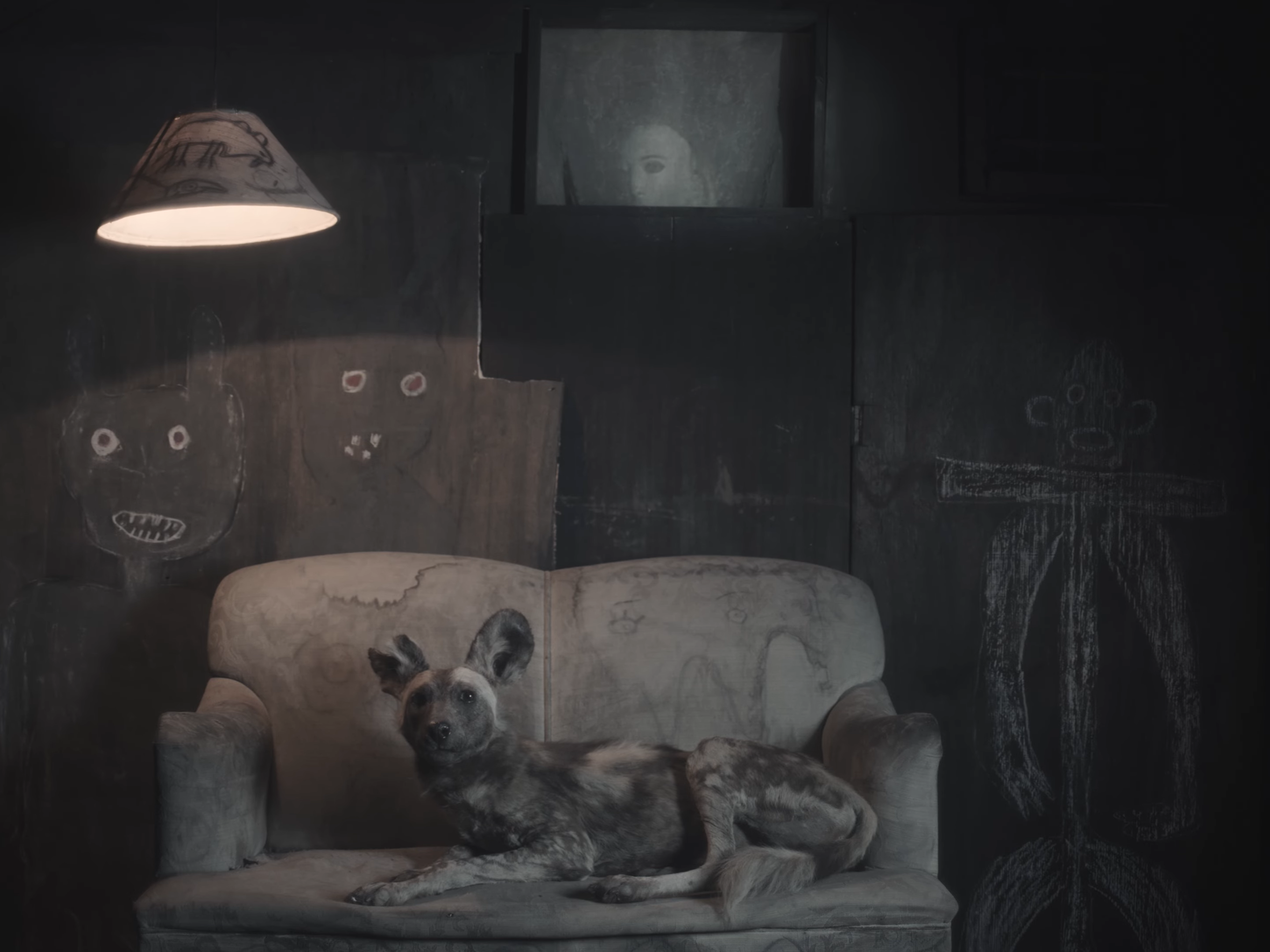
Talking about the snake, can I ask you about the presence of animals, both in the film and in your work, Roger? And also, how do animals connect to our subconscious, to our psychological interiors?
Roger: Look, I’ve been obsessed with animals since I was young. And as time has gone on, I’ve used more and more animals in the pictures, rather than human beings. It’s a very, very, very complex subject, you know. It deals with human relationships to animals, animal relationships to humans, where the animal behaviour repeats itself in the human being, and maybe vice versa.
It has to do with primal evolution, neurological evolution; it has to do with ecological problems. It’s a very, very complicated issue, and the animal ultimately is enigmatic to the human being. You don’t know what the dog’s thinking, you don’t know what the fly is thinking. You can’t get into its mind; you don’t have the same sensory perception.
But I think, ultimately, if I had to make any statement…the first exhibition I had at my centre, the Inside Out Centre for the Arts, was called End of the Game. Well, it really is the end of the game. The relationship is exploitative and alienating. There’s nothing productive about it. It’s destructive. That’s what you’re looking at – one species on the planet has upset the balance for a billion other species on the planet. So, we’re looking at a pretty sad situation, and I always tell people I don’t have any answers. The only answer I could give, a sort of simplistic answer, is that you need to create more parks on the planet. That’s about it.
A relationship that somebody sitting on Park Avenue has to their cat or dog, that ends up going to a psychologist three times a week, is not about the relationship of humanity to the natural world.
Peter: Yeah, yeah. Sure. I like to spend more time discussing that, but I think that we should draw this to a close now because I’d like people to watch this interview! But, I want to ask you, Gabriella, if there’s anything that you would like to ask Roger that you haven’t before?
Gabby: I’m very privileged with the relationship that we have, in that I can be very honest and ask Roger very direct questions when we’re on set and brainstorming. So I haven’t felt the need to hold back! Let me think about it. You can ask Roger a final question, and I’ll think about it.
Peter: I just thought it would be interesting, but if I put you on the spot and you don’t have an answer, that’s fine! But I also then, nonetheless, do want to ask Roger if he has a question for Gabby?
Roger: Well, you know, it’s like somebody asking me what my favourite photograph is. One question leads to the next, and this leads to the next, which leads to the next. So, I think we’ve done very well in this interview, and we won’t get to the last question. We just won’t get there. I think that’s a better way of putting it. We’re not gonna get to the last question.
The last question, the last question. You’re crossing the boundary from the verbal mind to the silent mind, and there are no more questions.