


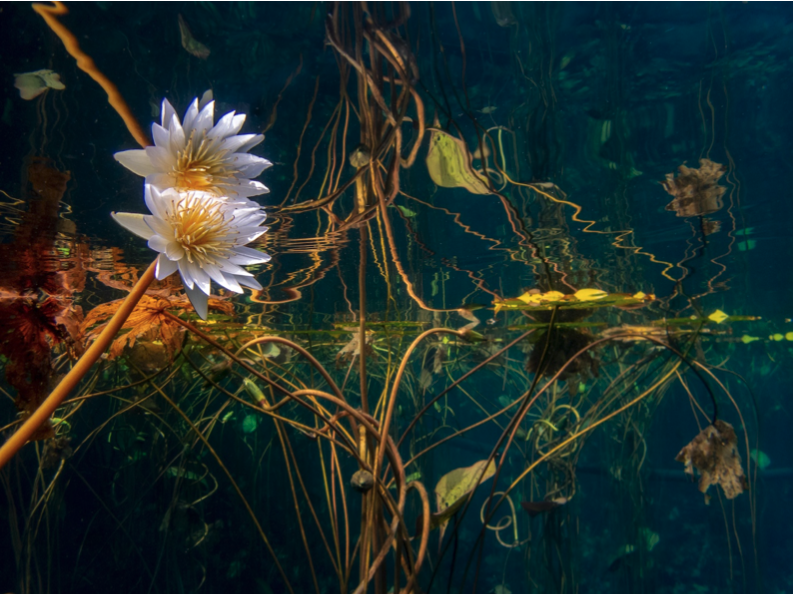



I spoke to writer and underwater photographer Helen Walne - whose work recently appeared on the cover of Time magazine - about the world below the surface.
What’s a Rich Text element?
The rich text element allows you to create and format headings, paragraphs, blockquotes, images, and video all in one place instead of having to add and format them individually. Just double-click and easily create content.
Static and dynamic content editing
A rich text element can be used with static or dynamic content. For static content, just drop it into any page and begin editing. For dynamic content, add a rich text field to any collection and then connect a rich text element to that field in the settings panel. Voila!
How to customize formatting for each rich text
Headings, paragraphs, blockquotes, figures, images, and figure captions can all be styled after a class is added to the rich text element using the "When inside of" nested selector system.

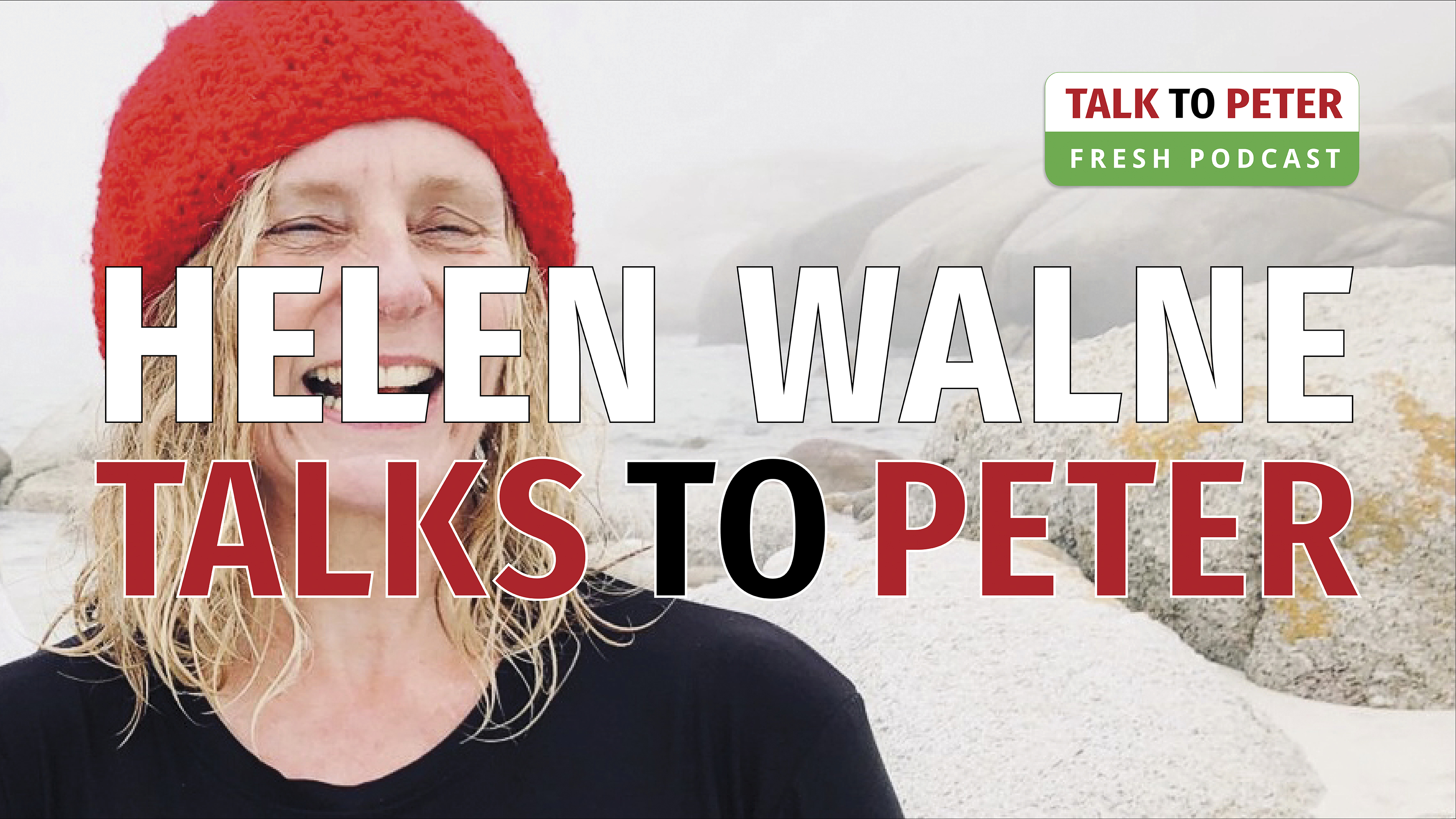
Helen Walne is a South African writer and underwater photographer whose work recently graced the cover of Time magazine. She is also the author of The Diving, a novel about her brother's suicide. I spoke to Helen about the underwater world that she documents so exquisitely, and about the experiences of loss and grief that led her to discover that world.
Peter Machen: Hello Helen, thank you so much for talking to me. It's a real pleasure. I've been really looking forward to this and, as you know, we've tried to do it quite a few times before.
Helen Walne: I think the last time was my fault. really do. Well, actually it was both of our faults. Everything was collapsing.
PM: It was definitely both of our faults. For anyone listening, we started this interview about two months ago, and it was going pretty well and then both of our technology systems just collapsed completely. So we're starting again.
Helen, I want to dig straight into what I'm going to call 'your process'. But before you get nervous, I'm not talking about the artistic process – I want to talk about the actual process of you diving underwater, taking the photographs. I think it's really, really easy when we're on our Instagram phones, and we're scrolling and we're scrolling, it's really easy to forget that those photographs actually have to be taken. I've was talking to my mother the other day, and it's something that never occurred to her, that all of these videos and photographs actually have to be taken by someone. She just thought they kind of happened. And I think that's how a lot of people think.
Can we talk about the process of you actually diving underwater? You don't use scuba gear, you use a snorkel. So can we talk about that process?
HW: I don't scuba diving – I just do free diving. Well, I can't even really call it free diving, because my breath-hold is less than a minute, which makes the photography way more impressive, almost! (laughs)
It takes me a while to get into being in the water with my camera. It takes me about 20 minutes until I feel like I know where I am, and what I'm looking at, and what I want to capture. And by that time, most of my dive buddies have already got out because it's too cold! So, I'm generally on my own, which I know is not recommended, but I don't care. I actually love diving on my own. It's like writing a book – you don't want someone leaning over your shoulder.
So, essentially, it's take a deep breath at the surface, go down, mostly about six to seven meters, sometimes less. And then, pretty much, I'm always just drawn to the way the light is. So if I see light sort of flickering among the kelp, then that's where I'll go. And then, I kind of look, and get...it's actually amazing because what I do is I wait for the light to change and, as the kelp moves, the sunlight comes through the blades of the kelp in a different way. So, you have to basically just hope that you can hold your breath long enough for when the light changes to that absolute specific second that you can then take the picture. Come to the surface, pant, and then repeat! So that's pretty much how it goes.
PM: (laughs) It's interesting that you say you take 20 minutes, because, when I take photographs, it's a much less complicated process. But if I have an idea, or any kind of conceptual thing, like I want to go film these trees doing that, or whatever, it's never a case that I just arrive and start taking the photographs. I always just have to relax into being there before I can get going.
HW: Yeah, exactly. And it's quite a thing when I don't wear weights and I don't wear a wetsuit and the water here is pretty cold. The one side where I dive can get down to, I think I've dived in nine degrees before, and usually it's around 11. So, I think the cold also helps me to kind of get into some kind of weird flow state. it's almost like those first 20 minutes are adapting to the sensory feeling of the water and the cold, as well as what I'm looking at. But I also think it's because I do get sensory overload. So, I almost have to settle into a place for those 20 minutes before I can orientate myself, and then be in it, looking within it from within, rather than just looking at it from the outside.
PM: That's kind of my next question – but it just suddenly occurred to me, knowing what I know about both you and me, is that I think we probably also take 20 minutes to acclimatise to a new social setting, if we go to a bar or somewhere. So I think that might be part of that.
HW: (laughs) I think it takes me about an hour. An hour and three glasses of wine and then I'll be fine!
PM: I'm fine, I'm fine, I got wine! So, beyond the physical experience, as you were intimating, and beyond what happens in the photograph, what happens in your mind when you go below the surface of the water?
HW: So, the first five minutes are a lot of discombobulation. But once the settling has happened, it's almost like I leave my body and, it honestly is a flow state – and I know that's a terrible pun to make – but time and space just disappear. You are, essentially just, I feel, not like a fish, but I feel like I'm part of the kelp forest, and that I'm not just looking at it.
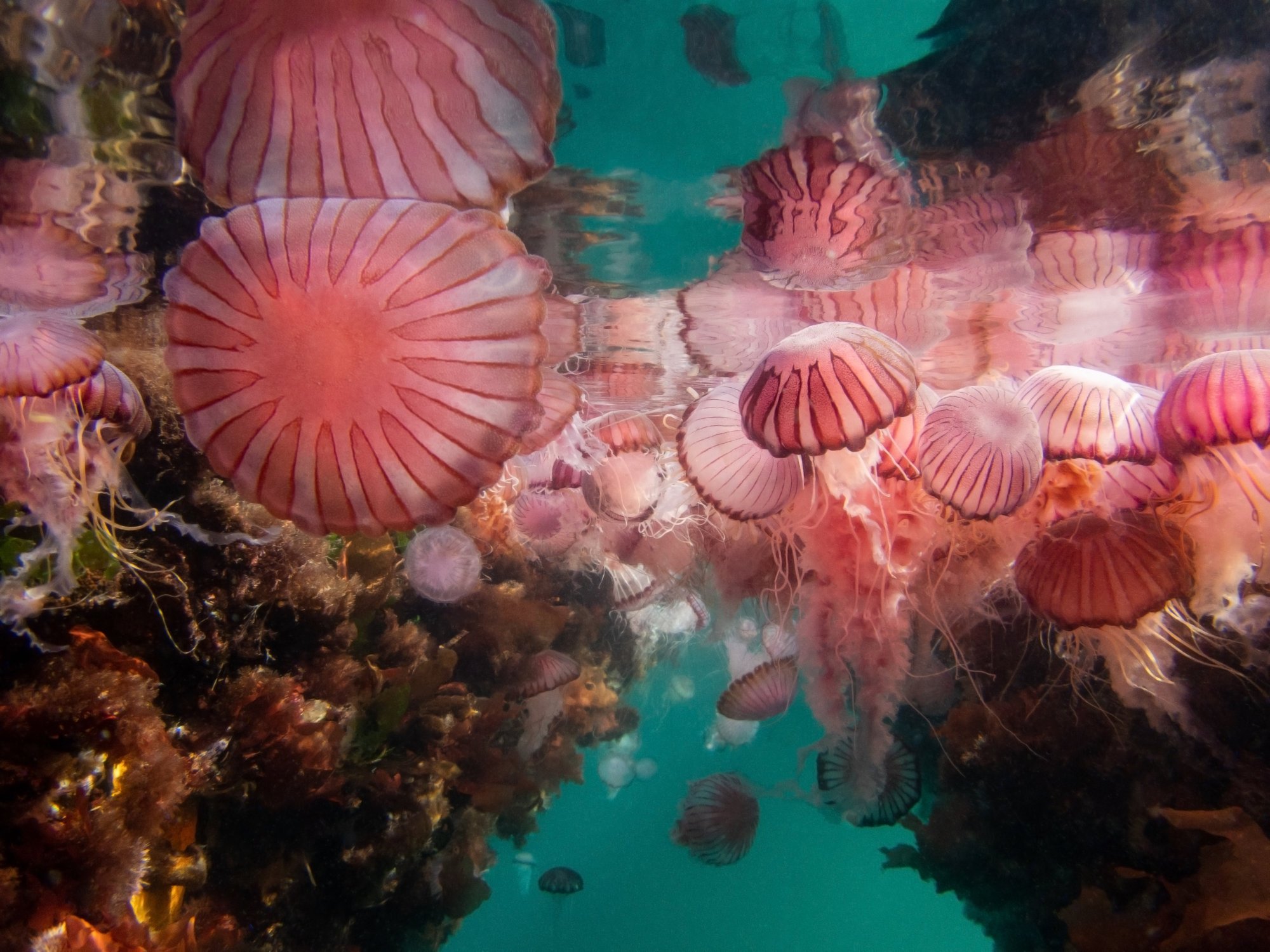
Yeah, it's quite a weird feeling, and it can be quite dangerous, because I get so fixated on something. Like, I came across this beautiful, very rare jellyfish one day and I just couldn't get enough of it. It's like being hungry. And I was photographing it and photographing it – I lose complete awareness of my surroundings – and somebody watching said that a seal had been circling me the whole time. And I don't know if you know, but our seals have had this terrible outbreak of rabies, unprecedented rabies, and some of them are quite aggressive, and I hadn't even noticed. So, it's like everything just disappears and then the only things that are left is just this absolute mind-blowing magical place.
PM: And if you dive without your camera, how different is that experience?
HW: That's very different. I call it "going pure" and I don't go pure very often. It's a very weird experience. I feel jumpy. I feel really unable to sync my breath up with my body and the ocean and my mind. And it should be the opposite!
So it's super interesting – it's almost like I can't connect property with the kelp forest without my camera. And you'd think it should be the opposite. Yeah, yeah. I very rarely go without it. It's almost like it's a conduit.
PM: That is weird. I kind of get it. I mean, when I was younger, I would take my camera all over the place, in places that were pretty dangerous to be taking a camera. But it felt, in a way, like the camera was a conduit for me being safe.
HW: Yeah, exactly.
PM: Which doesn't make sense. And that's definitely not the case for everyone.
HW: No, it doesn't make sense. And I am quite self conscious about it, because I feel like I should just be able to connect without, you know, technology or apparatus. But the thing is, I can't...the way that I make sense of the world...even if I go hiking in the mountains, I take my camera. And one of the ways that I can make sense of where I am is to take photographs from water. So, we've been hiking in the mountains often, and I've even got my weight belt on, I've got like a snorkel, I've got my mask, and I'm lugging my massive camera just in case I find a stream or a river and then I can make sense of stuff. It's rather bizarre – and quite inconvenient as well!
PM: Look, I mean, on one level that sounds perfectly bizarre. But, on another level, that's what artists do and that's what art is. At least on one fundamental level, it's how we makes sense of the world. Whatever that art is, whether it's writing or performance or taking pictures, it's how we make reality.
And so, in a way, you take away the camera that has becomes such a central part of you, and one of your reality-making tools is gone. So what do you do?
HW: Yeah, it's true. I know. But it's much more convenient to have like a little pocket of paintbrushes and some paint than a camera, and then having to sniff out some water, essentially. (laughs)
PM: So you started with a disposable camera or a cheap underwater camera?
HW: Yeah, yeah, it was my husband's action camera and it didn't have a back screen so I had no idea what I was taking, which I kind of liked. And now, I've almost gone back to that, with a film camera.
PM: Wonderful. Yeah, I was talking to Roger Ballen about the difference between film and digital. And he is pretty much a digital convert now, which I'm actually quite amazed and impressed by. But he does talk about what gets lost.
HW: Yeah.
PM: I miss the days of random slide film.
HW: Yeah, exactly. Because I started with the bad fake GoPro – and it didn't take bad pictures, actually – but often there was like, you know, just like half a piece of kelp and nothing else, because I didn't know what I was doing.
And then I got a smaller compact camera, an Olympus, which was incredible. They're incredible underwater cameras – with no housing – just the most insane cameras. And then I got a Marillus with housing, which I use most of the time. And then recently I bought a Nikonos – they're from the eighties – and it's a film camera and it's a completely different beast. It's difficult.
PM: How much work have you done with that new camera?
HW: I've shot two rolls of film, both of them black and white. And I realised that you have to judge distance, focus, like, you know, distance, focus distance. And when you're underwater, distance is distorted. So I have these horrific grainy pictures of urchins – and someone's foot! So, yeah, I have a lot to learn. It's really difficult. I think it's the most difficult thing I've done, but I'm going to persist.
PM: I think there's something to be said for hurling oneself into the difficulty, putting yourself at its mercy, even if it doesn't work.
HW: Yeah, it's true. Even if it doesn't work. It's just, you know, I wish that it was less expensive! And I do love the experience of taking a roll of film and then sending it, away and then you wait. It's like waiting for Christmas, you know, until you get it back. And then you're like, my God, there's only like one that's decent. But yeah, I'll get better. I hope.
PM: Yeah, I remember that feeling. I remember the first time I ever took a roll of pictures that I'd taken with a kind of artistic intent – as opposed to snapshots. And I think I had a roll of 24 and they gave me three photographs. And I was like, "What?". And they're like, "No, none of the others are proper photographs". And I looked at the negs, and I was like, no, "That's what I intended. I wanted them to look like that!"
HW: (laughs) That is so funny.
PM: So I always have to leave special instructions. "Please print them all even if you don't think they're photographs". Because all of my photographs can look like mistakes.
HW: Yeah, that's brilliant. Your photographs are lovely, by the way.
PM: Thank you! Let's talk about kelp!
HW: Okay, let's talk about kelp. What would you like to know about kelp?
PM: You've developed a real relationship with kelp and various kelp forests around the world...
HW: I have! And seaweed. I mean, kelp is technically a seaweed, but I like to see it as its own thing. I think what blows my mind is that even though kelp is an algae, it's not a plant, okay, but it looks like a plant. And it really just blows my mind that these plant-like things exist in saltwater. And in these immense storms, you'll see kelp just bending and flowing with the waves. and you're like, how can you withstand this? How is this possible?
There are so many beautiful things about it and there are so many different types of kelp across the world. And I mean, if you just look at a blade of kelp in the sun, it's just this coppery colour, and they sustain so much life.
I don't know how much you know about kelp – and just tell me to shut up if you think I'm geeking out too much – but they don't have roots, because they're not like plants that draw nutrients from soil, because they don't have soil, right? But they have these things called holdfasts and they are these incredible root-like structures that anchor them to mostly rocks and reefs. And within those holdfasts, there's like cities of creatures, from like tiny little amphipods to – okay, I'm completely geeking out here – but they sustain these entire cities of animals. And I've seen them under the microscope, and it just blows your mind – like little worms and little brittle stars! So kelp is just rad. It's it's unlike anything else on earth.
PM: Yeah, so I didn't know that it wasn't a plant until right now – maybe I did know that, but I've forgotten it. But I definitely didn't consciously know that it wasn't a plant. And I've always been kind of afraid of kelp and seaweed. But I think especially as an Indian Ocean swimmer, you know, they're basically they like low-level sharks – they're things in the water that are trying to get me! So even as a kid, I was always a little bit afraid. And they were a bit slimy, a bit rubbery.
HW: Yeah.
PM: But I also always thought that kelp had a sentience and now I'm more convinced that it might, since it's not a normal plant -I think plants do have sentience but just like not in the same way. Do you think kelp is more sentient than land-based plants?
HW: Yeah. I do, but I'm just biased, I think. Yeah, I'm just biased.
PM: But your bias is informed by experience.
HW: Precisely, precisely. Although, I do love a land forest and I do love a tree, but I haven't spent as long in them. And I don't know, there's something incredible about the 3D-ness of kelp and the way that it has a surface as well. So it kind of flows on the surface and underneath.
So it's sort of contained in this incredibly weird fluid 3D environment, whereas trees just kind of blow in the wind. Sorry, trees! I'm looking out my window at some trees and I've just apologised to them.
PM: But I think that's also because we tend to flatten our vision. Something that I'm super-aware of, and especially in spring in Berlin, is the three dimensionality of plants. It's really easy to walk past them as a two dimensional object, but then if you start going inside them, there are incredible layers, and it really, you know, becomes very kind of like a 3-D movie. Which is weird because life is also three-dimensional – like a 3-D movie – but we tend to forget it!
HW: Yeah.
PM: So I do find plants really sentient. When I walk past, you know, like a tree or a bunch of flowers, I do get some sense of communication from it. But with kelp I feel a little bit more, and maybe that's because part of me thinks that kelp wants to take me down! Bring me down!
HW: That is a very common feeling about kelp. But what is on the opposite end of that is that kelp, when you are freediving in the kelp forest, it actually helps you, because you hang on to it. You hang on to the stipe, which is the kind of like trunk.
And so, I usually take photographs just with one hand because my other hand is holding onto a kelp stipe. Also, when the great whites were still around – unfortunately they have disappeared for various reasons – but when they were still around, they wouldn't generally go into the kelp forest. They would stop at that border of the kelp forest. So one always felt very safe in it. So it's actually friendly and safe and supportive.
PM: My very next question is about encountering large marine animals, mammals and fish. I'm terrified – I mean I love swimming in the sea, it's this incredible sense of freedom – but every shadow is a shark! When you encounter large marine animals, whether they're seals or sharks or whales, how do you respond? And how do you feel?
HW: I think the biggest animal I have encountered many times and still do is the short-tailed stingray. And they can be, I don't know, three meters wide. They weigh – I don't know – a good hundred kilograms. And they're also known for having killed Steve Irwin.
And when I come across them, I am not scared one tiny little bit. And I know how to approach them. And I know this sounds like I'm some sort of animal-whisperer , but I'm not. It's just like you basically know the rules. You don't corner them. You don't make them feel trapped. You approach them mostly just from the side. You keep your distance.
And I just feel complete awe and wonder when I see them. I don't ever think that they've got malicious intent, because they don't. That's just our kind of perception.
PM: Yeah.
HW: But I do confess...I mean I have friends who'd be like, my "God, I just want to see a great white." And I do not want to see a great white. I don't. I'm scared.




LESS
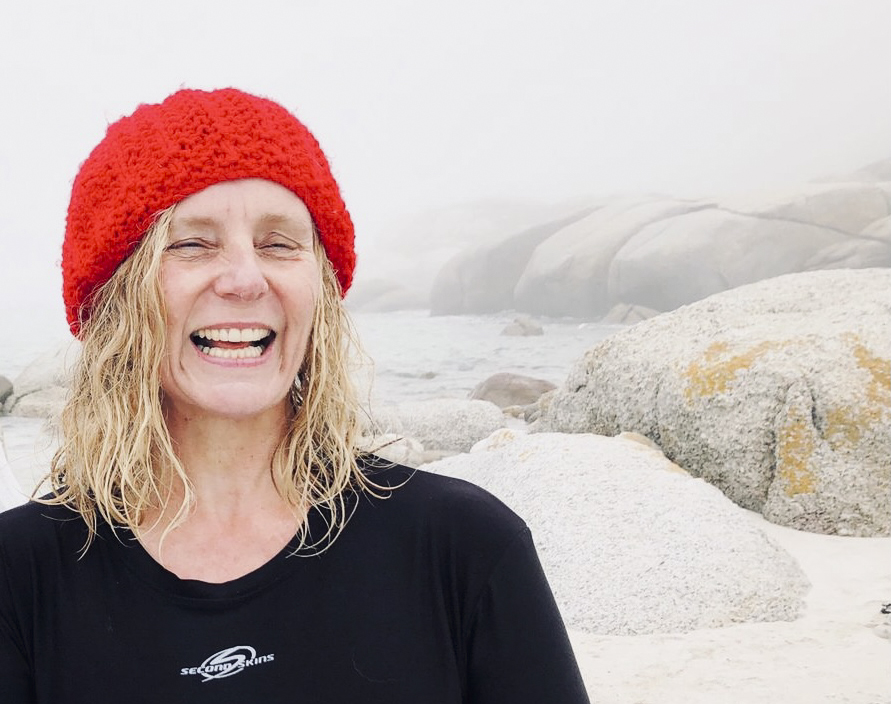
Helen Walne is a South African writer and underwater photographer whose work recently graced the cover of Time magazine. She is also the author of The Diving, a novel about her brother's suicide. I spoke to Helen about the underwater world that she documents so exquisitely, and about the experiences of loss and grief that led her to discover that world.
Peter Machen: Hello Helen, thank you so much for talking to me. It's a real pleasure. I've been really looking forward to this and, as you know, we've tried to do it quite a few times before.
Helen Walne: I think the last time was my fault. really do. Well, actually it was both of our faults. Everything was collapsing.
PM: It was definitely both of our faults. For anyone listening, we started this interview about two months ago, and it was going pretty well and then both of our technology systems just collapsed completely. So we're starting again.
Helen, I want to dig straight into what I'm going to call 'your process'. But before you get nervous, I'm not talking about the artistic process – I want to talk about the actual process of you diving underwater, taking the photographs. I think it's really, really easy when we're on our Instagram phones, and we're scrolling and we're scrolling, it's really easy to forget that those photographs actually have to be taken. I've was talking to my mother the other day, and it's something that never occurred to her, that all of these videos and photographs actually have to be taken by someone. She just thought they kind of happened. And I think that's how a lot of people think.
Can we talk about the process of you actually diving underwater? You don't use scuba gear, you use a snorkel. So can we talk about that process?
HW: I don't scuba diving – I just do free diving. Well, I can't even really call it free diving, because my breath-hold is less than a minute, which makes the photography way more impressive, almost! (laughs)
It takes me a while to get into being in the water with my camera. It takes me about 20 minutes until I feel like I know where I am, and what I'm looking at, and what I want to capture. And by that time, most of my dive buddies have already got out because it's too cold! So, I'm generally on my own, which I know is not recommended, but I don't care. I actually love diving on my own. It's like writing a book – you don't want someone leaning over your shoulder.
So, essentially, it's take a deep breath at the surface, go down, mostly about six to seven meters, sometimes less. And then, pretty much, I'm always just drawn to the way the light is. So if I see light sort of flickering among the kelp, then that's where I'll go. And then, I kind of look, and get...it's actually amazing because what I do is I wait for the light to change and, as the kelp moves, the sunlight comes through the blades of the kelp in a different way. So, you have to basically just hope that you can hold your breath long enough for when the light changes to that absolute specific second that you can then take the picture. Come to the surface, pant, and then repeat! So that's pretty much how it goes.
PM: (laughs) It's interesting that you say you take 20 minutes, because, when I take photographs, it's a much less complicated process. But if I have an idea, or any kind of conceptual thing, like I want to go film these trees doing that, or whatever, it's never a case that I just arrive and start taking the photographs. I always just have to relax into being there before I can get going.
HW: Yeah, exactly. And it's quite a thing when I don't wear weights and I don't wear a wetsuit and the water here is pretty cold. The one side where I dive can get down to, I think I've dived in nine degrees before, and usually it's around 11. So, I think the cold also helps me to kind of get into some kind of weird flow state. it's almost like those first 20 minutes are adapting to the sensory feeling of the water and the cold, as well as what I'm looking at. But I also think it's because I do get sensory overload. So, I almost have to settle into a place for those 20 minutes before I can orientate myself, and then be in it, looking within it from within, rather than just looking at it from the outside.
PM: That's kind of my next question – but it just suddenly occurred to me, knowing what I know about both you and me, is that I think we probably also take 20 minutes to acclimatise to a new social setting, if we go to a bar or somewhere. So I think that might be part of that.
HW: (laughs) I think it takes me about an hour. An hour and three glasses of wine and then I'll be fine!
PM: I'm fine, I'm fine, I got wine! So, beyond the physical experience, as you were intimating, and beyond what happens in the photograph, what happens in your mind when you go below the surface of the water?
HW: So, the first five minutes are a lot of discombobulation. But once the settling has happened, it's almost like I leave my body and, it honestly is a flow state – and I know that's a terrible pun to make – but time and space just disappear. You are, essentially just, I feel, not like a fish, but I feel like I'm part of the kelp forest, and that I'm not just looking at it.
Yeah, it's quite a weird feeling, and it can be quite dangerous, because I get so fixated on something. Like, I came across this beautiful, very rare jellyfish one day and I just couldn't get enough of it. It's like being hungry. And I was photographing it and photographing it – I lose complete awareness of my surroundings – and somebody watching said that a seal had been circling me the whole time. And I don't know if you know, but our seals have had this terrible outbreak of rabies, unprecedented rabies, and some of them are quite aggressive, and I hadn't even noticed. So, it's like everything just disappears and then the only things that are left is just this absolute mind-blowing magical place.
PM: And if you dive without your camera, how different is that experience?
HW: That's very different. I call it "going pure" and I don't go pure very often. It's a very weird experience. I feel jumpy. I feel really unable to sync my breath up with my body and the ocean and my mind. And it should be the opposite!
So it's super interesting – it's almost like I can't connect property with the kelp forest without my camera. And you'd think it should be the opposite. Yeah, yeah. I very rarely go without it. It's almost like it's a conduit.
PM: That is weird. I kind of get it. I mean, when I was younger, I would take my camera all over the place, in places that were pretty dangerous to be taking a camera. But it felt, in a way, like the camera was a conduit for me being safe.
HW: Yeah, exactly.
PM: Which doesn't make sense. And that's definitely not the case for everyone.
HW: No, it doesn't make sense. And I am quite self conscious about it, because I feel like I should just be able to connect without, you know, technology or apparatus. But the thing is, I can't...the way that I make sense of the world...even if I go hiking in the mountains, I take my camera. And one of the ways that I can make sense of where I am is to take photographs from water. So, we've been hiking in the mountains often, and I've even got my weight belt on, I've got like a snorkel, I've got my mask, and I'm lugging my massive camera just in case I find a stream or a river and then I can make sense of stuff. It's rather bizarre – and quite inconvenient as well!
PM: Look, I mean, on one level that sounds perfectly bizarre. But, on another level, that's what artists do and that's what art is. At least on one fundamental level, it's how we makes sense of the world. Whatever that art is, whether it's writing or performance or taking pictures, it's how we make reality.
And so, in a way, you take away the camera that has becomes such a central part of you, and one of your reality-making tools is gone. So what do you do?
HW: Yeah, it's true. I know. But it's much more convenient to have like a little pocket of paintbrushes and some paint than a camera, and then having to sniff out some water, essentially. (laughs)
PM: So you started with a disposable camera or a cheap underwater camera?
HW: Yeah, yeah, it was my husband's action camera and it didn't have a back screen so I had no idea what I was taking, which I kind of liked. And now, I've almost gone back to that, with a film camera.
PM: Wonderful. Yeah, I was talking to Roger Ballen about the difference between film and digital. And he is pretty much a digital convert now, which I'm actually quite amazed and impressed by. But he does talk about what gets lost.
HW: Yeah.
PM: I miss the days of random slide film.
HW: Yeah, exactly. Because I started with the bad fake GoPro – and it didn't take bad pictures, actually – but often there was like, you know, just like half a piece of kelp and nothing else, because I didn't know what I was doing.
And then I got a smaller compact camera, an Olympus, which was incredible. They're incredible underwater cameras – with no housing – just the most insane cameras. And then I got a Marillus with housing, which I use most of the time. And then recently I bought a Nikonos – they're from the eighties – and it's a film camera and it's a completely different beast. It's difficult.
PM: How much work have you done with that new camera?
HW: I've shot two rolls of film, both of them black and white. And I realised that you have to judge distance, focus, like, you know, distance, focus distance. And when you're underwater, distance is distorted. So I have these horrific grainy pictures of urchins – and someone's foot! So, yeah, I have a lot to learn. It's really difficult. I think it's the most difficult thing I've done, but I'm going to persist.
PM: I think there's something to be said for hurling oneself into the difficulty, putting yourself at its mercy, even if it doesn't work.
HW: Yeah, it's true. Even if it doesn't work. It's just, you know, I wish that it was less expensive! And I do love the experience of taking a roll of film and then sending it, away and then you wait. It's like waiting for Christmas, you know, until you get it back. And then you're like, my God, there's only like one that's decent. But yeah, I'll get better. I hope.
PM: Yeah, I remember that feeling. I remember the first time I ever took a roll of pictures that I'd taken with a kind of artistic intent – as opposed to snapshots. And I think I had a roll of 24 and they gave me three photographs. And I was like, "What?". And they're like, "No, none of the others are proper photographs". And I looked at the negs, and I was like, no, "That's what I intended. I wanted them to look like that!"
HW: (laughs) That is so funny.
PM: So I always have to leave special instructions. "Please print them all even if you don't think they're photographs". Because all of my photographs can look like mistakes.
HW: Yeah, that's brilliant. Your photographs are lovely, by the way.
PM: Thank you! Let's talk about kelp!
HW: Okay, let's talk about kelp. What would you like to know about kelp?
PM: You've developed a real relationship with kelp and various kelp forests around the world...
HW: I have! And seaweed. I mean, kelp is technically a seaweed, but I like to see it as its own thing. I think what blows my mind is that even though kelp is an algae, it's not a plant, okay, but it looks like a plant. And it really just blows my mind that these plant-like things exist in saltwater. And in these immense storms, you'll see kelp just bending and flowing with the waves. and you're like, how can you withstand this? How is this possible?
There are so many beautiful things about it and there are so many different types of kelp across the world. And I mean, if you just look at a blade of kelp in the sun, it's just this coppery colour, and they sustain so much life.
I don't know how much you know about kelp – and just tell me to shut up if you think I'm geeking out too much – but they don't have roots, because they're not like plants that draw nutrients from soil, because they don't have soil, right? But they have these things called holdfasts and they are these incredible root-like structures that anchor them to mostly rocks and reefs. And within those holdfasts, there's like cities of creatures, from like tiny little amphipods to – okay, I'm completely geeking out here – but they sustain these entire cities of animals. And I've seen them under the microscope, and it just blows your mind – like little worms and little brittle stars! So kelp is just rad. It's it's unlike anything else on earth.
PM: Yeah, so I didn't know that it wasn't a plant until right now – maybe I did know that, but I've forgotten it. But I definitely didn't consciously know that it wasn't a plant. And I've always been kind of afraid of kelp and seaweed. But I think especially as an Indian Ocean swimmer, you know, they're basically they like low-level sharks – they're things in the water that are trying to get me! So even as a kid, I was always a little bit afraid. And they were a bit slimy, a bit rubbery.
HW: Yeah.
PM: But I also always thought that kelp had a sentience and now I'm more convinced that it might, since it's not a normal plant -I think plants do have sentience but just like not in the same way. Do you think kelp is more sentient than land-based plants?
HW: Yeah. I do, but I'm just biased, I think. Yeah, I'm just biased.
PM: But your bias is informed by experience.
HW: Precisely, precisely. Although, I do love a land forest and I do love a tree, but I haven't spent as long in them. And I don't know, there's something incredible about the 3D-ness of kelp and the way that it has a surface as well. So it kind of flows on the surface and underneath.
So it's sort of contained in this incredibly weird fluid 3D environment, whereas trees just kind of blow in the wind. Sorry, trees! I'm looking out my window at some trees and I've just apologised to them.
PM: But I think that's also because we tend to flatten our vision. Something that I'm super-aware of, and especially in spring in Berlin, is the three dimensionality of plants. It's really easy to walk past them as a two dimensional object, but then if you start going inside them, there are incredible layers, and it really, you know, becomes very kind of like a 3-D movie. Which is weird because life is also three-dimensional – like a 3-D movie – but we tend to forget it!
HW: Yeah.
PM: So I do find plants really sentient. When I walk past, you know, like a tree or a bunch of flowers, I do get some sense of communication from it. But with kelp I feel a little bit more, and maybe that's because part of me thinks that kelp wants to take me down! Bring me down!
HW: That is a very common feeling about kelp. But what is on the opposite end of that is that kelp, when you are freediving in the kelp forest, it actually helps you, because you hang on to it. You hang on to the stipe, which is the kind of like trunk.
And so, I usually take photographs just with one hand because my other hand is holding onto a kelp stipe. Also, when the great whites were still around – unfortunately they have disappeared for various reasons – but when they were still around, they wouldn't generally go into the kelp forest. They would stop at that border of the kelp forest. So one always felt very safe in it. So it's actually friendly and safe and supportive.
PM: My very next question is about encountering large marine animals, mammals and fish. I'm terrified – I mean I love swimming in the sea, it's this incredible sense of freedom – but every shadow is a shark! When you encounter large marine animals, whether they're seals or sharks or whales, how do you respond? And how do you feel?
HW: I think the biggest animal I have encountered many times and still do is the short-tailed stingray. And they can be, I don't know, three meters wide. They weigh – I don't know – a good hundred kilograms. And they're also known for having killed Steve Irwin.
And when I come across them, I am not scared one tiny little bit. And I know how to approach them. And I know this sounds like I'm some sort of animal-whisperer , but I'm not. It's just like you basically know the rules. You don't corner them. You don't make them feel trapped. You approach them mostly just from the side. You keep your distance.
And I just feel complete awe and wonder when I see them. I don't ever think that they've got malicious intent, because they don't. That's just our kind of perception.
PM: Yeah.
HW: But I do confess...I mean I have friends who'd be like, my "God, I just want to see a great white." And I do not want to see a great white. I don't. I'm scared.
PM: Fair enough!
HW: Yes. Fair enough!
PM: But have you seen one?
HW: No, I haven't. The closest thing that I have seen was a mako shark, who can be a little bit aggressive if they're feeling grumpy that day. We went diving with some blue sharks who are also very curious. They're not aggressive, they're curious. So the blue sharks were very curious. You had to kind of bump them, push them away with your glove. And then a mako shark came along unexpectedly and no one else saw it. And then I was showing the dive people afterwards. I was like, my God, look at this shark. And they're like, "Woo, that was a mako!" But I didn't know. I just felt fine. I did notice its teeth though. Yeah!
PM: I think I would just be terrified. On land I've had encounters – I haven't had an encounter with a lion or anything, but I have had encounters with medium-sized animals that could hurt me if they wanted, and I've always felt pretty fine. But I think a shark would be different, I'd just go straight to panic.
HW: And they move so fast as well. I think, nowadays, with the rabies in the seals, there have been a few attacks, and people have been pretty bitten up. So those are the animals that I'm actually quite fearful of. I bumped into one the other day in the kelp forest and it was a big, big seal. And I actually started sort of hyperventilating, but tried to stay calm. And it was perfectly chilled. It didn't have rabies, and it just swam around me, but it was quite unnerving.
PM: That strain of rabies, is that the same strain of rabies that domestic dogs carry?
HW: I think so. So, it's unprecedented. It's never been seen. I think there was one incident, like hundreds of years ago in Norway, I might be wrong here, but it's unprecedented in marine mammals. And the theory is that it came from Namibia, where a lot of seals live, and that a jackal might've been infected with rabies and then got bitten – or vice versa – had an interaction with a seal. And then that's moved all the way down the coast. But it's really sad, it really is. Because they basically just go bonkers. They also get thin and die, eventually, and it's just awful.
PM: It seems to me another leakage from our fucked-up human world into what's left of the environment.
HW: Yeah, it is. It's the imbalance. Yeah, exactly. But I can't help thinking – because, I mean, the great whites disappearing is a combination of two orcas that kind of chased them out, but also overfishing and things like that. And if they were still around, we've often thought, "Well, maybe it was the great whites, maybe it's..."
PM: I mean, maybe it would happen anyway.
HW: There always have been sick seals, who were then controlled by the great whites. So who knows? I don't know. It's not proven.
PM: That kind of does make sense. I'm just thinking about the decimation that we are – the human species. So, I have, in the past, spent some many wonderful afternoons on Battery Beach in Durban, swimming with you and our friends, many years ago. At some point, the seagulls disappeared, but I never noticed them going. I only noticed when there were none. And that's probably related to the fact that there are no fish off the coast of Durban. Because they've all been taken, they've all been fished. It's just jellyfish, pretty much.
HW: Yeah, you told me that. I had no idea. I was like, "How is that possible? That there are no seagulls?" Do you think it's still the case?
PM: Yeah. I mean, maybe they've come back. They hadn't last time I was there. But it was also interesting that no one had noticed that they'd gone.
The fishermen had long noticed that there were hardly any fish in the sea, basically no fish in the Durban ocean. So that's why, and also in other parts of the world where...like in Canada, I know there's an issue of seagulls lacking sustenance from the ocean, but they can move inland to the rivers. But our rivers are so fucked - you can't eat fish from Durban rivers – you'll get sick.
HW: Yeah, yeah, sure. Yeah.
PM: So anyway, on that happy note, have you ever had any trouble with wild seas?
HW: With wild seas, oh. Well...it depends on your abilities and perceptions of what a wild sea is. So, when I first started going into the water, I decided it would be a really good idea to go freediving on my own, when I'd only done it twice before. And I thought it was a really, really good idea to have a weight belt that had double the amount of weight that I needed. Choice! Classic! Brilliant! I went into the water, and basically started drowning. I could barely keep my nose above the surface of the water because the weight belt was so heavy.
And I perceived then at the time that the swell was huge and I was going to die. I got smashed up on the rocks. I had to be rescued by the NSRI (National Sea Rescue Institute), which was so humiliating. I was bleeding all over. And when they brought me ashore, they were like, "Are you okay? Do we need to take you to hospital?" And I was so mortified that I just said, "No, no, no, I'm fine". And then I just ran away to my car and then cried.
So, I perceived those seas to be wild, but I wouldn't say...but as you become more experienced, you learn that it's not. I used to get panic attacks after that. Whenever there was a bit of swell, I would be like, "Oh my God, I'm going to die!" And now I go into fairly rough seas and it's fine. You realise that you've just got to go...you've got to just pretend that you're the sea, and go with it.
PM: Yeah, yeah, yeah.
HW: And, you know, not fight against it. But...I don't go in if it's wild. I mean that's just stupid.
PM: Yeah, sure. There's a kind of strong technical aspect to swimming comfortably in the sea, just knowing how it operates, knowing when to surrender to it and when to fight it, and how to swim out of things.
HW: Yeah, yeah, yeah, and the more anxious, the more you panic, the worse it gets.
PM: Yeah, now I know: just dive underneath, try to work out which way the water is going and go at 90 degrees and you'll probably be okay. And we can also breathe for much longer than we think we can.
HW: Yeah, that whole mammalian reflex thing. Yeah.
PM: Is one minute your absolute record or is that just roughly about how long you can hold your breath for?
HW: I said less than one minute. Would you like to know? I think I think the longest...
PM: Have you tested it?
HW: I've started testing it and so, now I basically go and practice, and I go down and I'll hold onto a rock, and then I just stay still. But staying still is very different from moving around. So, when I do that I can do more than a minute, probably like one minute ten. Which is not great in the great scheme of things. But to be honest, mostly, I'm generally around 33 seconds, which is not a lot at all.
PM: Yeah, that's not a lot of time, and I mean that's one of my main things about...like, you know, emphasising the fact that you are doing freediving. Thirty-three seconds isn't a long time to go down, find the shot, get the shot, and come back up.
HW: No, it's not. That's why you have to do it about a hundred times!
PM: So, I want to ask you the thing about breath. Every time I ever take a photograph, I hold my breath. And I think many people do it. And for me, the photograph is basically finished on the exhale. What I want to ask you is: it feels like it's possible that when you take the photograph, the photograph is only finished when you come up. Is that true? Does that feel true at all?
HW: I think it's like halfway up, but yes, yes, definitely. That's the process: the going down is basically the drive, the kind of, the journey. No, I can't use that word. Basically, getting down there is just the trip. And then once you're there, then you take the photograph – No, so it's actually just in that time actually, and then the going up is returning.
PM: Okay, so you know you've got the image as you take it?
HW: Yeah, but not necessarily. Because you kind of look at it on the surface, and you're like, "Jeez, that's so shit". And so then you go up and down for about as long as it takes, which is why I often end up just in one spot for like an hour. And it's always changing, always changing.
PM: Yeah. I mean, I take an extraordinary number of photographs of trees and details of flowers and stuff. And I can breathe and I don't have to come and go. And still, within the space of a few seconds, that thing I wanted is gone. And you know, I'll try to find something else in another shape.
HW: (laughs) Yeah, exactly.
PM: So you spoke about the 11-degree water and the nine-degree water, and I just want to emphasise for anybody who is listening that 11 degrees in the water feels much, much colder than 11 degrees in the wind or the air. It feels like three degrees, I want to say. The Atlantic Ocean always feels like it's just on the edge of freezing, except for maybe on a very warm summer day. So that experience is cold, it's icy, it's not just cold.
HW: Yeah.
PM: So, I can't last more than 10 minutes in the Atlantic. I can swim for four hours in the Indian Ocean and it's an incredible freedom for me. And sadly, I cannot extract that sense of freedom and liberation from the Atlantic Ocean. How do you cope with staying in the water so long? Is it a feat of endurance? You know, you're a strong female! You have power! Is there a discomfort that you have to fight or do you kind of get used to it?
HW: I think I'm physically lucky to be able to do it. I don't know why. I am a sturdy woman, so I think that helps. But I think for me, quite a lot of it is mental. When I get in and it's really cold – it's the first five minutes that everyone says is the most difficult, right? And when I get in, I trick my brain and I tell my brain, not to shut up, but that it's not bad at all. And then. it's almost like I'm able to leapfrog that first five minutes and ignore it. Maybe I just have such a cognitive dissonance that I'm able to just pretend that those few minutes don't exist. And then I kind of leapfrog into just being in the water.
I must say though, I think it's also a state of mind. When I was feeling really, really beaten up by grief and loss and everything else, I felt that I was much more able to go into the water and not think about it. I was almost like steely in some way. And now that I am feeling a lot better, but more vulnerable at the same time, it's not as easy as it used to be.
PM: Interesting. Just talking to that first thing of trying to trick your body. Like I said, I can't do 10 minutes in the Atlantic. But I take a cold shower after my warm bath or warm shower. And that cold shower can be between five and seven degrees in the winter. And I can't not do it because it really invigorates me, but it's always slightly unpleasant. But I do just trick myself – I pretend that I'm outside in my Durban Garden, where I had an outside shower and it wasn't cold, and I just pretend I'm there and that works every time. Next time I'm in the Atlantic I'm going to try that.
HW: It's just amazing to think how many other things we trick ourselves about.
PM: It's amazing to think. Yeah, a lot of other things. I mean, it's a rabbit hole, but: our current economic model, our social realities, everything, in a way. And our perceptions are in some sense illusion-based and we work with those.
HW: Yeah, exactly. Yeah, Yeah.
PM: So, can we talk a little bit about your journey to underwater photography, which also means we need to talk a little bit about your beautifully written novel, The Diving, and your brother Richard. Are you happy to talk about that?
HW: Yep. Um, cool. So people ask me how I ended up doing underwater photography, and I honestly can't really answer them very clearly, because I don't know. Is it like you decide to take up a hobby like running? Like where does that come from when people are like, "I'm going to start running"? Or is it informed by something else? And because of where it came from, and the timing of it, I feel like it came from somewhere else.
I don't believe – I'm not a religious person – but I do think that there was some weird synchronicity, or something, going on. Because I started taking photographs a few months after my brother Richard ended his life in the ocean, pretty much where I felt like I was drowning that day when I had too many weights on.
Which is in itself bizarre, in a way, because I don't think I knew that that was the exact spot. Also I had never really liked the ocean before that. I'd always been really really scared of it and I much preferred being on land. I just was not a water person at all. So the whole thing...and sometimes it can be quite awkward for me when people ask, you know, "How did you start doing this?", thinking that, you know, I went to the Caribbean and I decided to do it, but it's like...it's not a hobby for me – I can say that.
PM: Yeah.
HW: So, I do definitely think that it's linked to...and I think that whole thing of me having to be in water to understand the world and my own reality and myself is very much connected to the source of it, in some way. I don't know how.
PM: Yeah. Something that occupies me quite a lot, and I know it sounds quite wanky, but it is a real thing – we all do it – is the way that our life functions as a metaphor for itself. And that can sound highfalutin', but even, you know, if we have money or we don't have money, that is both a factual state and a set of constraints, but it's also a metaphor for ourselves. And we certainly use it that way, not just money, but anything.
So in that sense, do you spend much time thinking about the metaphoric meaning of going underwater and how it relates to your life, or does that just kind of get lost in the lived experience?
HW: No, it doesn't! No, it does! I mean, of course, one thinks about the metaphors that are usually really cheesy. Like, you know, "go with the flow" or "don't fight it" or "the tide comes in and then the tide goes out."
But I think, for me, a lot of it is a lived experience in that it's not a metaphor per se. But because I've lost my whole primary family – two brothers, my sister, and my parents - I have a thing that I call "shrining". So I have these various places in the kelp forest that are shrines, living shrines to various people, not "to"...because that would be taking away from the sort of autonomy of nature. But it's where I go to visit. And each one is very much very representative of that person.
So, my mum's shrine, for example, is this beautiful little crack that is just full of pink bands. She did love a pink! My dad's one is this beautiful place, with all these golden sea fans everywhere. So each one of them has a place. And when I go there, it's not like I feel them intimately, but they'll definitely be on my mind when I'm there.
PM: I mean that makes sense, and if you think about most cemeteries, they're usually in things that resemble forests, you know, on land. So there's a kind of parallel, it's actually kind of normal in a sense, except you're doing it underwater.
HW: Yeah.
HW: Yeah, exactly. Yeah. But it's also interesting because I'm not a very ritualistic person. So it's quite weird how that just happened. It's not like I went out and chose one. Like this one just said, "look at me". You know, I like pink.
PM: Yeah, yeah. But I think that ritual is so embedded in the human experience that it calls to us, even if it's not something we're comfortable with. Especially with the ritual of death and remembrance and grief. I think it's just something we have to do.
HW: Yeah. And I think also in our very own ways, I don't think it can be imposed on anyone. So many people have said, "You need to get rituals to grieve properly." And I'm like, well, what am I going to do? The normal rituals of lighting a candle, which I believe can feel really nice, but it's just not my thing. So I'm very grateful that I have found my own – not even found – that it came to me.
PM: And also I gotta say, it's really hard to light a candle underwater.
HW: Hahaha!
PM: I mean, it is.
HW: This is so true. Yes.
PM: So you recently started taking photographs of bodies in water, particularly female bodies. I want to ask you a little bit about this project, but I also just want to ask you about to what extent you feel that diving itself is gendered? Did you feel like... basically, were there any men who felt you were getting in on their turf when you started diving and taking photographs?
HW: Maybe in the beginning, and I still have it sometimes. I guess when I first started it was about 10 years ago. So now, in the last few years, it's become really popular. And in fact, most people I see diving now are women, which is amazing. But, in the beginning they were often kind of bros, you know, who might spear gunfish on weekends. And I have had a few comments of...I had a classic one the other day: this guy looked at my camera and he said, "Wow, that's an impressive setup". And I was like, "Yep!" And then he said, "Oh. Is it yours? Or are you carrying it down for someone?" (laughs) I think also being a middle-aged woman carrying a big camera is quite baffling to some people, to some men.
But I must say, a lot of the men I know who I do dive with are lovely, really lovely. But, like any kind of outdoor activity, there are always the bros, who I wouldn't choose to dive with anyway. So if I do go with other people, it's generally women, who are, for me, so much more comfortable in the water... I don't know... just so much more, you know, they just look like they belong there.
PM: Yeah, yeah. I think that everybody kind of relaxes in the water, but maybe women do more than men. And maybe women are also...their physicalities are more demanded of on land than men's, in some ways.
HW: Yeah, that's so true. And there's a real visceral response when you see women in the water, compared to men. I'm not being – I probably am sounding terrible – but women move much more slowly and they seem to notice things a lot more. Whereas men seem to want to go from one place to the next. I've dived with a few guys like that, and they kind of want to go quite deep, and they want to fin really quickly and go and look at this, and go and look at this, and go and look at this. Whereas, the women that I dive with, we generally just hang out in one spot and look at stuff. But I'm not saying it's like that with all men.
PM: Yeah, I mean, of course not. No sentence about "all men" or "all women" is ever going to make sense. But I have always been fascinated about how people's bodies change in the sea. And when I think about that, I am actually thinking specifically of women, but generally of people as well. And there is a relaxing, maybe a surrender. And I find it true even if they're scared of the sea, even if they're scared of drowning, there's still a kind of...I want to say...okayness with their body, but also a surrender to the liquid. It feels like all of our insecurities just evaporate, and maybe in the face of the vague mortality that the sea is. I don't know.
HW: Yeah, I agree. I mean, I've been doing this project with women who never signed up to do naked photography with me. All of them are pretty much strangers to me. It's a very bizarre WhatsApp group that I have, which is wonderful, of 200-odd women dying to be photographed naked. But we started out doing it with bathing suits on. And then there came a point when someone said, "I don't want this on! I want to take it off!".
And then, suddenly, everyone had their bathing suits off. And, yeah, it was just such a vulnerability, and so beautiful, though, and then everyone was just so relaxed – with each other – and they mostly didn't know one another either, and it was a diverse range of ages and bodies.
And this one woman was very quite shy at first, and she just says, "I really don't like my body", and I just think that everybody looks beautiful in water. It renders us to be the best kind of people, of physical beings. I don't know if it's because we were born in fluid. I'm not sure...
PM: Maybe, because I think people are more beautiful in the sea than in swimming pools, but even in swimming pools that thing starts to happen. And the freedom of swimming in the sea is extraordinary...
HW: Yeah, I think the thing about swimming pools is the walls. I think it makes a difference.
PM: Yeah, you're still in a room, basically.
HW: Yeah, yeah


PM: Those images are exquisite, what the refraction of the water does, but also, the light underwater, even on a gray overcast day, the light coming in, it's just one of the most beautiful things, always has been.
HW: It really is. really is. know. Yeah. I'm obsessed. Exactly. Yeah. But with that project, it's an ongoing thing, I just haven't done it for a bit, but...
PM: Like, it's like...like a Renaissance painting.
HW: I wanted it also to be an antidote to...you know, there are a lot of underwater photographs of women, sort of wearing ball gowns or...I mean, the ones I took are quite ethereal, I guess, but a lot of the ones that are out there are, you know, stereotypically beautiful bodies. And I really wanted a diverse range of ages and bodies, and it wasn't really about the bodies in a lot of ways, it was just about the people and the connection. I didn't even care what came out of it. I didn't even think of an outcome. I just wanted to do the process and do it with people.
PM: And I presume for them it was in general a liberating experience? I mean, I'm presuming.
HW: Yes. So we stay in for as long as people can stay in. And it's such an interesting thing. It's transformative. A lot of them have said that it's transformative. Because we're all strangers in the beginning, and wearing our clothes, and feeling a bit awkward, and making small talk. And then afterwards, you know, there's a lot of giggling and laughing during the process. And I bring cake, which the baboons often steal, and tea, and whatever else. And then, it's just suddenly like everyone's like friends, and there's this invigorated kind of spirit that happens. Yeah. And it's a beautiful thing to be able to give people.
PM: I can see that. Because I think, especially in this day and age, but I think in all time, we all have such giant issues with representation of our bodies. And if you can resolve that, even just for an afternoon, hopefully for longer, I think that's probably a really healing thing.
HW: Yeah. Yeah.
PM: Do you ever dive at night?
HW: I've dived at night twice, and I'm not sure I loved it so much.
PM: Yeah.
HW: I had a torch, but it made me feel a little bit jumpy.
PM: Yeah, yeah. I mean, the sea is a pretty scary place.
HW: Yeah. You see really cool pictures.
PM: Well, that's what I was imagining. I have swum underwater, I've swum swam at night, and it's always beautiful and amazing, but also fucking scary. Even if the sea is calm, moonlight, no one on the beach, you know, you're safe. It's still...like, we kind of shouldn't be doing this.
HW: Yeah. Yeah, exactly. I mean, with a torch, you've got....I don't know...a circumference of light that's probably about two meters and then beyond that, who knows? Probably just mostly crabs, having a good time, but yeah, it's unnerving.
PM: Yeah. I mean, our waters are pretty dangerous, Durban and Cape Town. But I remember swimming on a Goa beach, where it was fine, just by the shore, nothing out to get you, but still just like, quickly in and out, because you're so scared that somehow the great subconscious is just going to consume you.
HW: Yeah, yeah, that's so true! Yeah. Yeah, that is perfectly phrased. Yeah, totally.
PM: Yeah, I mean even on a beautiful calm, easy, swimmable day, there is always that thing about the sea that it might just take you, randomly for no reason – even if it's completely illogical.
HW: Yeah, completely. In those early days, I used to feel like that, used to feel like it was out to get me. And I think part of that was also related to Richard choosing to die in the sea. It was kind of an adversary. So I kind of figured it would come and seek me out, in some way. But yeah, I don't feel like that at all anymore.
PM: Yeah, I mean, that makes sense. And a lot to just deal with, you know, like...
HW: Yeah.
PM: So I mean that's an extraordinary amount of meaning compressed into a very simple action.
HW: Yeah.
PM: Which is maybe part of the broader human difficulty that we face when doing so many other things too. How do you feel when you are in a river or a dam or a lake, as opposed to the sea, taking images?
HW: The same.
PM: The same?
HW: Yep. Obviously, they're not as abundantly beautiful, or biodiverse, or anything like that, but the light's always the same. And maybe that's the main thing. So I've done photographs in rivers and dams as well, like these man-made little ponds that have just got some water lilies in them or whatever. And you can always find light, you can always find shadow and light. So, they're different environments, but the sort of seeking for me is the same.
PM: Yeah, and also just that connection between life and water. It's especially true in Durban, where you can just put like a jar of water on the side, you know, for a week and a week later, there's like an ecosystem, there's life.
HW: Yeah, exactly. Yeah. So during COVID, we couldn't go out anywhere, I started just taking pictures of puddles on our walks, because I was almost just craving it so badly that I was like, okay, "This is all I've got, a puddle". I just don't know what I'd do, imagine! If I lived in a desert, it would be just awful.
PM: Don't go to the desert! I mean, you can go, but don't go to live.
HW: No, no, no, no, not going to live. No, no.
PM: Yeah, I've never actually been fully in a desert. I've been to the edges of a desert.
HW: Yeah. Yeah.
PM: Have you been into the Kalahari or the Saharas?
HW: No, I've been to the Namibian desert, I guess, like on the dunes, as you do when you go to visit Namibia. But I've never gone walkabout, if that's what you mean. I don't think I would like it very much. And it's also very hot and I'm pale. Yeah, it wouldn't be good.
PM: Yeah, yeah.
PM: Very hot.
PM: Yeah, I'm not pale, but I don't cope well with the heat.
HW: No, no.
PM: So I just have a few more questions. I want to talk a little bit more about The Diving. It was a difficult book for me to have any critical distance from because I think it's the only novel I've ever read where I actually know all the characters, and nearly all the landscapes, and all the settings, and
even the ones where I don't, are very easy for me to imagine. But it is beautifully written and it's currently out of print, but you can still buy it on a Kindle.
Are there any plans to get it republished? And how do you feel about that book, which you wrote a while ago?
HW: I don't think it will be republished, unless it gets republished by somebody else. Somebody did ask me a while back if I wanted to look into what the rights were and get it republished. But kind of I'm done with that book. I don't think it's a bad book, but I don't know. I actually haven't read it for many, many years. So I also feel like I can't have an opinion on it, because I know the characters so well and the settings so well. (laughs) I don't think I'm embarrassed by it. And certainly...
PM: You really shouldn't be, that would be ridiculous.
HW: No, no, no. But, I've been trying to write recently and I realised how incredibly out of practice I am. And so I probably would be surprised when I read that book again, if I do, that it, you know, had life in it. Because I know how difficult it is to write, now that I'm not really working in newspapers or doing writing on a daily basis.
PM: It is hard!
HW: Yeah, it's so hard. I think it was a necessary book, though, for me to have written. I think it was. It's a cliche, but I think it was quite cathartic, although it didn't solve any questions. And I also was hoping that other people would be able to read it and not feel so lonely, because I think, you know, suicide can be very lonely to deal with.
PM: Yeah, and life, full stop, can be pretty lonely. And I think that is one of the key functions of art and literature, to be our companions and our guides through darkness. And I think it certainly does a good job of doing that.
HW: Yep. Yeah, exactly. Thank you.
PM: For me, it feels like a coming-of-age novel. And it's a very strange coming-of-age novel. It's a coming-of-age novel that is about death, which is not the normal kind of...loss is normally incorporated into the genre. But it feels very much about the narrative. It feels more about you than about Richard. It feels about the writer kind of becoming something, gaining some kind of wholeness – even if that's illusory.
HW: Yes. I agree with you. I do agree with you. I think I'm always coming of age. I mean, do we ever stop coming of age?
PM: I hope not, because that probably means we're dead. But I think so too. I feel the same way. I've never thought about that. But, obviously, I'm very linked to notions of vitality and, you know, I want to live for a long time. But yeah, "Today I came of age, and tomorrow I will come of age again".
HW: Yeah, exactly. Exactly. Imagine if one wrote novels, every single year, and it would just be like, "And this is her coming-of-age novel. And this is her coming-of-age novel. And this...and then you're like 95 years old. And this is her coming-of-age novel". Brilliant.
PM: Well, I'm not even sure I have one...I think I may have one or two novels in me, and I think they will probably never get written. That does sound exhausting.
HW: It does, right? Imagine. Yeah.
PM: Yeah, I mean, it's possible that someone's done it, because that is the kind of thing that human beings would do. But we shouldn't do it.
HW: Hmm. Yeah.
PM: I have one last question, which is probably not a great last question, but I think it's a valuable question, I think it's important. You spoke about The Diving being a kind of solace, a kind of help, a kind of lamp light. But, beyond people buying the book or buying the Kindle, you've faced a lot of grief. As you said, all of your immediate family members have died. That's not an easy thing to deal with. And I know that there are no easy answers, but do you have advice for anybody who's going through the grieving process?
PM: Sorry!
HW: That is a very, very difficult question, because we're all so different.
PM: Maybe let me rephrase it. Do you have any advice to make it easier?
HW: No. Sorry!
PM: I think that may be a very good answer. (laughs) I really like the seriousness on your face! I do think that grief is the one area in which words are almost entirely useless. We send our SMSs, our letters, our short messages of condolence, and they can be "thoughts and prayers", or they can be incredibly heartfelt and real, but still, when you're that broken, I don't think there's anything that helps. Other than time.
HW: Yeah, I don't have advice for people who are grieving, because I just think it's unresolvable in the moment, and even even lifelong it might just be unresolvable. But, for people who are dealing with people who are grieving, or your friends, or relatives, I think just say something, even if it's "thoughts and prayers" and even if the person receiving them just goes "whatever". But more than that, I think listening is just so important and not being scared. That's what really, really, really made me quite angry after Richard died, was how scared people were. And how I felt that I was somehow grisly, particularly because it was a suicide, somehow that I was some grisly, transformed monster.
And that might've just been my perception, but there were people who completely avoided me, because they didn't know what to say. And it's not about you. For fuck's sakes, it's not about you. Just, you know, have compassion.
PM: I think that's actually very good advice. I think, yeah, advice when you're in that phase just really is no fucking good, actually. And I also think that, sometimes when people are in different stages of grief, they don't necessarily need advice, they just need presence and companionship and the offer of a hug. Because nothing's going to work.
HW: Exactly. Exactly. Nothing's going to work. A hug means more than anyone will ever know. A hug, even if it makes you dissolve into a million thousand tears, a hug, there's nothing actually better than a hug. Yeah.
PM: Even if you can't deal with it?
HW: Yeah. Well, maybe not!
PM: Okay, so now I've got to find a way to end this conversation!
HW: Give me a hug!
PM: We've been talking for quite a while now. But I think maybe we just leave the grief and the irreconcilability of grief and sadness. And that is just something that we have to experience as human beings. Hopefully, not as many times as Helen Walne has!
HW: Yeah. Well, yeah, but we will. We all have to. So, yeah. The conundrums...
PM: Helen, do you currently have a favorite song or book or film or anything that you would like to recommend people to engage with or to read or to watch?
HW: I should. I should. Oh, I've been reading two memoirs by Sally Mann, the photographer, and I just love her writing so much. And I can't remember their names because my brain is rotten. But one of them is quite beautiful. I just love the way she writes, and I love the way she talks about photography, but I love the way that she's not wanky. She's not wanky at all. Yeah, and she loves gin, and she's just lovely.
PM: I will have a look. I only really know her early photographs, which of course, on a beach.
HW: Yes, yeah, yes, and then of her children in the swamps and stuff. Yeah, it's beautiful.
PM: Okay, so look out for Sally Mann and look out for Helen Walne! Helen, thank you so much for talking to me. But we're not going to end this conversation yet because I need to give you post-conversation instructions. But..oh look! There is a doglet! In the background. I just saw a little tail.
HW: Did you see the doglet?
PM: I just saw the tail, like come into the room. Ahhhh, that is lovely. Everybody, that is Manny! Named after Sally Mann. Probably not!
HW: (laughs) Manfred!
PM: Helen, thank you so much for talking to me.
HW: Yeah. Thank you as well. Thank you, Peter. It's been lovely. It's been really lovely.


